
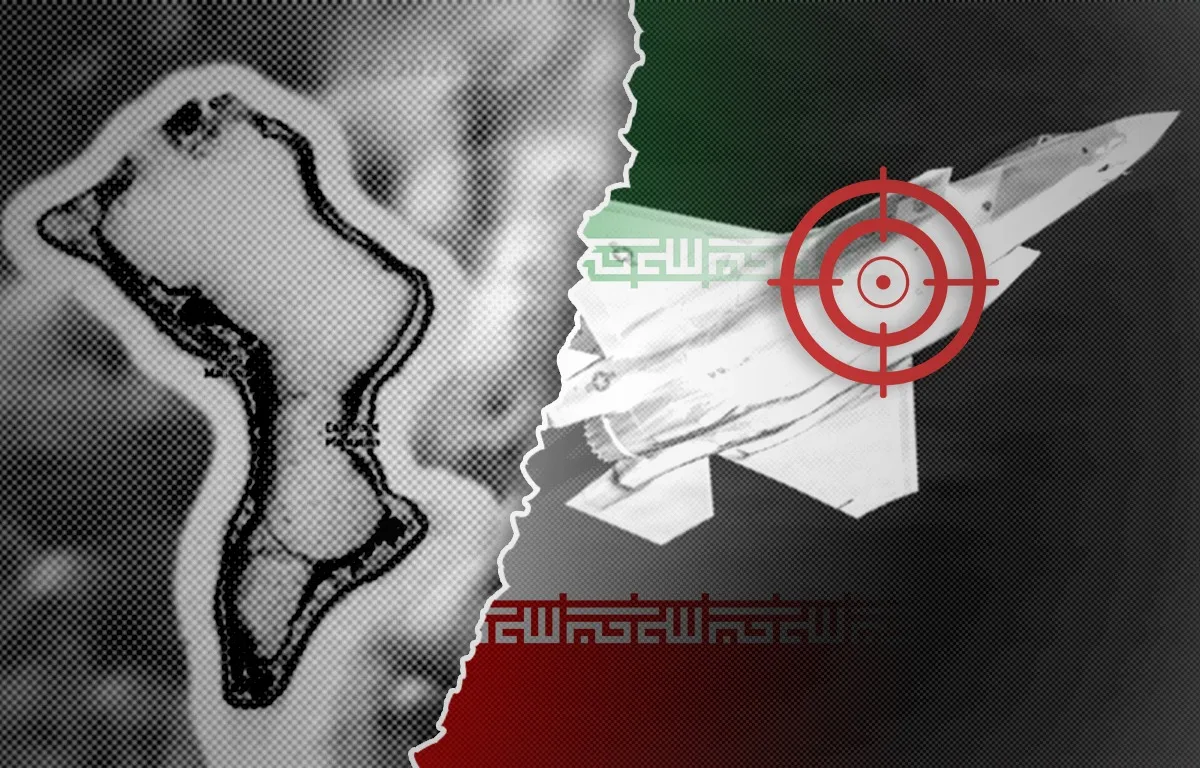
F-35 Damage and Diego Garcia Claims: What We Know So Far
From a reported F-35 hit to claims of missiles targeting Diego Garcia, this report breaks down what is known, what is claimed, and what remains unverified.
In a dramatic turn, U.S. President Donald Trump took to his Truth Social account on March 23 to announce that Washington had held discussions with Tehran aimed at ending hostilities. A five-day pause on planned strikes targeting Iranian power infrastructure swiftly followed. Yet Tehran struck back — not with missiles, but with words — flatly rejecting the claim, denying that any such talks had ever taken place, and alleging that Trump had simply backed out of the war.
Against this backdrop of conflicting narratives, two incidents were quietly unfolding that would demand the world’s attention. On March 19, a U.S. Lockheed Martin F-35 Lightning II — one of the most advanced stealth fighters ever built — was reported damaged during a mission over Iran. The following day, reports emerged of something far more audacious: an attempted strike on Diego Garcia, a remote but critical U.S.-UK military base deep in the Indian Ocean.
This OSINT report examines both incidents and cuts through the noise to offer an analytical perspective.
What is the US F-35?
The Lockheed Martin F-35 Lightning II is a fifth-generation fighter aircraft used by the United States. It is built for air combat, precision strikes, and surveillance missions.
One of its main features is its stealth design, which reduces radar detectability. This allows it to operate in defended airspace.
The aircraft is powered by the Pratt & Whitney F135 turbofan engine. While it provides high thrust, it also produces a strong heat signature.
What do we know about the hit?
On March 19, the official statement of the Islamic Revolutionary Guard Corps (IRGC) claimed that the fate of the targeted F-35 was unknown and implied a high chance that it had crashed, but US Central Command (CENTCOM) rejected it US CENTCOM’s spokesperson however confirmed that the flight landed safely and that the pilot was stable.
Air & Space Forces Magazine which closely covers US national security issues and air defence, reported the incident on March 22. According to the report, the pilot suffered shrapnel wounds.
After the incident, several Iranian-linked social media accounts shared a video claiming that the aircraft had been successfully targeted. On March 19,the late Ali Khamenei’s official X account, which is still active even after his demise, shared eight-second footage of the alleged strike on the US F-35.
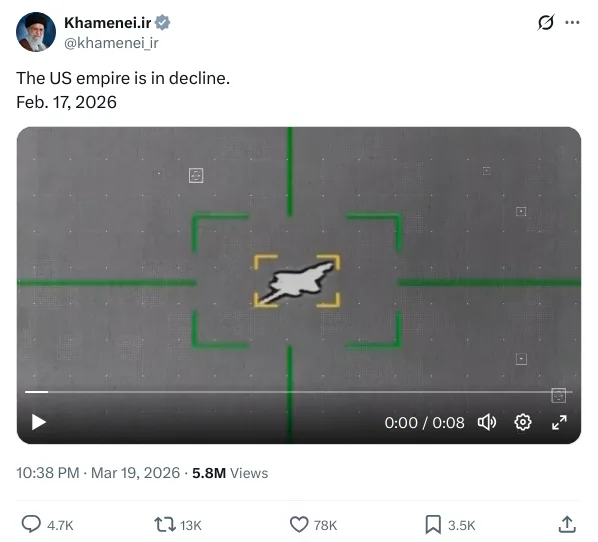
As of March 24, the post received 58,00,000 views, 78,000 likes, and 13,000 reposts.
These posts indicated that a stealth aircraft belonging to the US had been detected and engaged. The visual was presented as proof that such systems can be countered.
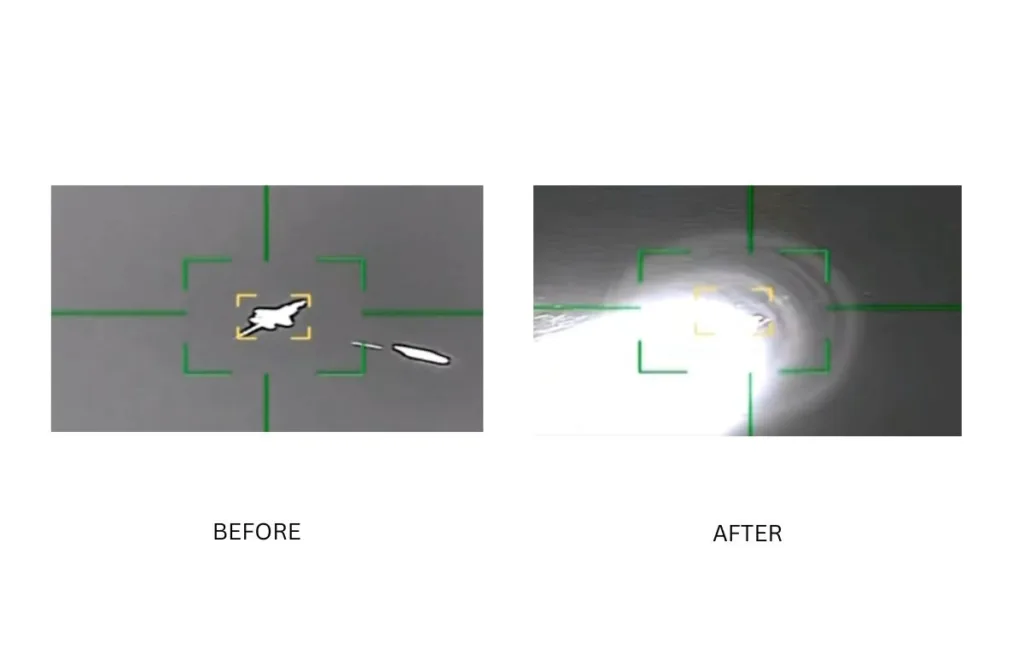
A keyframe split of the video shows a projectile hitting the tail end portion of the aircraft.
How could Iran have done it?
Available information suggests that the incident may be linked to how stealth works rather than a failure of the system. The F-35 is designed to reduce radar detection. It is not invisible in the infrared spectrum. The heat from its engine can still be tracked.
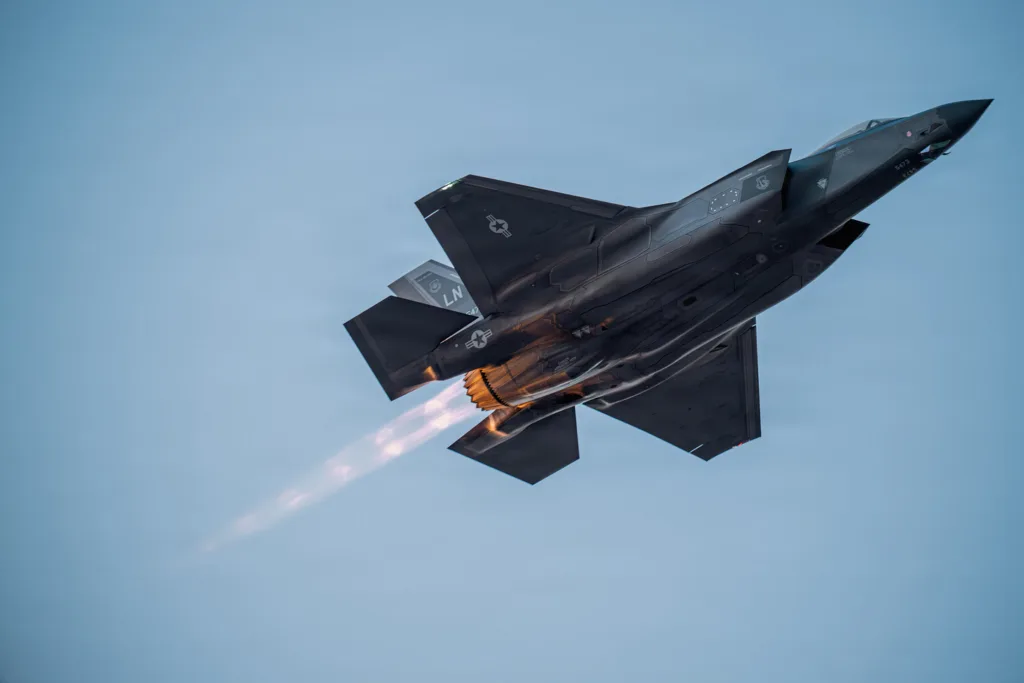
Air defence systems that rely on infrared sensors can detect such heat without using radar. In such cases, a short-range missile can lock onto the heat signature.
Even if flares are deployed, a missile exploding close to the aircraft can still cause damage. This could explain how the aircraft was hit without being destroyed.
Defence analysts online suggest that the weapon used to target the F-35 could be any of Iran’s infrared-guided surface-to-air missile (SAM) systems, which utilise heat signatures rather than radar to lock the target.
These systems include:
| Category | System Name | Type / Description | Targeting / Key Feature |
| Short-Range / Shoulder-Fired | Misagh-2 | Locally developed MANPADS | Infrared (heat-seeking) |
| Short-Range / Shoulder-Fired | Misagh-1 / Misagh-3 | Earlier and upgraded variants | Infrared (heat-seeking) |
| Point Defence System | Majid | Short-range air defence system | Electro-optical and infrared tracking |
| Passive Air Defence | Herz-9 | Mobile air defence system | Passive tracking (no radar emissions) |
| Anti-Aircraft Missile | Sayyad-1A | Upgraded anti-aircraft missile | Likely includes infrared tracking capability |
Diego Garcia: An Island in the Indian Ocean that Iran Targeted
Reports dated March 20 also pointed to Iran’s attempt to strike Diego Garcia. If accurate, this would mark a shift from nearby targets to locations much farther away.
What is Diego Garcia?
Diego Garcia is a remote island in the Indian Ocean. It is part of the British Indian Ocean Territory and hosts a major U.S. military base.
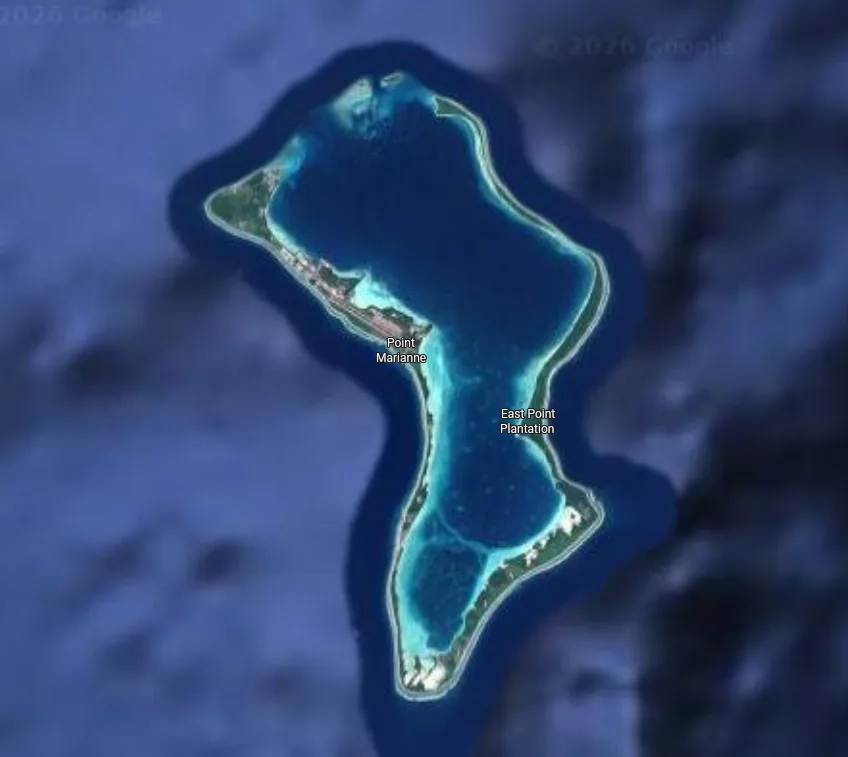
The base is used for bomber operations, naval activity, and logistics. It has been used in several past conflicts in the Middle East.
Why is it of strategic importance in the Iran War?
Its distance from the region makes it less exposed to direct attacks. At the same time, it allows the U.S. to launch long-range missions into the Middle East.
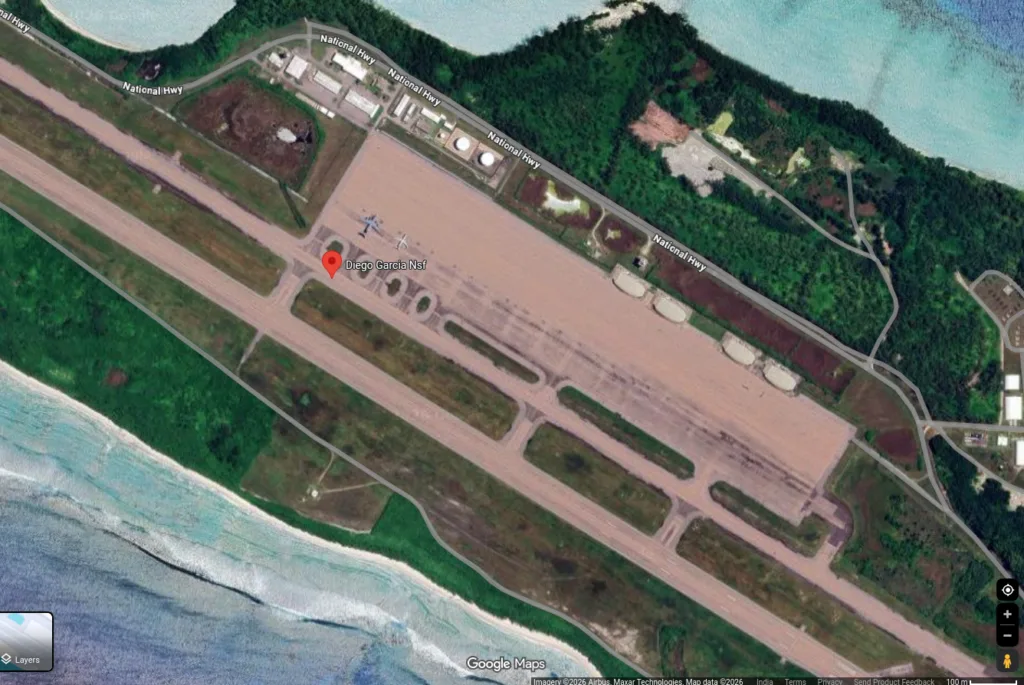
As a result, it serves as a backup and support base during ongoing operations.
How did Iran target it?
Reports from US media stated that two ballistic missiles were launched towards Diego Garcia.
According to these reports, one missile failed mid-flight, while the other was intercepted before reaching the base.
The incident is disputed. The United Kingdom described it as an Iranian action. Iran denied any involvement and called the reports a “false flag”. The United States has not confirmed the launch.
The distance between Iran and Diego Garcia is around 4,000 kilometers. Iranian officials have previously said their missiles are limited to about 2,000 kilometers.
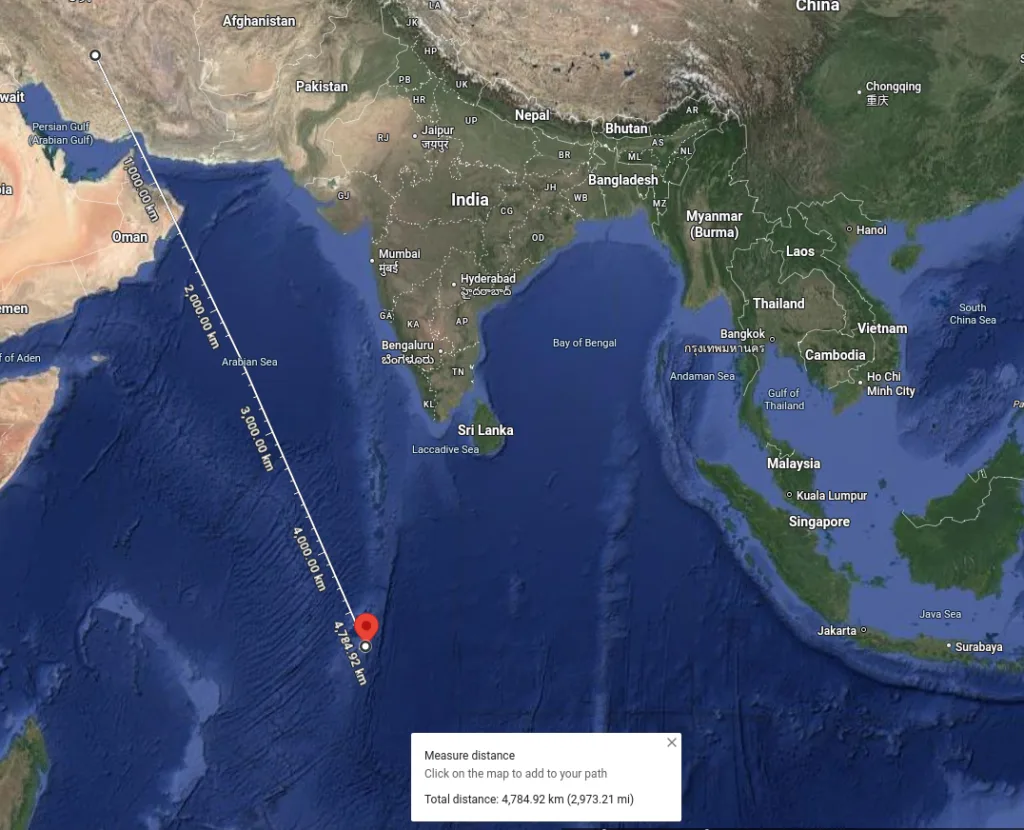
This raises questions about where the missiles came from and how the launch was carried out.
While visiting an Iranian missile site in Arad, the southern Israeli city, Prime Minister Benjamin Netanyahu remarked that by targeting Diego Garcia, Iran had demonstrated an extended missile range capability of 4000 km, which is enough to target European countries.
According to an Al Jazeera report, Esmaeil Baqaei, Head of the Centre for Public Diplomacy and Spokesperson for the Ministry of Foreign Affairs, Islamic Republic of Iran, denied the claim of Iran targeting Diego Garcia and labelled it as an “Israeli false flag”.
On March 22, speaking to CBS News, NATO Secretary-General Mark Rutte said, ”We cannot confirm that at the moment. So, we’re looking into that. But if this were true, it is further evidence that what the president is doing here, taking out the ballistic missile capability, taking out the nuclear capability from Iran, is crucial. And exactly as the ambassador just said, Ambassador Waltz, we have seen with North Korea, if we negotiate for too long, you might pass the moment where you can still get this thing done.
And North Korea now has the nuclear capability. If Iran had the nuclear capability, including together with the missile capability, it would be a direct threat, an existential threat to Israel, to the region, to Europe, uh, to the stability in the world. So the president doing this is crucial, and I’ve seen the polling, but I really hope the American people will be with him because he is doing this to make the whole world safer.”
The reported damage to the U.S. Lockheed Martin F-35 Lightning II and the claims around Diego Garcia come at a time when the conflict is continuing across multiple fronts. The F-35 incident points to the possible use of infrared-based air defence systems, while the reports surrounding Diego Garcia bring attention to claims of Iran’s extended strike range. At the same time, both incidents remain contested, with limited confirmation from official sources.

Sujith A
Open Source Intelligence Researcher and Mis/Disinformation tracker. Passionate about investigations and a big fan of Sherlock Holmes.
View all posts by Sujith A