From Meme to Movement: How an online campaign grew into an anti-incumbency movement
From the streets of Delhi, Srishti Jaswal and Kaushik Raj recount what they saw, heard and experienced as the CJP movement outgrew its founders, bringing together first-time protesters, police surveillance and a widening demand for democratic rights.
When we first began reporting on the Cockroach Janata Party (CJP), it was easy to dismiss it as another internet phenomenon. It had begun with a viral social media post and was driven by memes, satire and online outrage. But over the following weeks, every visit to Jantar Mantar suggested something else was taking shape.
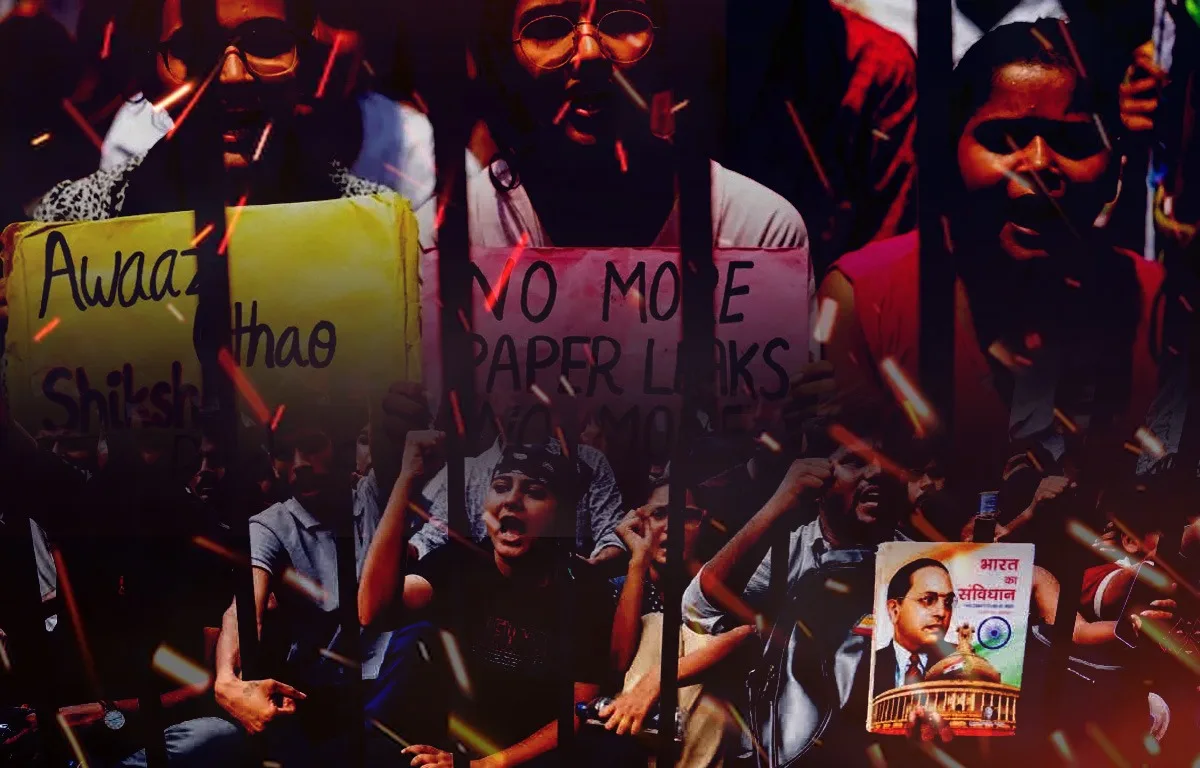
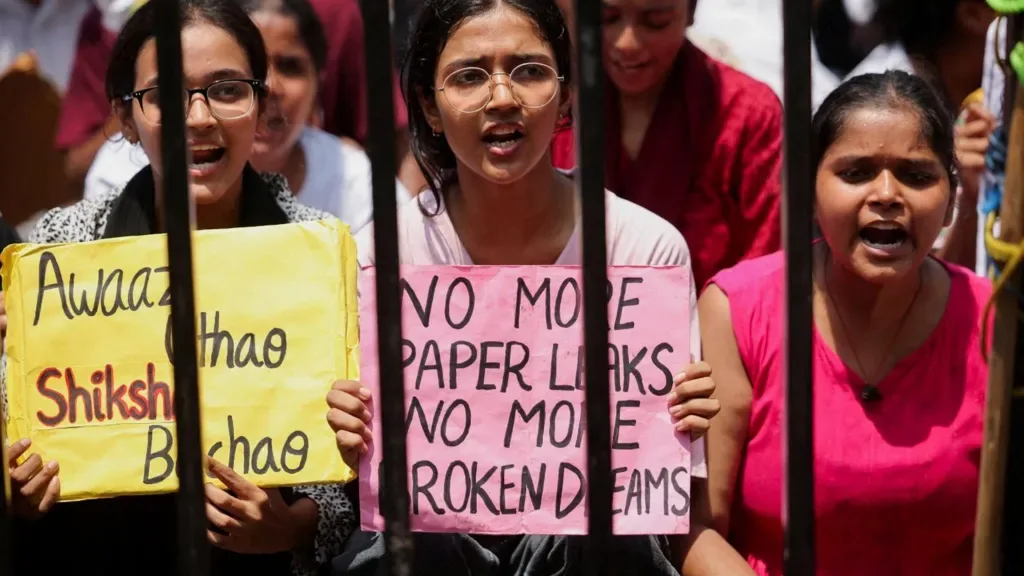
What started as an online campaign against examination paper leaks had gradually become a broader movement. By the time we returned to cover the protests in July, the conversation had expanded well beyond recruitment exams and NEET. Students spoke about democracy, the right to protest and a government they believed was no longer willing to listen.
The transformation was visible on the ground.
As the crowds grew larger each day, another presence became increasingly visible. Parked near the protest site was Ikshna, Delhi Police’s AI-powered surveillance vehicle equipped with 360-degree cameras, facial recognition technology and a live command-room feed.
While reporting from the protest, we made an unexpected discovery. One of us noticed our own face appearing live on the monitor inside the surveillance van. Curious, we walked up to the police personnel operating it and asked why journalists were being recorded. The officers acknowledged that the cameras were actively monitoring everyone present.
The moment was unsettling. We had arrived to document the policing of a student movement, only to realise that we, too, had become subjects of surveillance.
One of the most striking things we noticed was that the movement had, in many ways, outgrown its own leadership.
Across Jantar Mantar, we saw hundreds of copies of the Constitution, portraits of Dr B.R. Ambedkar and Bhagat Singh, and countless national flags. But we barely saw posters of CJP founder Abhijeet Dipke or even of Sonam Wangchuk, whose hunger strike had become an important rallying point in the days before the Parliament march.
The people we spoke to rarely mentioned either of them. Instead, they returned to the same themes again and again: paper leaks, shrinking opportunities, the future of public education and erosion of democratic rights.
The posters reflected that mood. One declared, “Government is not equal to the nation.” Another, written on a sanitary pad, read, “Pradhan, even this leaks less than you.” A third said, “1984 was not supposed to be an instruction manual.”
Many people had travelled overnight from different parts of the country. A group from Uttar Pradesh’s Kannauj district told us they had reached Delhi without informing their parents. One carried a portrait of Bhagat Singh, another held a book by Ambedkar.
“Our democracy is in danger. There is no freedom to protest,” one of them told us. “I myself faced police excesses when I protested inside my university.”
Not everyone had come because they had personally suffered from paper leaks.
Ravindra Kumar, now in his sixties, said he was there because of his daughters. After the 2024 NEET controversy, he said, his family had fallen into depression when his daughter’s examination was cancelled.
“I have come here for my daughters.”
Another protester, attending a demonstration for the first time, told us she was an engineer and had no government examination to take.
“Education affects every household. I came for future generations.”
Again and again, we met people who were not directly affected but believed the issue had become symbolic of something much larger.
That perhaps explains why the movement drew so many first-time protesters.
One Class 12 student carrying a poster that read “Modi Means Murderer of Democracy in India” told us he had spent years following events in the country before finally deciding to join a protest.
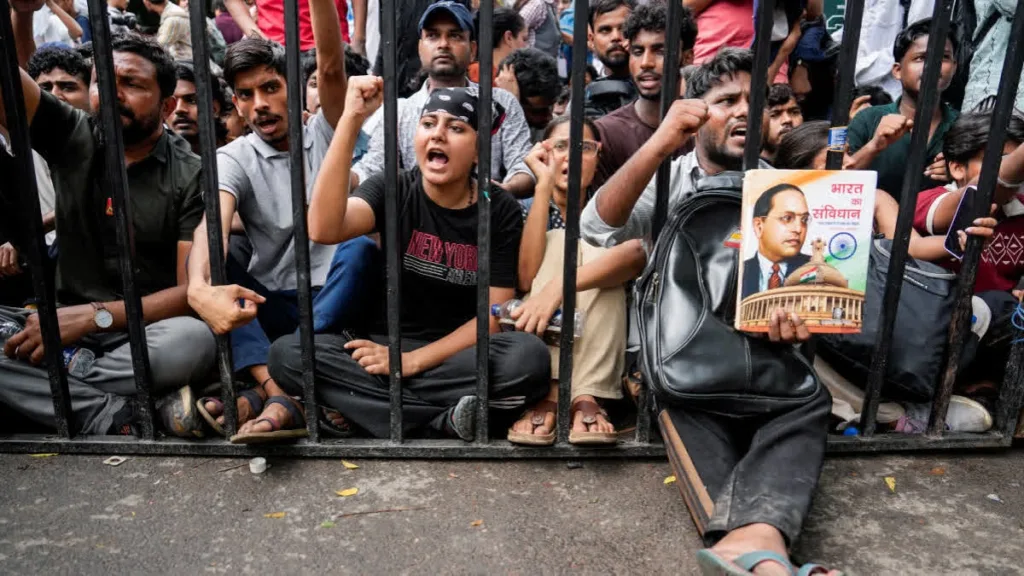
“We needed a space to express our dissent. That’s why I came.”
An autorickshaw driver who had worked throughout the previous night before reaching Jantar Mantar early in the morning told us he had willingly sacrificed a day’s income.
“Forget one day’s earnings. I am ready to sacrifice even ten days’ earnings to save democracy.”
Perhaps the most memorable conversation we had was with a group of humanities students attending their first protest. We asked whether they were afraid of police action.
They smiled before replying:
“The government should fear the people, not the other way around.”
The Parliament march on 20 July proved to be the movement’s biggest test. Despite metro station closures, barricades and heavy police deployment, tens of thousands of people gathered around Jantar Mantar and attempted to march towards Parliament.
As protesters advanced, Delhi Police repeatedly stopped them with barricades, lathi-charges and tear gas. We watched protesters run through clouds of tear gas with burning eyes while others poured water over strangers’ faces or helped those injured in the baton charge. Despite repeated use of force, very few were willing to leave.
We asked Delhi Police Joint Commissioner Madhur Verma why tear gas and force had been used against protesters. He declined to answer.
The violence did not spare journalists either.
One of us was filming the lathi-charge with a press card clearly visible around the neck when several police personnel suddenly began running towards us. We repeatedly shouted, “Media! Media! I am from the media!” as we tried to move away. It made no difference.
A policeman struck one of us on the back and left arm while we were running. We turned back and asked, “How can you do this? I told you I am from the media.”
His reply was, “If you are from the media, you should take care of your safety.”
That exchange stayed with us long after the protest ended. It reflected not only the intensity of the police response but also the shrinking space for journalists documenting it.
Yet, over weeks of reporting, what stayed with us most was not the violence or the surveillance. It was the extraordinary range of people who believed the movement belonged to them and they belonged to the movement.
Whether the Cockroach Janata Party survives as an organisation remains to be seen. But by the time we left Jantar Mantar, it was evident that the movement had grown beyond its founders. What began as outrage over paper leaks had evolved into a wider expression of anxiety about democracy, dissent and the future of young Indians.
That, more than any slogan or speech, is what defined the recent protests we witnessed.
Srishti Jaswal and Kaushik
Srishti Jaswal and Kaushik Raj are young journalists who thrive on investigative and field reporting.
View all posts by Srishti Jaswal and Kaushik