
The Biological Archives of Genocide
“War wounds are the biological archives of our times.” When Dr. Ghassan Abu Sittah said this, I was stunned. My 28 years in journalism could not prepare me for that one moment.
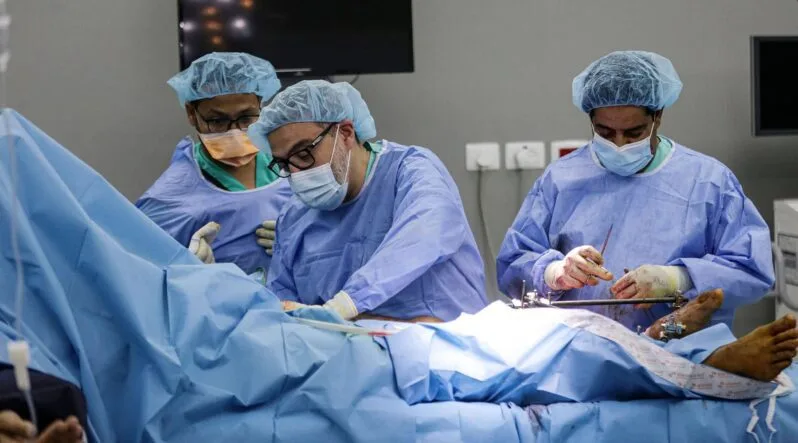
We all know Dr. Ghassan Abu Sittah. In the early days of the war, it was through his social media posts that the world learned what was unfolding in Gaza. The images of him addressing the press from behind a podium surrounded by heaps of bodies sent shockwaves across the world. A British-Palestinian plastic and reconstructive surgeon, Dr. Abu Sittah has been tending to Gaza’s wounds for years. After October 7, he became one of the few reliable sources of information on the massacres taking place. His description of performing surgeries without anaesthesia—cutting into living flesh—shocked global audiences.
I spoke to Dr. Abu Sittah and a few other doctors working in Palestine’s war zones while preparing a report for Outlook. Each had unique, complex, and harrowing experiences to share. Yet, they were unanimous in their conclusion: what is happening in Gaza is not an ordinary war—it is a genocide aimed at erasing an entire people.
“This is not just about killing individuals,” Dr. Abu Sittah explains. “What we are witnessing is an attempt to make it impossible for future generations to live here. The first things targeted are sources of drinking water, waste disposal systems, and hospitals. The goal is the annihilation of the physical environment itself.”
“It’s not only the destruction of infrastructure,” he adds. “It’s the obliteration of thousands of historically significant sites, even cemeteries—so that people lose their connection to their past. That is the first difference between war and genocide. That’s what sets Gaza apart from all the wars that came before.”
For people who have never seen war, it is difficult to comprehend its true horror. This is why every time tensions rise along the border, cries for war are heard—by those who mistake it for a video game. Evolutionarily speaking, wars have no true beginnings or ends—only continuities.
A war wound, says Dr. Abu Sittah, “is a biological archive that marks the times we live in.” Hearing him say this over a Zoom call, I found myself unable to fully grasp its meaning—only to sit there, overwhelmed.
“All the stories of war—who did what, who fought whom—are contained in those wounds. They remain with the patient for life. The injuries suffered by Iraqi and Iranian soldiers during the Iran-Iraq war of the early 1980s still exist on their bodies. Saddam is gone, Khomeini and Reagan are dead, and most of those who fought have passed—but the narrative of those wounds endures.”
“Sometimes, that narrative runs counter to current political ideologies or agendas. Iraq and Iran may now be allies, but the story etched in those wounds has not changed. The wounds outlast the political projects that caused them—they persist unchanged,” he says.
“The scars of South Vietnamese soldiers who fought in the Vietnam War, the injuries of those who battled Americans, all serve as reminders of that conflict. Vietnam’s war had elements of a civil war, too. When power dynamics change, ruling elites either glorify or suppress these narratives. Sometimes, the story told by a wound becomes a source of embarrassment for political regimes. That is why I say a war wound remains a biological historical record of the war that created it.”
Even ageing differs for those who have endured war. Medical records of veterans reveal that they face higher risks of chronic diseases like diabetes and other non-communicable illnesses. Children injured in war often require multiple surgeries, suffering lasting developmental challenges.
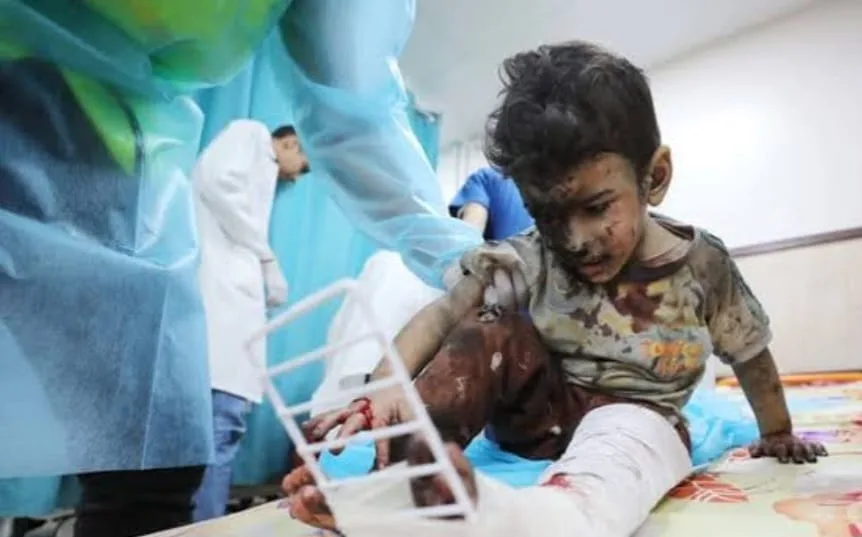
Science and technology, instead of reducing human suffering, have only amplified the destructive power of war. Gaza has seen the use of lethal white phosphorus and thermal-baric bombs—devices that don’t cause large explosions but inflict deep, deadly burns. Quadcopters—small drones armed with sniper rifles—target schools and hospitals. Victims of these new weapons are often left mutilated beyond recognition, Dr. Abu Sittah explains.
Medical research on treating war wounds remains woefully inadequate, even in countries with long histories of conflict. This, says trauma care specialist Dr. Paul Ransom from the UK, is a serious gap. Having worked in war zones for years, Dr. Ransom notes that doctors from India and Africa—accustomed to handling emergencies without advanced technology—often outperform Western specialists on the battlefield.
Dr. Ransom leads the medical team of HALO (Hazardous Area Life Support Organization), which locates and defuses landmines and unexploded ordnance in conflict zones. “Thousands of bombs filled with metal shrapnel are being used in Gaza,” he says. “They pierce every part of the body. Treating such wounds is an enormous challenge. I have never seen injuries as brutal or heart-wrenching as those in Gaza.”
“You have only three options,” says Dr. Ahmad Mokhtabi, a plastic surgeon at Khan Younis Hospital. “You are either killed, imprisoned, or evacuated. Which would you choose?” He was among those evacuated shortly before the hospital was bombed. “What is happening in Gaza today is many times crueler than Hiroshima or Nagasaki,” he says.
“The world’s attention turned to Gaza only after October 7, 2023. But we have been under siege for twenty years—since Hamas won the 2006 elections. Ask what the world’s largest open-air prison is, and there’s only one answer: Gaza. For our people, there is no option left but death.” Speaking over a video call, Dr. Mokhtabi’s voice faltered, and I could only listen, unable to utter another question.
His video, recorded on December 6, 2023, from Khan Younis Hospital, went viral. In it, he breaks down, asking, “How many more of us must die before this war ends?”
Every doctor I spoke to echoed the same truth: what is happening in Gaza is genocide. By January 2025, over 200,000 people had been killed—nearly 20 percent of the total population. Hospitals and schools are bombed, food and medical aid blocked at the borders.
“If this is not genocide,” Dr. Mokhtabi asks, “then what is?”Dr. Santosh Kumar, an Indian doctor who has worked in Gaza, offers this simple explanation for those who have never known war:
“When you need to use the toilet but there are 250 people ahead of you in the queue—what would you do? Can you even imagine such a situation? Have you ever gone two or three days without food, only to stand in line for hours and still go hungry? War is not an idea. It is hell—a hell that can only be understood by those who have lived it. For those who glorify war as an act of patriotism, that truth will always remain beyond reach.”
Shahina K K
Shahina K.K. is a seasoned journalist and the co-founder and chief editor of OBC. She has received the International Press Freedom Award (2023) and the Chameli Devi Jain Award, among others. Her work is known for its depth, and steadfast commitment to speaking for the margins and defending democracy
View all posts by Shahina K K