Where BJP Gained, Voters Vanished: Kerala’s SIR Puzzle
As over 24 lakh voters vanish from Kerala’s draft SIR electoral roll, data shows BJP strongholds and close-second constituencies witnessing mass drop-offs. Confusion on the ground, overburdened officials, and rising political allegations now raise urgent questions about how—and whether—the state’s electoral rolls can be repaired in time.
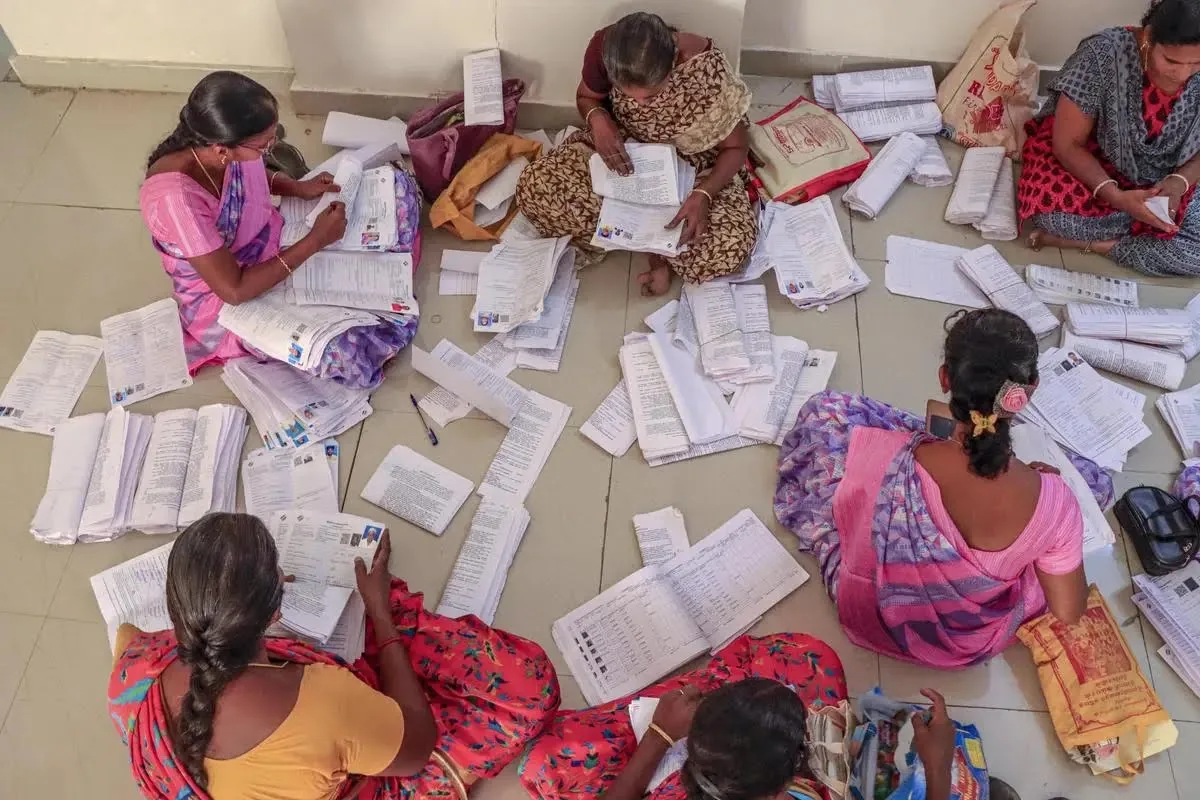
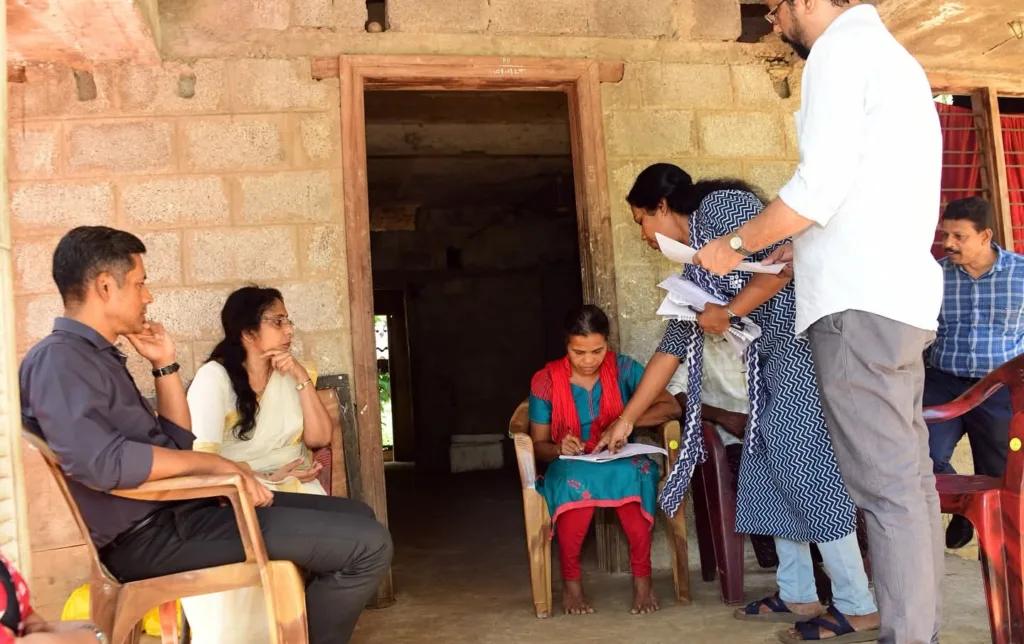
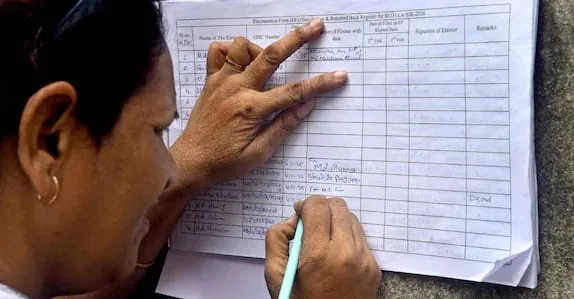
“Some addresses I visited were locked, and none of the neighbours knew where the residents had gone. I even tried locating them with the help of local political leaders, but without success,” said Suma (name changed), a Booth Level Officer (BLO) from Thiruvananthapuram. According to her, such voters may be shifting residences without informing the concerned authorities.
She said that two additional visits are made to the listed addresses before these voters are marked as “untraceable/absent” in the ASD (absent, shifted, or dead) list and excluded from the draft electoral roll following the Special Intensive Revision (SIR) exercise in the state.
Suma’s struggle to locate voters as part of the SIR exercise is not an isolated one. With the draft roll published on December 23 excluding over 24 lakh voters in the state—24,08,503 to be precise—questions have begun to surface about who these excluded voters are and why they were dropped from the rolls. While some attribute the exclusions to administrative lapses and the haste with which the process was carried out, others allege the emergence of a broader political pattern, one that has been observed in northern states and is now being repeated in Kerala as well.
The statistics reveal a stark pattern: over five lakh voters excluded from the list are from the twenty assembly segments where the BJP led or came second in the 2024 Lok Sabha elections. Allegations of ‘vote chori’ have once again entered public discourse as the emerging pattern becomes increasingly hard to ignore.
“A Dangerous Situation”: What the Numbers Reveal in Thrissur
In Thrissur’s Nattika Assembly constituency, 23,595 voters were excluded from the draft roll. Nattika was among the eleven Assembly constituencies in the state where the BJP had a lead in the 2024 Lok Sabha elections. In this segment, Suresh Gopi—Kerala’s first-ever BJP Member of Parliament—secured a lead of 13,945 votes over CPI candidate V. S. Sunil Kumar. Sunil Kumar had earlier alleged that Suresh Gopi and his family voted in Thrissur in 2024 by declaring it their permanent residence, but in the recently concluded local body elections, they cast their votes in the Thiruvananthapuram Corporation.
C. C. Mukundan, the incumbent MLA of Nattika, said that serious lapses by certain officials, allegedly aimed at favouring parties with vested interests, were behind the mass exclusion. “We have observed that even people who are not residents here have been included in the list. We are actively taking steps to verify those who appear on the roll, as well as to identify eligible voters who may have been left out,” he told OBC. Compared to the 2021 Assembly elections, a significant number of voters were added ahead of the 2024 Lok Sabha elections, he added. According to the MLA, it was evident that a dangerous situation exists and must be checked immediately.
In the six Assembly constituencies of the Thrissur parliamentary segment—Manaloor, Ollur, Thrissur, Irinjalakuda, Pudukad, and Nattika—where the BJP had secured a clear lead in the previous year, as many as 1,42,386 voters have been excluded from the draft roll.
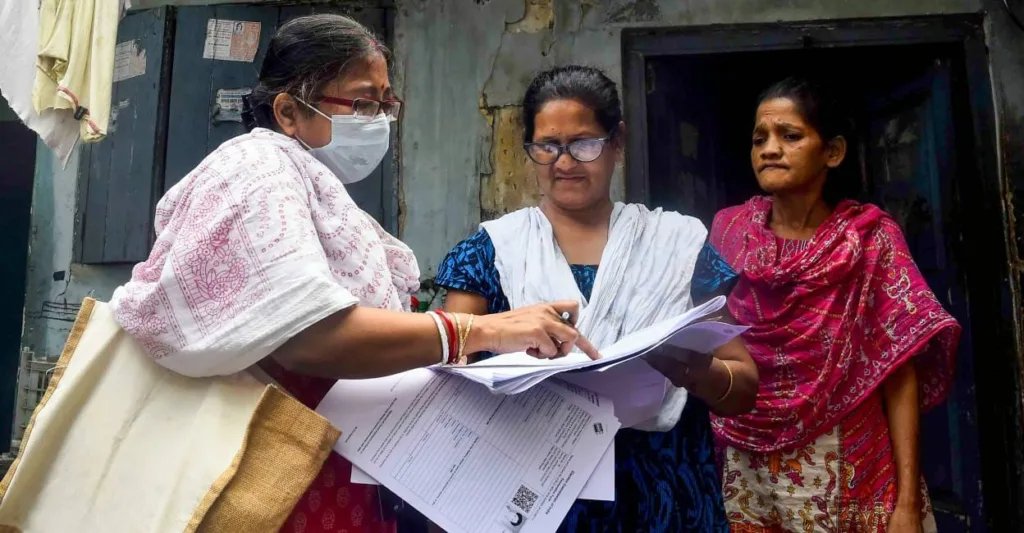
Bindhu, a BLO from rural Thrissur, told OBC that many voters were excluded because their relatives—parents or grandparents—may not have been included in the 2002 base SIR list, or they could not produce sufficient documents needed. “Most of them, as far as I have seen, are Muslims who might have been abroad at that time,” she said.
Tracing the ‘Untraceables’: From Thiruvananthapuram to Palakkad
In a single booth in the Nemom Assembly constituency in Thiruvananthapuram—Chinnamma Memorial GHS, Poojapura—as many as 837 voters figure in the ASD (Absent, Shifted, Dead) list. Of these, 611 have been marked as “untraceable/non-existent.” Nemom is considered a BJP stronghold, having elected the party’s first-ever MLA in Kerala, O. Rajagopal, in 2016. In 2024, BJP candidate Rajeev Chandrasekhar secured a staggering 45% vote share in the Assembly segment, far surpassing Congress’s 29%.
The draft SIR excludes 49,063 voters from Nemom.
Including Nemom, five Assembly segments in Thiruvananthapuram where the BJP had a lead in 2024 have now seen large numbers of voters dropped from the draft roll. Across these five segments—Kazhakootam, Vattiyoorkavu, Nemom, Attingal, Kattakkada—a total of 1,87,856 voters appear on the ASD list. Another four Assembly segments—Varkala, Thiruvananthapuram, Kovalam, and Neyyattinkara—where the BJP came second, have seen around 1,24,989 voters dropped after the SIR.
Palakkad Assembly constituency, where the BJP finished second in 2024, also saw a significant 32,165 voters excluded after the SIR. Manjeswaram, Kasaragod, Haripad, and Kayamkulam, which saw similarly large voter exclusions, are the other constituencies where the BJP finished second last year.
Chaos, Silence, and a Flood of Excluded Voters: What the SIR Still Has to Fix
“Everyone else in my family received the enumeration forms, and their names appeared on the list when we checked. Somehow, mine was dropped,” said Arun, a 22-year-old resident of Valiyasala ward under the Thiruvananthapuram Municipal Corporation. He was the only member of his family who did not receive an enumeration form during the SIR. Officials reportedly told him that his vote fell under a different booth. However, no enumerator from that booth visited him or issued a form until the draft list was published. The reason for his exclusion remains unclear. Arun had been an eligible voter and had cast his vote in the 2024 Lok Sabha elections.
Kerala had a total of 2,78,50,855 voters as on October 27, before the SIR started. Of the forms that could not be collected, 6,49,885 pertained to deceased voters, 8,16,221 to those who had permanently shifted, 1,36,029 were duplicate entries, 6,44,548 were marked as “untraceable,” and 1,60,830 fell under other categories, said Chief Electoral Officer of Kerala Ratan U. Khelkar in a press conference on December 23.
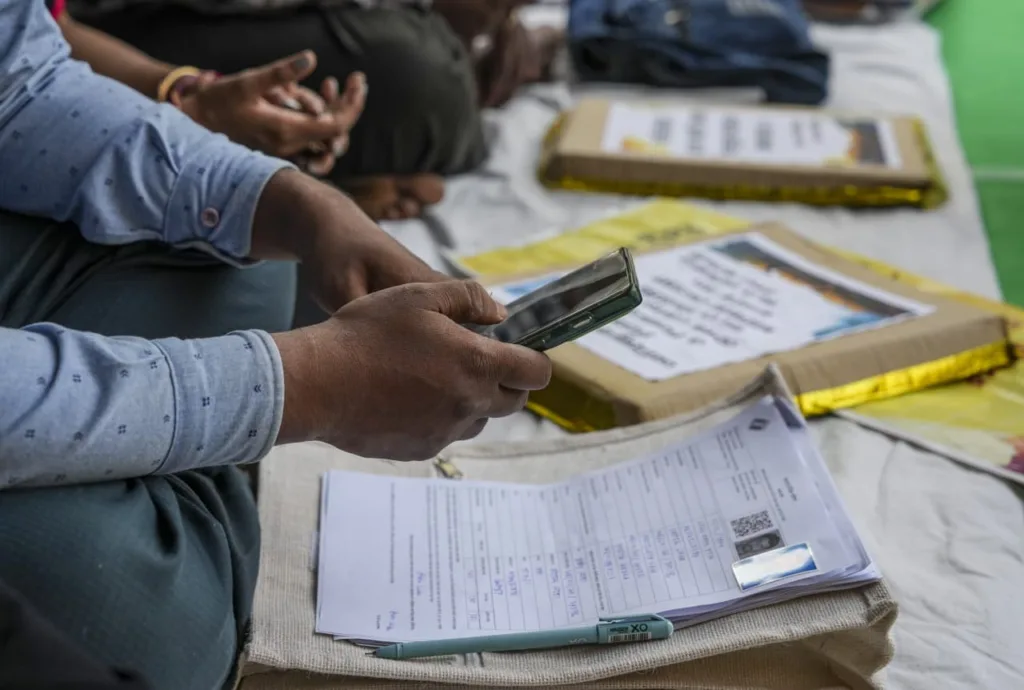
8.65% of voters included in the rolls prior to the SIR are now missing from the draft electoral list, as per the statistics from the Election Commission.
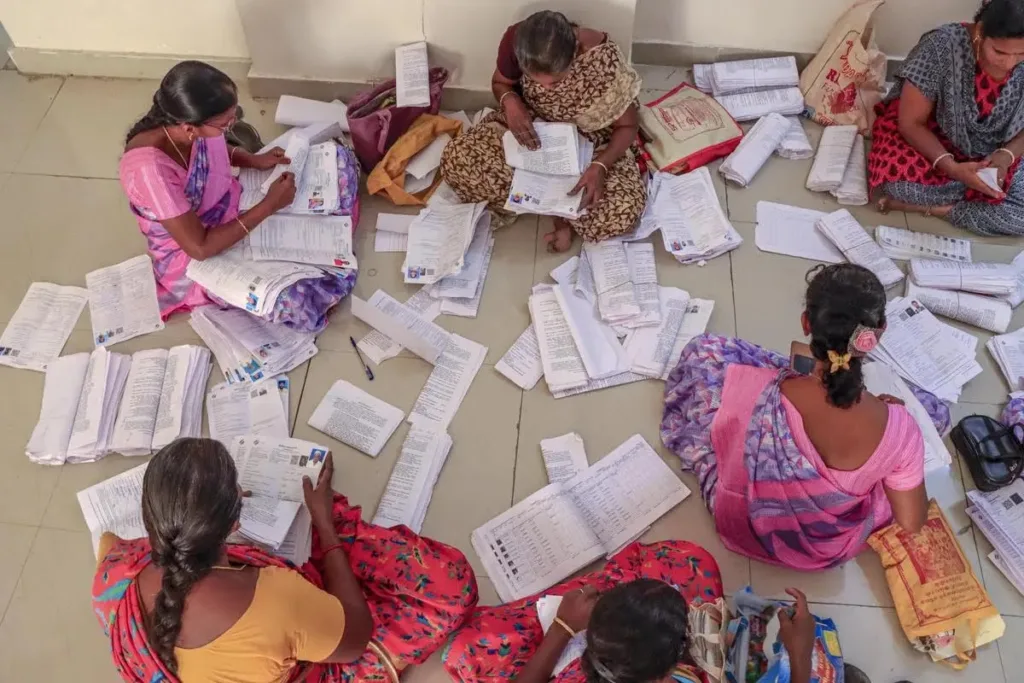
BLOs across the state faced a tough task tracing voters within the highly compressed timelines. Voters also faced confusion and ambiguity while filling out enumeration forms, particularly regarding the documents required to “establish relationships” with their parents or grandparents. “Some even forgot their booths and the places they had voted in 2002, the last year the SIR was conducted, which serves as the base for the current list,” a BLO told OBC. All these factors together contributed to what Chief Minister Pinarayi Vijayan described as a list “filled with anomalies” before its publication.
The BLOs emphasized the second phase of the exercise, during which those excluded have the opportunity to get themselves enrolled after a hearing. “We hope no one will be excluded in the end,” one of them said.
A Larger Sangh Parivar Project?
“In places that we need to win, we will even bring people from Jammu and Kashmir and make them voters here—there is no doubt about that,” BJP state vice-president B. Gopalakrishnan told the media earlier this year, amid allegations of fake voters in Thrissur. He even went on to audaciously reiterate that they would continue to do so if they wanted.
This poses an admission from the BJP itself, coming amid the discovery of lakhs of duplicate entries and cross-constituency registrations across several states, including Karnataka and Haryana. T. N. Prathapan, All India Congress Committee (AICC) Secretary and former MP, said the party suspects that the Election Commission is acting behind the scenes to advance a “special RSS–BJP agenda” in Kerala. He added that the Congress would exercise heightened vigilance at the grassroots level to prevent any such move.
Kerala has a long-standing history of resisting the majoritarian rhetoric of the BJP and keeping the party at bay, even as much of the country was swept by the Modi wave from 2014 onwards. However, changes have been evident for some time now. The victory of Suresh Gopi and the BJP’s takeover of the Thiruvananthapuram Corporation signal a warning of what may lie ahead.
However, there is hope, as Kerala has emerged as the first state to actively assist citizens in navigating this crisis—by setting up help desks at the village office level to support eligible voters in enrolling, and by launching awareness campaigns, as announced by Chief Minister Pinarayi Vijayan on December 24.
Through the active scrutiny of political parties and civil society, it is hoped that the glaring gaps in the draft list are identified early, and necessary steps are taken to ‘purify’ the rolls. Efforts should also be made to actively locate the ‘missed voters,’ understand the reasons behind their exclusion, and take action against any identified irregularities.