Who Decides What Gets Published? Penguin India Under Scrutiny
The dispute over Sonia Gandhi’s memoir has put Penguin Random House India’s editorial choices under the spotlight. As the publisher denies external pressure, earlier controversies involving politically sensitive books raise a larger question: where does editorial judgment end and political or commercial pressure begin?
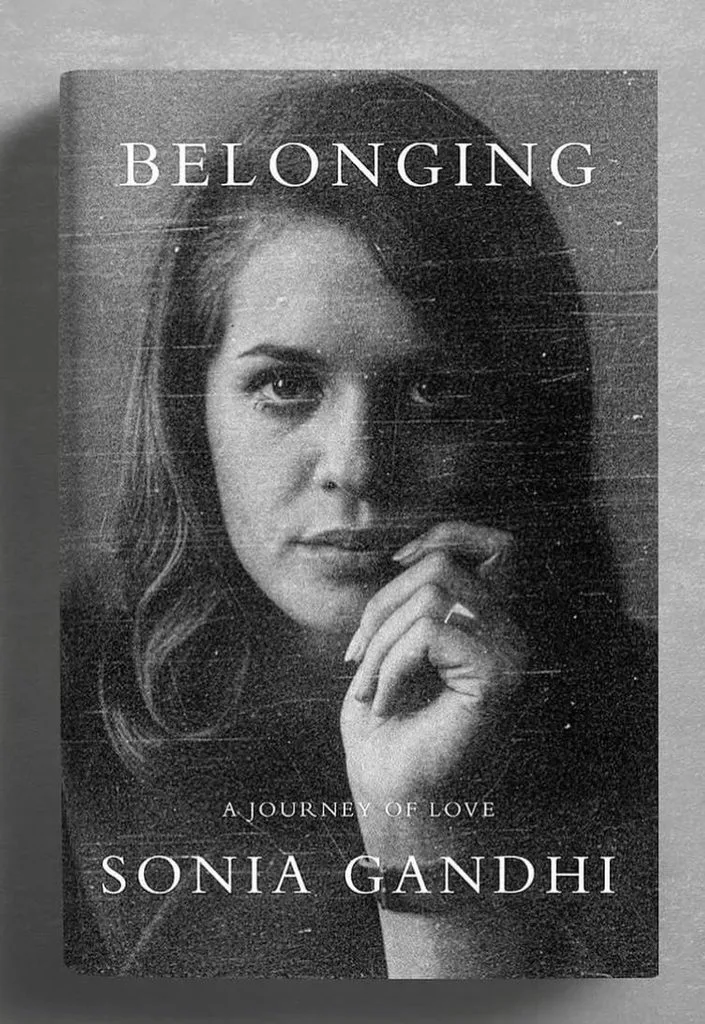
The upcoming release of Sonia Gandhi’s memoir, Belonging: A Journey of Love, has sparked controversy over its proposed publication in India. Reports said Penguin Random House India (PRHI), which had been in discussions to publish the book in India, proposed changes to passages dealing with the RSS, Prime Minister Narendra Modi and China. The book is scheduled for release on 10 November in the US under Alfred A Knopf and in the UK under William Collins. The publisher for the Indian edition has been confirmed to be HarperCollins India.
Congress leaders criticised Penguin Random House India after reports that the publisher had sought changes to passages concerning the BJP, China and Prime Minister Narendra Modi. Former Rajasthan chief minister Ashok Gehlot alleged that Penguin India had sought removal of passages relating to Prime Minister Narendra Modi, the RSS, and China’s occupation of Indian territory during Modi’s tenure. Gaurav Gogoi, the Deputy leader of the Congress in the Lok Sabha, criticised the publisher’s clarification, arguing that it was willing to publish books associated with the ruling party. ’.
PRHI Response
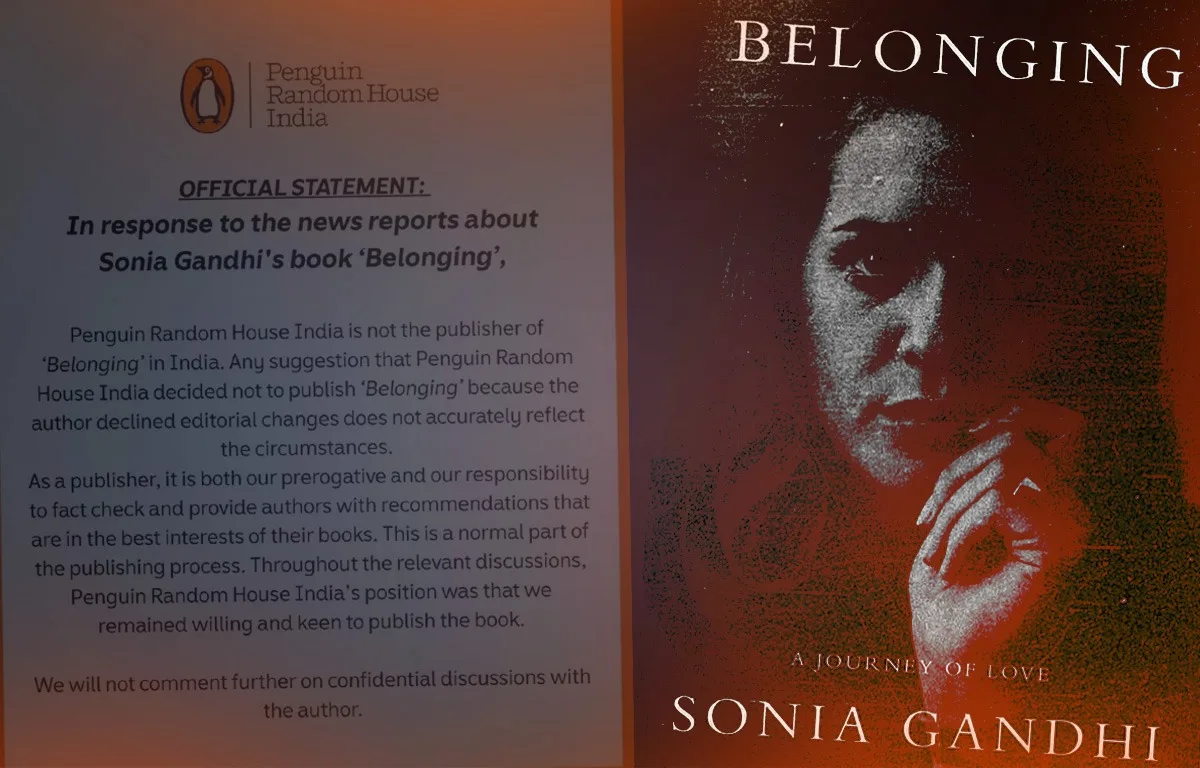
In a statement on 28 August, PRHI sought to clarify its position following reports that it had decided not to publish the book after Sonia Gandhi’s team rejected proposed editorial changes.
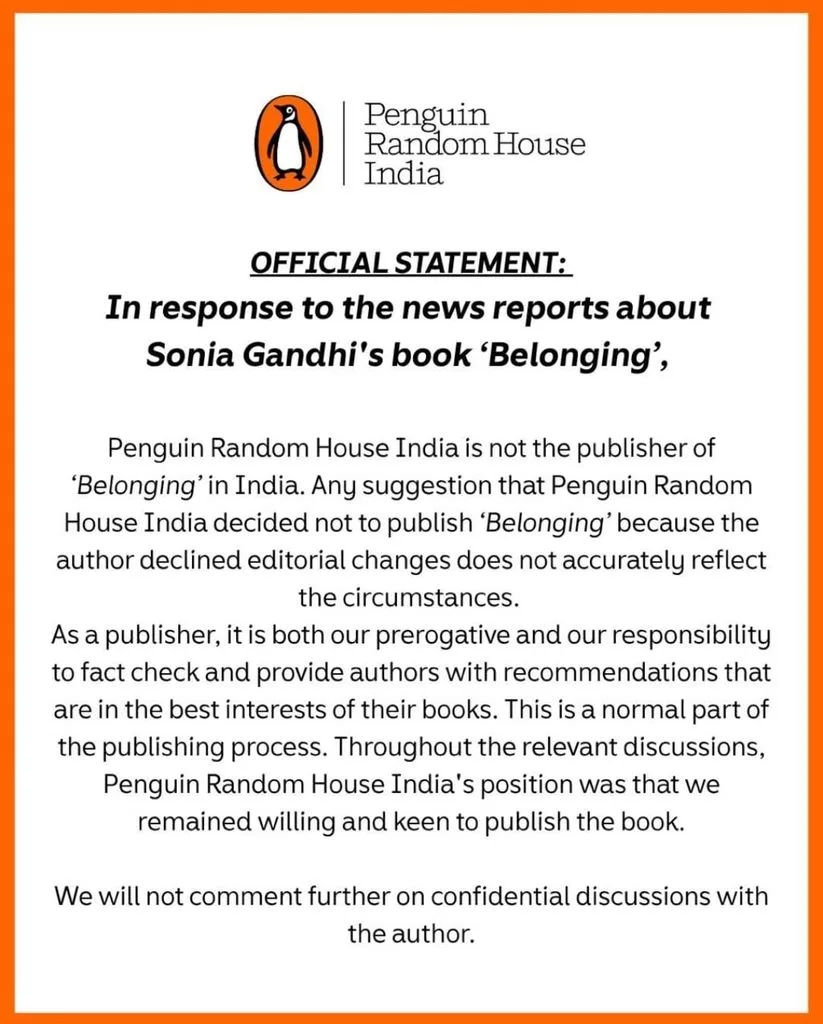
The publisher denied that its decision was prompted by external intervention. It said it remained ‘willing and keen to publish the book’ and described fact-checking and editorial recommendations as a normal part of the publishing process. Penguin India said it would not comment further on confidential discussions with the author and her representatives. It said discussions had stalled after the publisher and the author’s representatives reached an “impasse over a particular issue.”
The controversy comes against the backdrop of previous disputes involving Penguin India over the publication or withdrawal of politically and socially contentious books. These cases have prompted criticism from authors and commentators over questions of editorial judgment, legal risk and freedom of expression.
Previous controversies involving Penguin India.
In 2014, Penguin India withdrew Wendy Doniger’s The Hindus: An Alternative History following a legal challenge by the Shiksha Bachao Andolan Samiti, which alleged that the book hurt Hindu religious sentiments. Penguin cited legal concerns, including the implications of Section 295A of the Indian Penal Code, while saying it considered the law restrictive. In 2013, Penguin India decided not to distribute Joe Sacco’s graphic novel The Once and Future Riot in India. The publisher cited legal, regulatory, commercial and market considerations, including concerns over an inaccurate map of India’s boundaries and unanswered requests for citations.
However, Sacco claimed that Penguin ‘was looking for excuses’ to drop a politically sensitive title in a tense political climate. He also said he’d been asked to remove a conclusion concerning Hindu-nationalist priorities.
Around the release of Arundhati Roy’s memoir Mother Mary Comes to Me in 2025, a PIL was filed in the Kerala High Court seeking a ban on the sale, circulation and display of the book’s cover, which showed Roy smoking, unless it carried a statutory health warning. The petitioner alleged that the image promoted smoking.
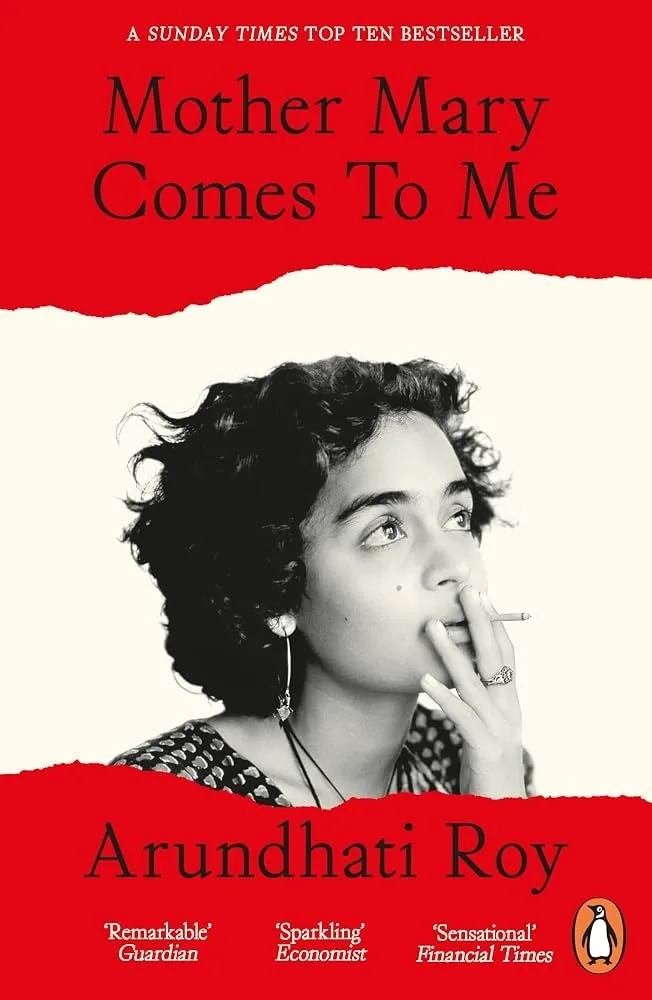
The Kerala High Court dismissed the PIL in October 2025, and the Supreme Court later refused to entertain a challenge to that decision. The courts noted the disclaimer concerning smoking on the book’s cover.
In this case, Penguin defended the publication of the cover during the legal proceedings.
Other publishers and similar controversies
This is not just an isolated case for Penguin Random House. Juggernaut Books, for instance, has faced similar situations.
In July 2017, Priyanka Pathak-Narain published Godman to Tycoon: The Untold Story of Baba Ramdev. The book examined Ramdev’s rise from a rural yoga teacher to the head of the Patanjali Ayurved business empire. Ramdev filed defamation and privacy suits against the author and publisher seeking a ban on the book.
The publishing house Juggernaut Books defended the text as well researched, backed by over 50 interviews, public records, and a 25-page source note. Juggernaut opposed the restrictions rather than releasing a censored version of the biography.
In August 2020, Bloomsbury India withdrew Delhi Riots 2020: The Untold Story from publication. According to the author, the book was a factual account of the communal violence in Delhi in February that year. The withdrawal came amid criticism of a virtual pre-publication launch event featuring BJP leader Kapil Mishra as a guest of honour. However, Mishra himself had delivered a controversial speech just before the riots broke out.
Bloomsbury India said that it had no prior knowledge of the pre-publication launch event, which it said used its logo without permission and involved participants it had not approved. The publisher said the decision reflected its ‘deep sense of responsibility towards society’ and expressed regret over the controversy.
The dispute over Sonia Gandhi’s memoir raises a broader question about the balance publishers must strike between editorial judgment, legal and commercial considerations, and political sensitivity. For readers, the key issue is whether such decisions are guided by consistent editorial standards and whether those standards are applied equally to politically contentious books.