Who Gets to Tell the Story? Journalism Through the Lens of Dalit Rural Women
What changes when India’s stories are told by Dalit, rural, poor women—often survivors of the very injustices they report on? The Good Reporter, the memoir of Khabar Lahariya, shows why who tells a story matters. These women don’t just report the margins. They know them, live them—and make us see them differently.
In a story on the actor assault case published in The NewsMinute, I remember reading about an experience shared by journalist Nidhi Suresh, who reported on the case in detail. As she wanted to interview actor Dileep, the eighth accused in the case, who the Ernakulam Sessions Court later acquitted, she tried to approach him while he was in the midst of promoting one of his films.
While she was waiting in the lobby of the hotel where the actor was staying during the promotion, the Malayalam-Tamil actor John Vijay allegedly offered to arrange the interview if she was willing to cooperate with him and made a sexually explicit remark. Nidhi decided to include this incident in the story—probably to illustrate the plight of women, regardless of the field they work in. Ironically, while reporting on a story about sexual assault, she herself was confronted with such an experience.
Nidhi was caught in one strand of the web—gender—as a woman navigating a field historically dominated by men.
Last week, I finished reading a book that tells the story of a group of women caught not in one strand, but in many: journalists who were women, Dalits, economically among the lowest rungs of society, and residents of some of India’s most underdeveloped villages.
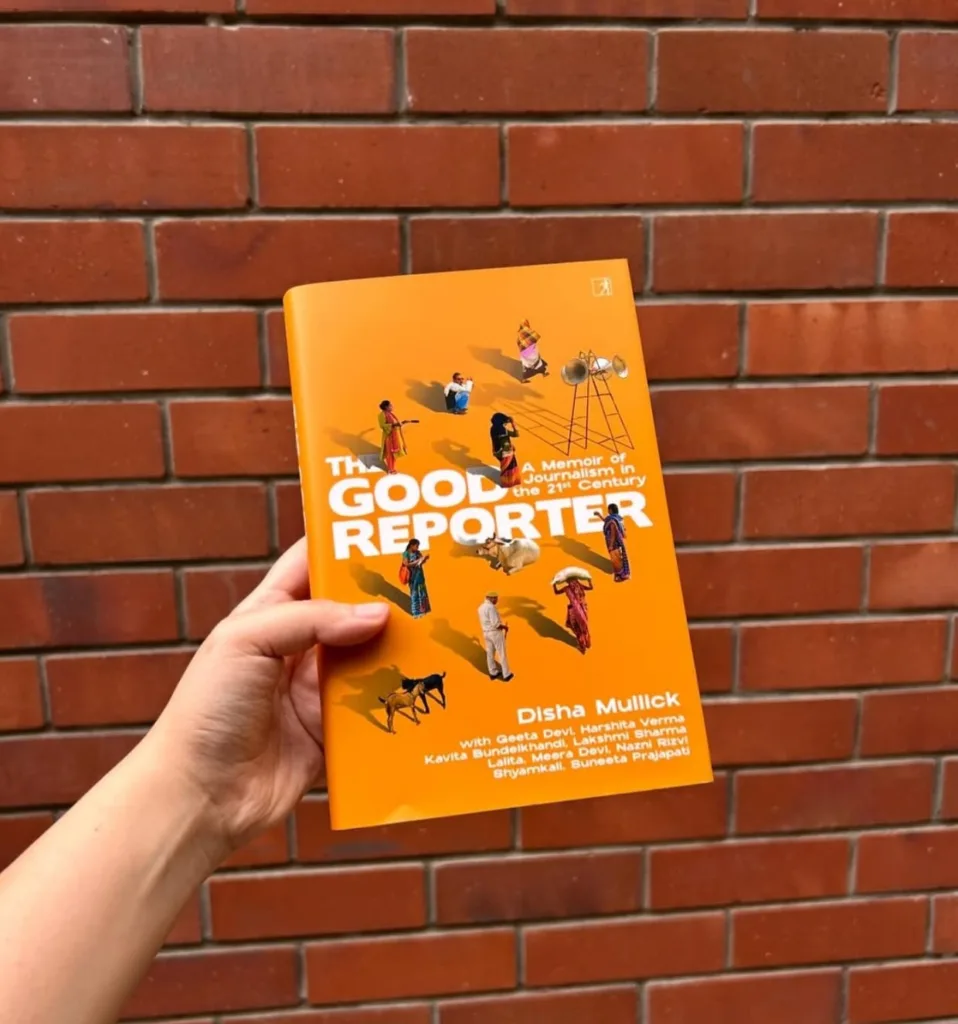
The Good Reporter: A Memoir of Journalism in the 21st Century, a collective biography of the women-led news organisation Khabar Lahariya, is not just a collection of random memoirs by a group of women journalists. It places rural Indian women at the heart of journalism and attempts to tell the story of the country itself, through both hyperlocal reports that illuminate larger systemic issues and stories of national importance seen through the eyes of these rural women.
There were many of them—some without basic literacy, some from semi-rural pockets who understood how village life worked, and a few from urban areas. But all of them dared to bring out stories that mattered.
Ten women take the pen.
‘Ten women take the pen to interrogate, and then shape a portrait-in-progress of complex, flawed, tenacious journalists and the continuing collateral damage of radical acts’, reads a line from the book’s introduction.
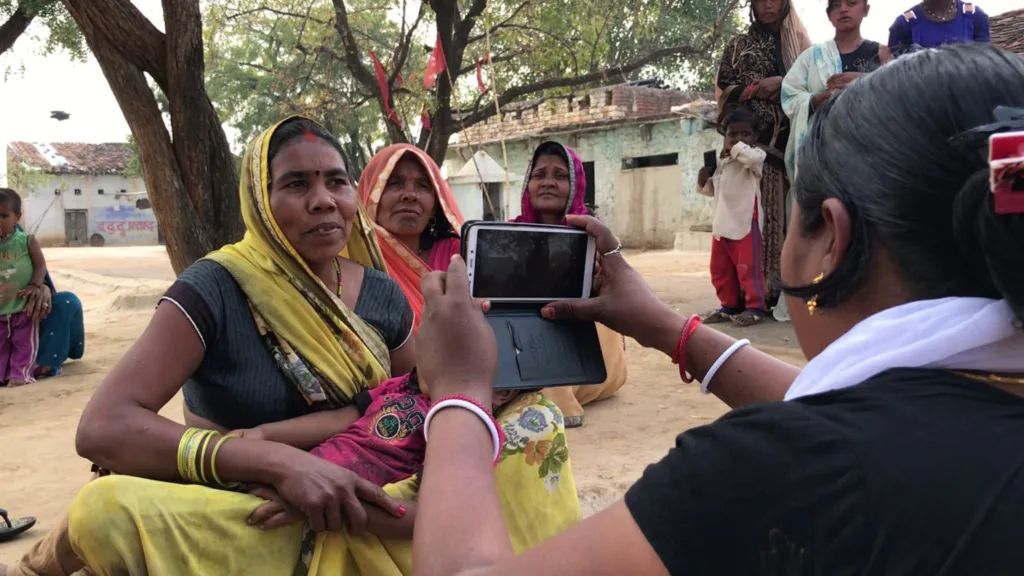
Most of the time, reporters are mere observers of the events they report on, as it traditionally ensures objectivity. But at Khabar Lahariya, since it started as a print newspaper, the reporters have been an intimate part of those very events.
A dowry death may be just another statistic for the national media, but here, the reporters themselves might be survivors of similar experiences. They know how a dowry death is not merely a ‘suicide’, but the culmination of a chain of events that pushed a woman towards it.
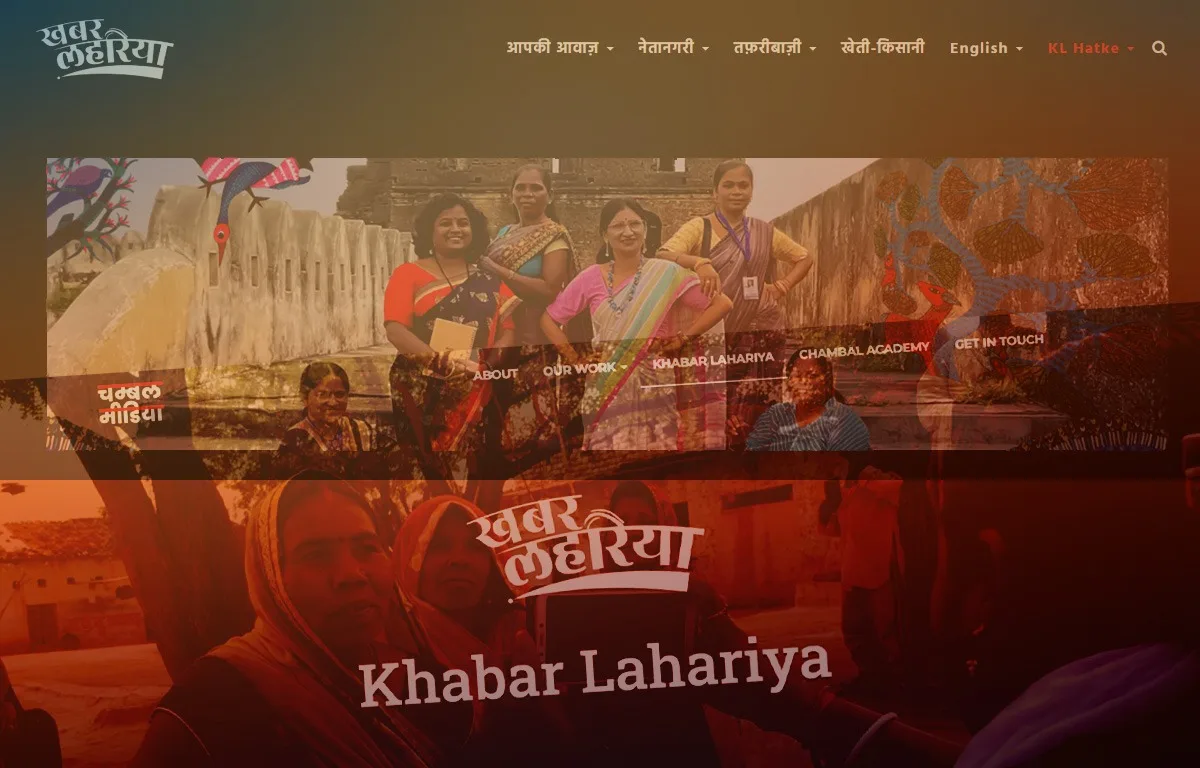
That is exactly why Khabar Lahariya describes itself primarily as a ‘feminist media’ organisation. The one qualification required to be hired there is to be a woman; the organisation provides all the necessary training thereafter. The current Bureau Chief, Geeta Devi, had studied only up to the eighth standard.
The questions of caste, body and business
A 2022 report jointly published by Oxfam India and Newslaundry found that nearly 89% of leadership positions across the seven English television news channels it studied were held by upper-caste journalists. None of these positions was occupied by members of the Scheduled Castes (SCs), the Scheduled Tribes (STs), or the Other Backward Classes (OBCs). Similarly, all leadership positions in the seven Hindi news channels analysed were occupied by upper-caste journalists.
The report also found that nearly 92% of leadership positions in the newsrooms of the six English newspapers studied were held by upper-caste individuals, with no representation from SCs, STs, OBCs, or religious minorities.
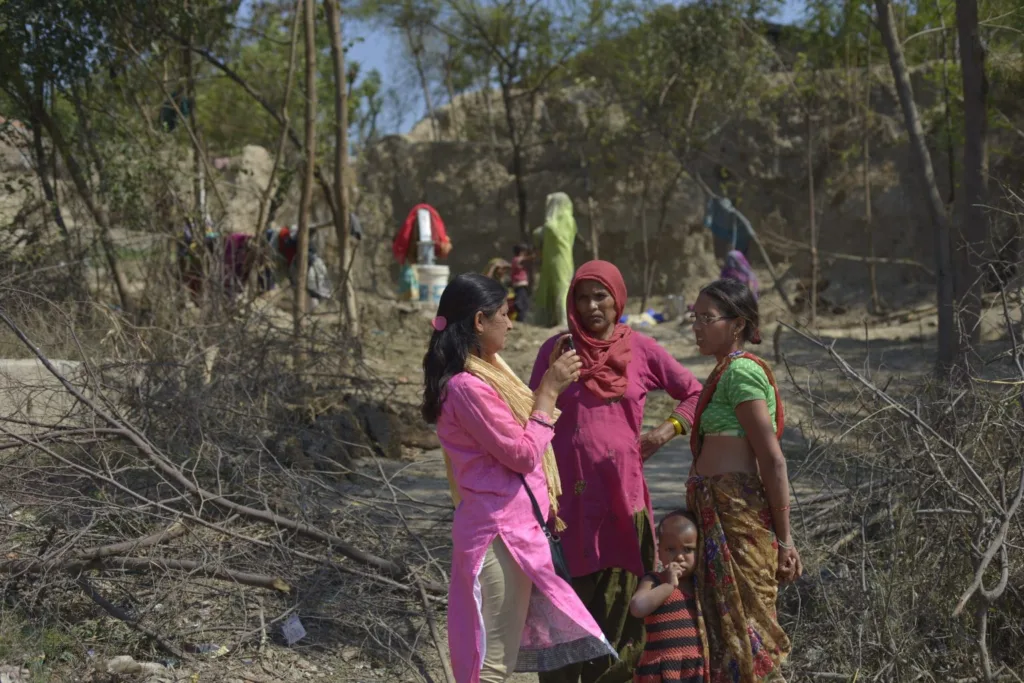
These facts present themselves in sharp contrast to the realities encountered by Khabar Lahariya. The journalists write about instances in which they identified the underlying dimensions of caste in events where ‘ordinary upper-caste’ reporters could see none. They also recount instances of severe internal conflicts; the uneasiness they felt when they were mistaken for upper-caste women because of their names, appearance, or surnames, but could not correct the assumption because the practical realities of the situation demanded otherwise.
Instagram/Khabar Lahariya
Such moments also reminded them of the long history of humiliation they had endured. Confronting those experiences in a professional setting, day to day, was not easy. As they write, ‘The everydayness of caste, in our lives and memories, embedded in our bodies and the ground beneath us, made it a challenge to write about. Caste violence was one thing, but living caste in its matter-of-fact way was a humiliation we had worked hard to forget.’
They also observe that it is easier to speak about their experiences as women than about the discrimination they have faced as Dalits. Caste was not just a reality in rural spaces, propagated by people with ultra-regressive mindsets. The reality points to a much more sophisticated form of discrimination—one that is hard to name or describe, ‘disguised beneath a sheen of upward mobility, liberal feminist friendships, and diversity’.
It is a ‘simmering reality’ in both the rural beats and the urban workplaces they occupied. It points to a social reality otherwise invisibilised by the mainstream media, in which the identities of those telling the stories matter in how those stories are told.
A reporter, in one of their workshops, recalled an instance in which she went to a Chief Medical Officer’s house for a soundbite. When she went there, he took her inside and grabbed her from behind. He also asked her to come to his room, but she refused and fled.
The same reporter also recalled a time when an officer from the Irrigation Department, at the very moment he saw her (mind you, he was at his official desk), slipped his hand under the desk and kept stroking himself while watching her. She didn’t dare to tell anyone. Many others shared similar experiences. Of misconduct, explicit sexual advances.
Of Fear.
Fear of not knowing what to do, whether to tell anyone, or whether it was their own mistake.
The book also speaks extensively about the physical vulnerabilities faced by women journalists, often overlooked and rarely spoken about.
Another facet was their business—their difficult transition from a hyperlocal, print-only journalistic venture to the larger canvas of digital journalism. The world of viewership, collaborations, and revenue was so alien to them. All of this is told in a way that maps the internal, external, and professional worlds of these women journalists. Complexities at their finest, without erasing contradictions of any sort. Even stories of joy and friendship amidst everything.
Though I have read a few memoirs by journalists, this is where it sits differently. It is never a linear narration of the events they reported, but rather a place within such narratives, how their identities shape them, and how important it is to frame them correctly. This is where the intersection of their identities and multiple vulnerabilities matters.
Maybe this might be the strongest resistance to fascism as we see it today. Rural women, in languages long ignored by many, tell stories of issues that do not stand the test of TRP ratings or the apathy of the ruling class.
What I have tried to give here is a glimpse. Whether you are a journalist, a student, or a layperson, The Good Reporter is an experience on its own. And you ought to experience the world of these women on your own.