Decentralise or Decline: The South’s Warning
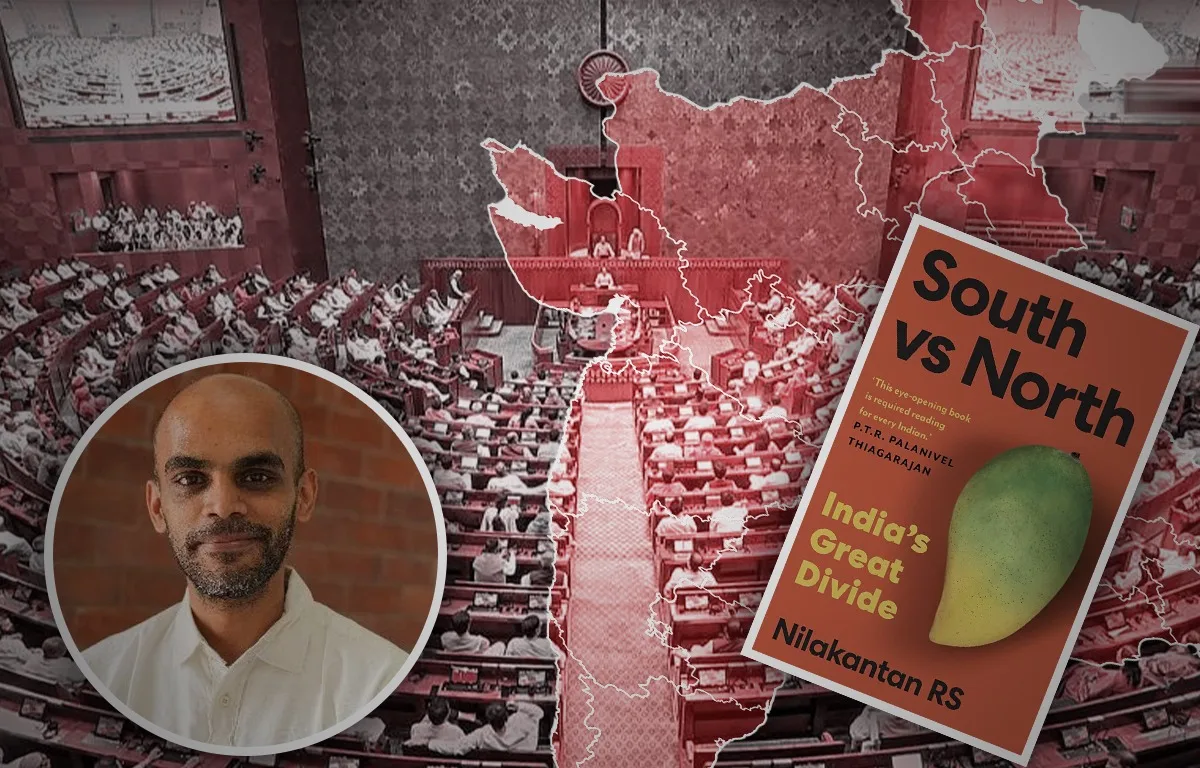
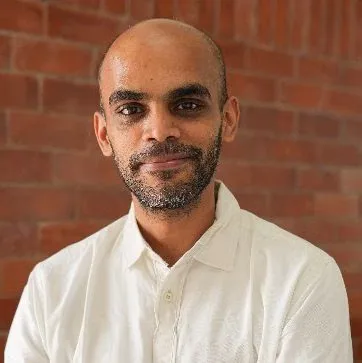
Though the move for delimitation has for now, failed in Parliament, the concerns it raised about federal balance, representation, and transparency remain unresolved—especially for the southern states. In this conversation with Shahina KK, author and commentator Nilakantan RS, known for his work South vs North, examines the political timing behind the proposal, the potential shift in power toward the Hindi-speaking belt, and the deeper structural questions about India’s federal model. He argues that the only viable path forward is deep decentralisation and a significant reduction in the powers of the central government.
How do you view the sudden introduction of these bills without waiting for the assembly elections to conclude, especially when Tamil Nadu and West Bengal are going to the polls? Why the hurry, and what do you make of it?
Obviously, this is not in good faith. BJP has been doing this for a while now, right? They introduce bills which are secretive. They don’t give MPs sufficient time to read and understand the bill on which they are voting for. And – This is, like you said, the timing of it makes it so suspect in the middle of election with like a sort of a suddenly called session, wherein they’re going to change the way in which our democracy works and the entities have been given , like whatever 24 hours to basically understand what is in the bill. So my guess is as good as yours in terms of the political strategy. It appears that they suddenly woke up and realized, I don’t know.
Why now? And why not next week is a question that I can’t answer. But why 2026? I can see that they expect the 2026 census to come out in a year or so. The data will be made available and they probably want to say that it will be on a pro-rata basis but at a future date .The delimitation commission can come into existence and use the latest census which will be a disaster for South India. They have been doing it now probably because they have sufficient time for the 2029 elections.
In the present form, the actual representation of the South will come down even if the numbers are increased. The North Indian states together may be having very few seats short of majority in Loksabha . How disastrous is it for South India?
In effect, South India had 24% of the overall Lok Sabha seats. And North India had about 37. If you take 2011 census it becomes 44% and the 24% becomes 20%. If you take the 2026 expected data, it will be even worse in which North India will go from 37 to 45 or 46 and South India will come down to 19%, right? Now, it depends on which data they choose to take. Whatever the data that they choose to take, the relative share of South India in the House is going to shrink from somewhere around 24% to somewhere between, 19% and 20%. The share of North India is going to go from about 37% to somewhere between 43% and 45%. Whether they take 2011 data or 2026 data is the question. I don’t know what they’re going to do, because it’s very secretive. In a liberal democracy, you can’t have such secrets.
They can’t randomly introduce laws without giving people sufficient time to understand them, nor can they do so without transparency. More important is that the Prime Minister or Home Minister cannot give guarantees and assurances randomly. If those assurances are not there in the bills, what is the point? What is passed in the Parliament is law, not what Prime Minister or Home Minister promises orally.
If you merely look into the proposed bill, it says a few things. One is that they’re going to increase the current number of seats from 543 to 850. Second is that they are going to have a delimitation commission, which will have absolute powers, and it will also have the ability to define and decide on what – quote-unquote population is. So we can’t really say.
A couple of years ago, when Amit Shah visited Coimbatore, he said South Indian states had nothing to worry about and that delimitation would be done on a pro-rata basis. What happened to that assurance?
The first iteration may be pro rata, because they will not have the delimitation commission and subsequent actions. But people often forget that the second iteration might be very soon where the delimitation commission can actually do whatever it wants, because that’s the nature of it which cannot even be challenged in a court. So whatever the delimitation commission says, goes. They can basically say that now we are expanding 540 into 850, the same ratio, and it is 2026. Right before the elections in 2028, they can say that they are going to take 2026 data.
Apparently this is kind of a shifting of power towards the Hindi speaking belt, right? That is very obvious.
Yes, absolutely. South India has already been at a disadvantage. It does not receive sufficient financial resources to sustain itself at levels commensurate with its prosperity, due to the way the Indian Union functions. However, it has at least benefited from relatively greater political representation on a per capita basis. And therefore,for long, South India could argue that at least, for slightly better representation on a per voter basis, the cost that it paid was significant. Now what this makes it obvious is that it will neither have political representation nor will it have financial resources. It will have nothing.
In the proposed form, we will have a Parliament that does not even require South Indian votes to get a bill passed?
Yes, that’s already the case for the most part but this is going to be even worse.
In such a situation What constitutional or political safeguards are we demanding to protect this federal balance? Or what is the solution?
Solution? The delimitation idea is never going to be a solution. The actual solution exists outside of this. It requires a significant weakening of this institution called the central government. It requires extreme decentralization. It requires a situation in which state and local governments operate largely independently of the central government in matters of funding, action, and governance. It would also require the Indian Union government in Delhi to function more like the European Union, with very limited powers. The State governments should act like the national governments of various countries in Europe. Only then will we have some semblance of, whatever it should be. The union government in Delhi should basically be in charge of the military, defense, foreign policy, and maybe the RBI macroeconomic policy. Beyond that, it should do nothing.
A very fancy idea, I would say. So when we see it from a practical point of view, how can we counter this argument that delimitation is necessary to uphold one person, one vote? How do you respond to this very idea of one person, one vote? Because on one side, theoretically speaking, there is an issue of fairness to the people of North India. So how do you respond to that?
Propose decentralization, right? No person in Tamil Nadu or in Kerala wants the person in Uttar Pradesh or Bihar to have less value for their vote. Please have all the value for your vote. It’s just that do not use that vote to oppress us. That’s the limited point that we are trying to make, right? It’s a zero-sum game. At the end of the day, regardless of whether you have 543 MPs or 850 MPs or any number of MPs, the point is that the purpose of an MP is to vote in Parliament and voting is a zero-sum game. And therefore, the point that I’m making is, we should make the power of that vote so much less that nobody cares about that power anymore. As long as Delhi has very limited powers, anything like one person one vote is a non-issue.
We entered into a situation where if you take the state of Kerala and the state of Rajasthan, in the last 50 years, Kerala’s population has grown by about 55-60%, whereas Rajasthan’s population has grown by about 180%. So, these two states cannot exist in the same union. or at least have the same policymaker and have the same system working for them because the primary resource in a democracy is people. If the rate of population growth is so dramatically different, they obviously can’t be part of the same governing structure, which is why the solution here is to break that governing structure, send the power back to the state capitals. and almost treat them as like, you know, separate countries with as little overlap as possible.
What is the political strategy that southern states should adopt collectively?
When Nirmala Sitharaman presents her budget, a look at her last four or five budgets shows that nearly 80–90% of total expenditure falls under subjects that are either in the State List or the Concurrent List. These are areas where funds should ideally be devolved to the states, allowing state governments to take charge. Instead, these decisions are being made centrally from Delhi.
There are hundreds of such schemes run by the Government of India, many of them together account for a large share—around 80–90%—of total budget spending. What the southern states should demand is this: the Union government should begin phasing out these centrally run schemes and instead transfer those funds directly to the states, following the same formula recommended by the Finance Commission. That formula may not be entirely fair, but at least the spending would then be carried out by the states, rather than being controlled from Delhi. We should also try and look at a change in the tax collection and devolution structure.Currently what happens is the union government collects two-thirds of the taxes and has one-third of expenditure, whereas the state governments have one-third of the taxes collected and have two-thirds of the expenditure. So what we need to do is cut the union government down to size.
Theoretically speaking, you are right. But will it be considered separatism? Because the kind of ideas that you propose, it requires a lot of courage and political conviction.
Why did the USSR or rather the former Soviet Union, why did it splinter? Forget the fact that communism failed and America had a hand in it, But one important factor was also that all the Eastern European countries which were part of the Soviet bloc went against the Russian hegemony .Those countries were treated like what south india has been treated today. The fall of the Soviet Union is the example that should worry us. Considering that, asking for greater devolution is not separatism. If we don’t ask for it now, what we will end up with is actual splintering of the country. What would you prefer? decentralization or actual splintering?
How do you see this linking of women reservation bill to this delimitation exercise?
I don’t even understand why these two are linked. it’s very simple. None of these men want to lose their seats. This is just like combining two completely unrelated things. It’s just absurd.
(Disclaimer: OBC encourages a diversity of ideas. The opinions expressed in articles may not necessarily reflect our editorial position.)
Nilakantan R S
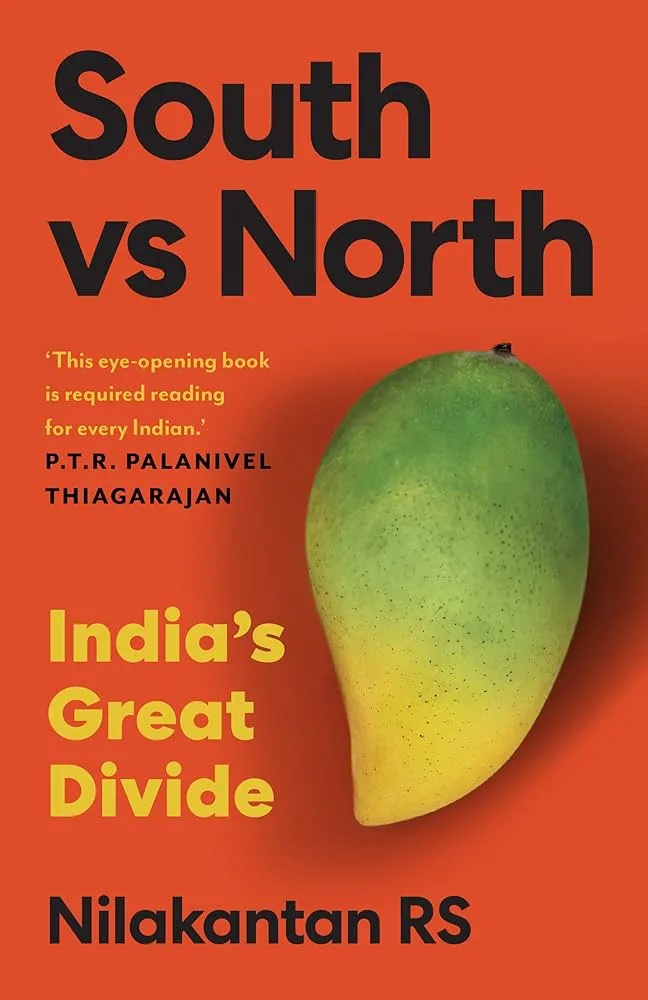
Nilakantan R.S. is the bestselling author of 'South vs North: India’s Greatest Divide'. Trained as an engineer at Clemson University, he is the Chief Data Scientist at one of India’s largest fintech firms.
View all posts by Nilakantan R S