
Power, Protection, and the Price Women Pay
When political influence meets sexual violence, the scales of justice are skewed. From MLAs to Ministers, political power can turn grave crimes into “scandals” and survivors into targets. They are forced to confront not just their abusers but entire systems that protect them. This report delves into the systemic protection that powerful men receive, the manipulation of legal processes, and the courage of women challenging these entrenched hierarchies in their fight for justice.
On December 29, a special court for elected representatives in Bengaluru discharged former minister and JD(S) MLA H.D. Revanna from sexual harassment charges. The case was registered in 2024 based on a complaint by his former domestic help, who alleged that Revanna sexually harassed her between 2019 and 2022 at his farmhouse. In August 2025, the court had convicted Prajwal Revanna, his son, in the same case.
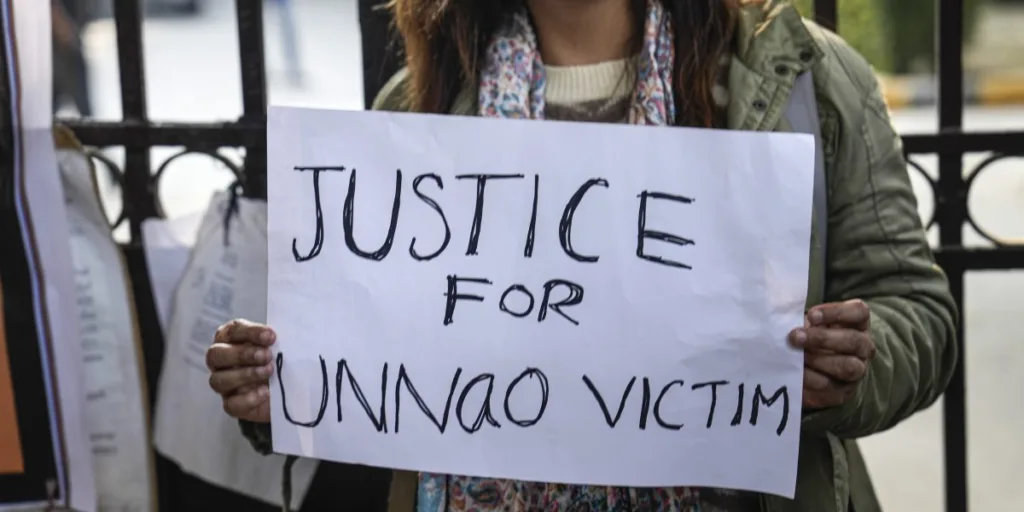
On the same day, the Supreme Court stayed the Delhi High Court’s controversial order suspending the life sentence of former BJP MLA Kuldeep Singh Sengar, which had granted him bail in the 2017 Unnao rape case. Speaking to the media, the survivor said that she would continue her fight for justice. Scores of protesters had gathered, along with the survivor and her family, in front of the court to protest the bail order.

Power operates in society in myriad ways. It grips your mouth shut and wraps you in fear at the very moment you are expected to stand up for yourself. In cases of sexual assault, especially when the perpetrators come from the higher echelons of society, questions like “Why didn’t you complain earlier?”, “Why did you allow it to happen multiple times?” and “Why didn’t you run away?” turn into cruel ironies.
Each of them circles back to a single answer: fear.
Sexual violence is upheld by various systems of oppression. Those who live at the intersections of these oppressive systems experience the highest rates of sexual violence. From politics to cinema to religious institutions, the shadow of power looms over victims and survivors of sexual violence, preventing them from filing formal complaints—or even speaking to a trusted friend. It often takes the form of prolonged legal battles, as the accused possess more than enough resources to hire the most experienced lawyers, influence people in positions of authority in their favour, and steadily erode the survivor’s morale through insidious ways.
When abusers wield significant political power, the course of such cases can be manipulated, often altering—or even overturning—their natural legal trajectory.
“David versus Goliath”: The Revanna Case
In its judgment convicting Prajwal Revanna, the Bengaluru District Court highlighted the acute power imbalance between the accused and the victim. Judge Santhosh Gajanan Bhat noted that the victim was a maid in the accused’s household and that the case involved a woman taking on her own “master,” who was “politically, economically and socially powerful,” with their positions being in no way comparable. The court described the struggle as a “David versus Goliath” fight.
Prajwal Revanna was a “Goliath” indeed. The grandson of former Prime Minister H.D. Deve Gowda and the son of H.D. Revanna, Prajwal was elected in 2019 as a Member of Parliament from the Hassan constituency. At the time, he was the youngest MP from Karnataka.
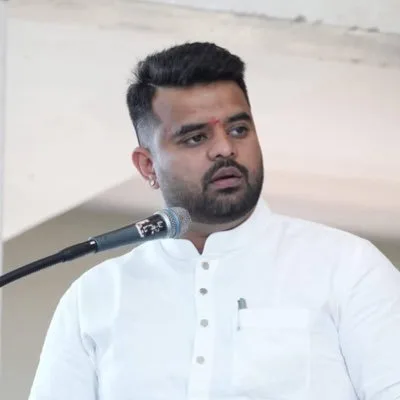
Videos of Prajwal Revanna’s abuse of at least dozens of women in Hassan have been circulating since April 2024. Four of them filed separate cases against Prajwal, in one of which he has now been convicted and is in jail.
The Revanna case has become a textbook example of the many ugly ways in which power is manipulated—both to commit grave crimes and to silence survivors. All the women Prajwal raped were from the lower strata of society, whom he allegedly threatened by invoking his position. In an interview with The News Minute, one of the survivors said, “He said that he is an MP and that if I didn’t listen to him, he would fire my husband and me, and also rape my daughter.”
As Revanna walks scot-free in the case, there are potential risks, given that he had previously attempted to kidnap the survivor.
Activists have often raised concerns that unchecked power, when powerful persons become perpetrators, can lead to its acute abuse—through attempts to intimidate survivors and their families, influence witness statements, or tamper with evidence. Multiple such attempts have reportedly been made in this case.
Rape, Murder of Kin, and the Machinery of Power: The Unnao Case
In her book Sexual Revolution: Modern Fascism and the Feminist Fightback, British journalist and author Laurie Penny writes that authority becomes abuse when it cannot be challenged without immense personal cost. “To name someone as your abuser is a direct challenge to power; the more powerful the abuser, the more perilous the challenge,” she says.
For the survivor in the Unnao rape case, everything that followed after June 4, 2017—the day she met MLA Kuldeep Singh Sengar at his home to discuss a job offer—came at a grave personal cost.
The 16-year-old was allegedly kidnapped and raped multiple times by the former MLA and others. Sengar was convicted in March 2020 and given a 10-year jail sentence.

The Delhi High Court suspended his sentence and granted him bail on December 23. The survivor and her family expressed that they feared for their lives if Sengar were released.
The fear was born of more than one—and deeply unsettling—reason.
His men allegedly gang-raped her for days, administering sedatives to ensure that she could not fight back. After the first FIR was filed on the girl’s and her father’s complaint—without naming Sengar—the police allegedly delayed her medical examination and the dispatch of the vaginal swab to the forensic lab. When they approached the police again, officers allegedly deterred them from naming Sengar. A chargesheet was filed later that month, but it did not name him.
In 2018, Sengar’s men allegedly attempted to intimidate the survivor’s father, beating him severely. Soon after, her father was arrested on a complaint filed by the very men who had allegedly attacked him. While in custody, he was allegedly subjected to continued torture.
Four days later, he died under mysterious circumstances. The day before his death, the survivor’s mother had written to Uttar Pradesh Chief Minister Yogi Adityanath, warning that she feared her husband might be killed in custody. The girl had attempted suicide the same day by setting herself on fire outside the Chief Minister’s residence.
An entire state machinery—meant to protect the survivor’s dignity and provide her with the assistance she needed—was cast into doubt, as her repeated attempts to bring the case to light were thwarted by the very institutions tasked with safeguarding her.
In August 2018, Yunus, a key witness in the death of the survivor’s father, died under mysterious circumstances. A year later, a truck rammed into the survivor’s car, killing her aunt and seriously injuring the survivor and her lawyer. The truck’s number plate was reportedly blackened. Days earlier, the survivor had written to the Chief Justice of India, saying, “People came to my house, threatened me.”
Even today, she continues to be targeted online, facing slurs and abuse after Sengar’s daughter posted on social media claiming her father’s innocence.
Still, she continues to reaffirm her faith in the very system that has failed her. She keeps fighting—on social media, in courtrooms, and on the streets. The question of what might happen to her when Sengar is released hangs heavily in the air, especially when those closest to her have been killed in broad daylight.
A Powerful Wrestler, a Powerful Politician—and Allegations That Went Nowhere
Very rarely does an Unnao or Revanna case unfold. Even more rarely do women—doubly disadvantaged by their position in socially vulnerable communities—stand up to, and take down, powerful politicians. Being trailed, slut-shamed, threatened, and publicly discredited, while simultaneously fighting a legal battle and securing a conviction, is no small feat. In countless other cases, the fight goes nowhere.
Olympic medallists and world champions dragged through the streets and bundled into police vans—the spectacle that shook the country’s conscience in 2023—came in the wake of sexual harassment allegations made by multiple female athletes against Brij Bhushan Sharan Singh, then Wrestling Federation of India chief and former BJP MP.
He was acquitted in one of the cases in early 2025. In a recent podcast, he vowed he shall return to Parliament.
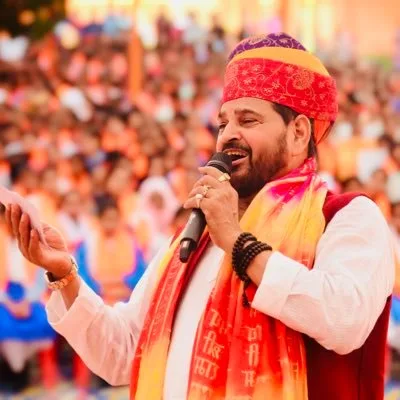
The abuse of power—and the state’s steadfast support for the accused—reveals itself most starkly in what followed. Brij Bhushan was removed as chief of the Wrestling Federation, and his close aide, Sanjay Singh, was appointed in his place. The Kaiserganj constituency he once represented is now held by his son, Karan Bhushan Singh.
Numerous other cases followed the same trajectory. The daughter of a BJP booth president accused Hans Raj, an MLA from Himachal Pradesh, in 2024, of long-term sexual exploitation that she said began when she was 16. Haryana BJP President Mohan Lal Badoli faces an FIR for gang rape, filed on the basis of a complaint by a woman from Delhi.
Scandal vs. Abuse
Various studies have shown how sexual assaults by powerful figures are often framed as “scandals” through media sensationalism and politicization. Headlines tend to prioritize the “elite downfall” over the trauma of survivors, creating space for denial or counter-accusations. This pattern is evident in a recent case from Kerala, where a Congress MLA was accused of rape and forced abortion by multiple women.
When politicians are the accused, the narrative often shifts to portray the allegations as a “political conspiracy”—a standard line repeatedly invoked by those facing such charges. By treating sexual violence as just another campaign hurdle, political figures evade responsibility and perpetuate a system in which the rights of survivors are secondary to maintaining power. This is illustrated by figures like the U.S. President Donald Trump, who has faced over a dozen sexual abuse allegations.
In a country where more than 31,000 rape cases are reported each year, the conviction rate continues to be abysmally low. Rather than allowing abusers to shield themselves through influence, intimidation, or procedural delay, the state should make genuine efforts to ensure that people holding positions of power are held accountable by all available means.