Devotion or Digital Harassment? The Online War on Women at Navratri
Under the banner of protecting tradition, online accounts are shaming, policing and sexualising women at Navratri, even using AI-generated images to do it.
As millions of people across India celebrate Navratri, the nine-day Hindu festival, social media has become a battleground of heated debates on the attire of women.
Many right-wing social media accounts are targeting women with moral policing and hypersexualised comments, while other accounts use expletive language to accuse them of tarnishing the spirit of the festival. Meanwhile, numerous accounts are circulating AI-generated images of scantily dressed women during Navratri, fuelling further controversy.
OBC investigates the online narratives of the harassment and digital abuse against women during the festival.
Patterns of abuse
Moral policing
On 13 September, the X (formerly Twitter) account @SamSiff shared a video of a woman getting ready for Navratri. The post is captioned, ‘Getting ready for garbha Getting ready for pub
’. With over 32,000 followers, the ‘SamSiff’ account regularly targets women by alleging that they attend Garba as if they go to pubs. It uses the platform to circulate misogynistic memes and statements.
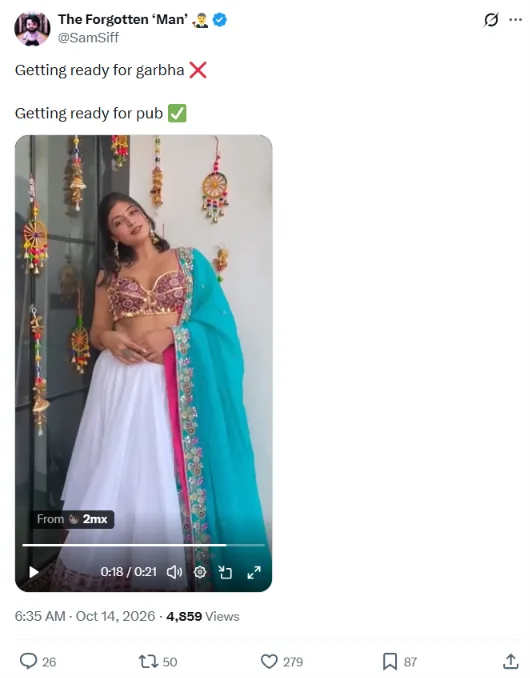
As of 17 October, the post had garnered over 4k views.
In another post on X, an account named SK shared a video of a woman dancing at a Garba night. This Bangalore-based account mentions ‘Men’s Rights Warrior’ in its bio, with the tagline ‘Justice for Indian Men.’ Several other posts related to the Navratri celebrations have also been shared by this account.
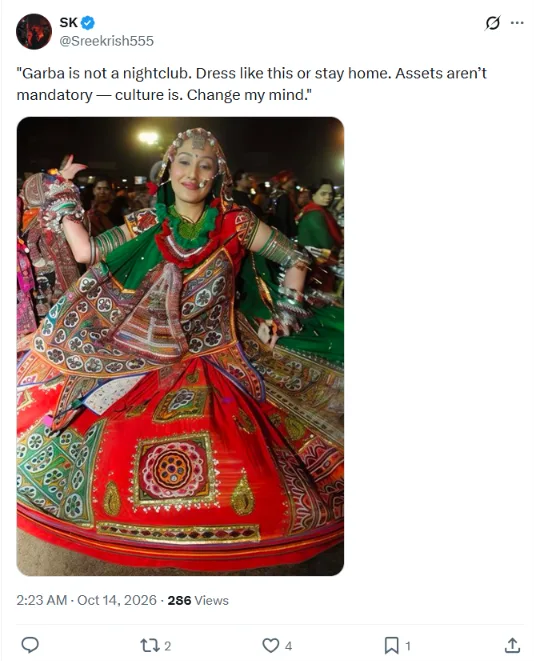
The post is captioned: ‘Garba is not a nightclub. Assets aren’t mandatory- culture is. Change my mind.’
Tradition vs modernity
Many Hindutva social media accounts, particularly those based in North India, have been actively targeting women online. These accounts criticise women’s attire and blame them for destroying the festival’s culture.
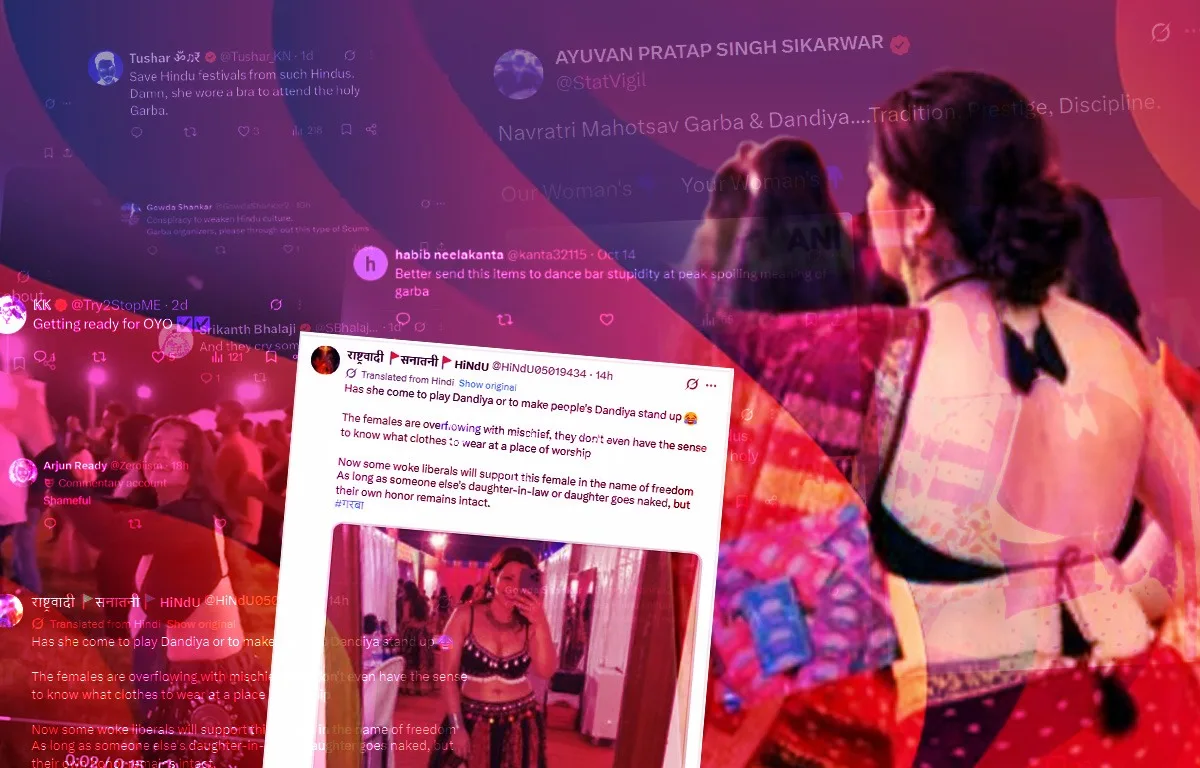
On 15 October, an X user, AYUVAN PRATAP SINGH SIKARWAR
9@StatVigil), shared the video with a caption, ‘Navratri Mahotsav Garba & Dandiya….Tradition, Prestige, Discipline. Our Woman’s Your Woman’s’.
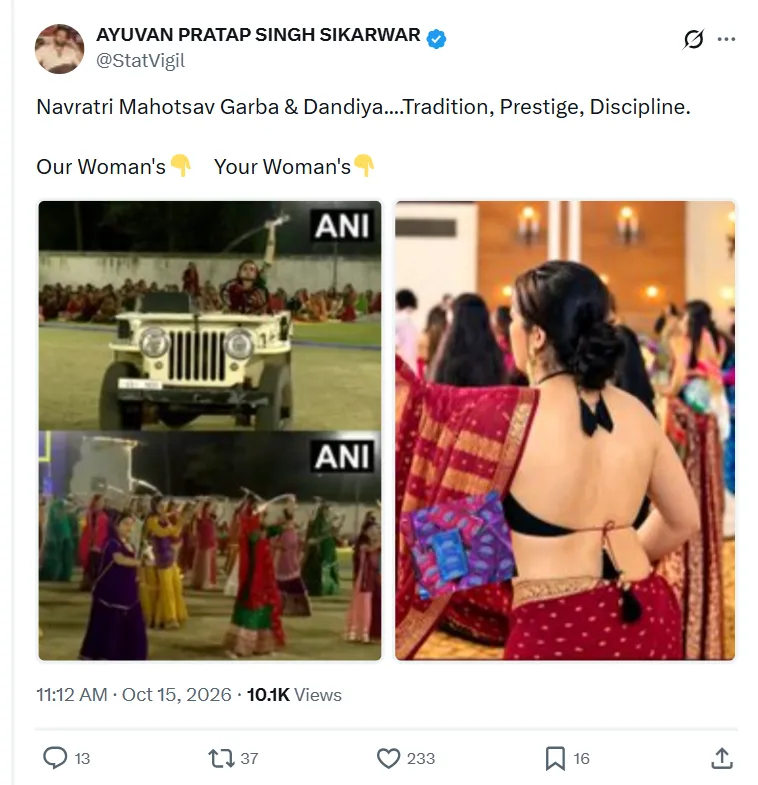
This post quickly gained traction, with more than 10.1k views and 230 likes.
Similarly, a video of a young woman performing the Garba dance went viral on social media. Numerous accounts shared the video of her dancing in a backless blouse and made derogatory comments about it. For instance, on 13 October, X user Daksha Tiwari shared a post captioned: ‘Garba is a festival of devotion, not a platform for obscenity and social media validation.’
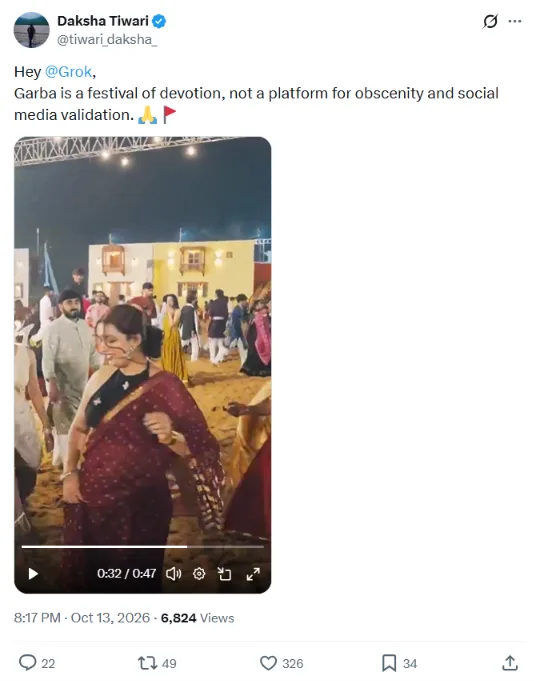
The account is known for sharing numerous misogynistic posts on a daily basis.
‘Garba as a site of dating’
Targeting women’s attire during celebrations, accounts like ‘Bihari Babu’ are spreading narratives that many women wear revealing outfits under the guise of fashion, arguing that the same goes against traditional Garba. The post further alleges that such women share Garba dance videos on social media solely to increase their views and followers.
The video posted on 13 October was captioned, ‘Garba is a festival of devotion, not a platform for obscenity and social media validation. •Girls wearing revealing outfits in the name of fashion and beauty. Garba nights turning into dating platforms. •People using a sacred festival just to make reels and gets Reach •Stop this obscenity in the name of wearing anything, because this is not Garba.’
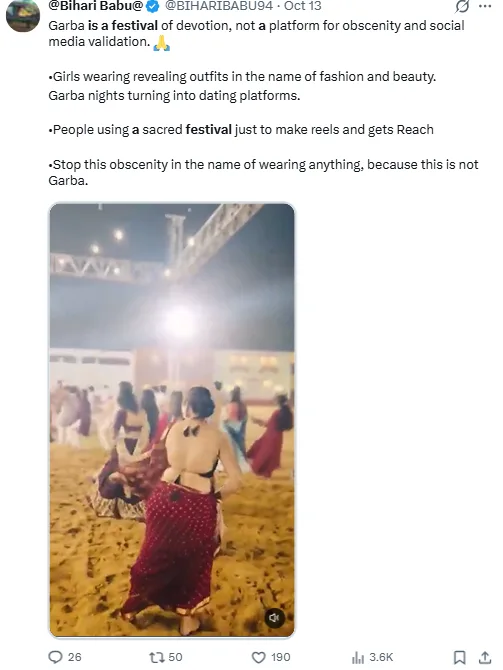
The video has amassed over 3.6k views and more than 190 likes.
‘The surge in condom sales’
Over the past few days, multiple viral posts have surfaced on X claiming that condom sales in India surged during the Navratri celebrations. Videos alleging that discarded condom packets were found in areas near Garba dance venues are also being widely shared on the platform.
A post from an account named ‘Anwishka’ claims that people are turning Garba venues into dating hubs. The account reshared a video originally uploaded by Shubham Kumar, with the caption, ‘People have turned Garba events into full-blown dating hubs. After watching videos like these, it’s no surprise why condom sales spike during Garba. Save Hinduism from these woke people’
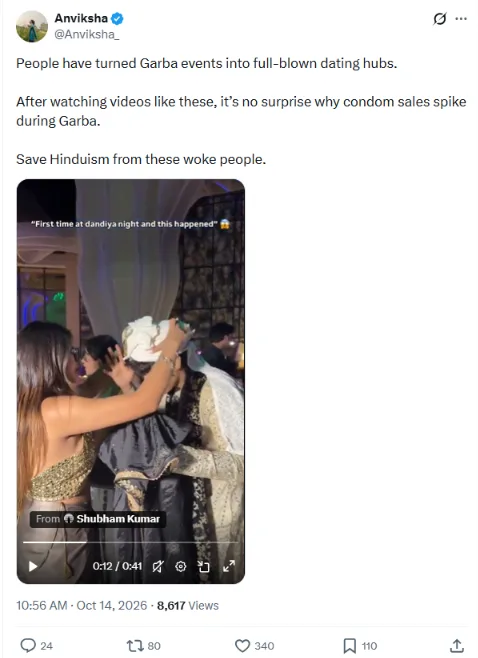
The post has gained 8.6k views and 340 likes.
‘The cry for mandatory dress code’
Many social media accounts are urging women to follow a specific dress code during Navratri celebrations. These accounts say that Navratri attire should match what people typically wear when entering a temple.
On 17 October, an X user, @Annju_here, shared the video with a caption, ‘ There should be a proper dress code for entering Devi Maas’s Garba pandals like in our temples.’
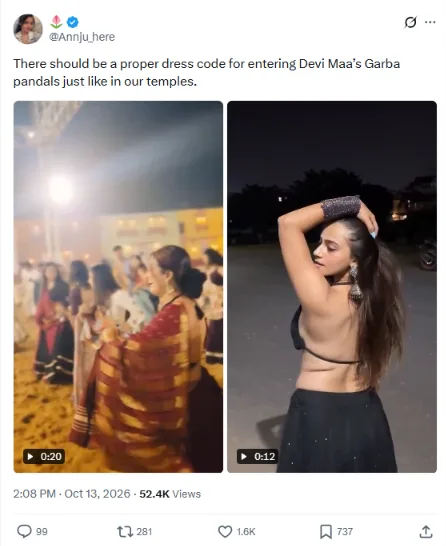
As of 17 October, the post had amassed more than 52.4k views, 1.6k likes, and 737 reposts.
On 13 October, an account named ‘Nitish’ published a post urging the government to ban backless tops and sleeveless attire during Navratri celebrations.
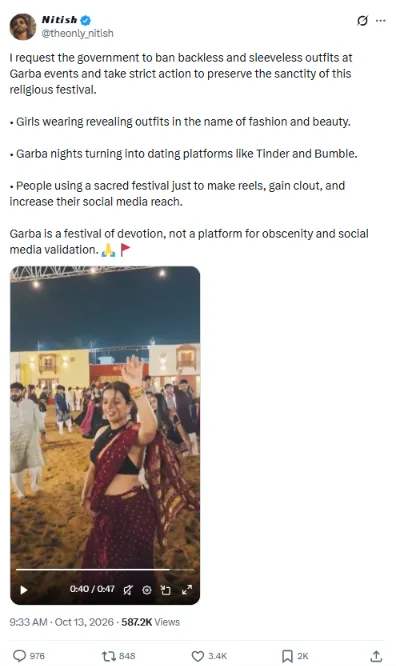
As of 17 October, the post has received 587.2k views, 2K saves and 3.4k likes. This account has 5,660 followers and frequently shares negative comments and videos about women. It’s active in right-wing online spaces and often targets women in modern attire, using conservative values to criticise how women act and dress in public.
AI-generated images
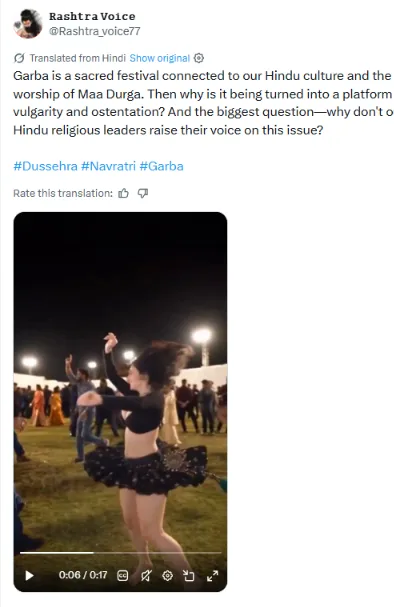
Numerous X accounts have shared AI-generated images related to Navratri celebrations. One right-wing account called ‘Rashtra Voice’ posted a video showing a young woman in black attire that objectified her body. Many users, unaware that the video was AI-generated, shared it further.
The post was captioned, ‘Garba is a sacred festival connected to our Hindu culture and the worship of Maa Durga. Then why is it being turned into a platform for vulgarity and ostentation? And the biggest question—why don’t our Hindu religious leaders raise their voice on this issue? #Dussehra #Navratri #Garba’
Another popular post was shared by the X account Prafull Gangrade, who used offensive language to target women. The post was captioned, ‘ I am not against women who carry themselves with dignity in public events like garba where decency and clothing is more important for maintaining the dignity of events. But these feminist jeeta would not understand The concept.’
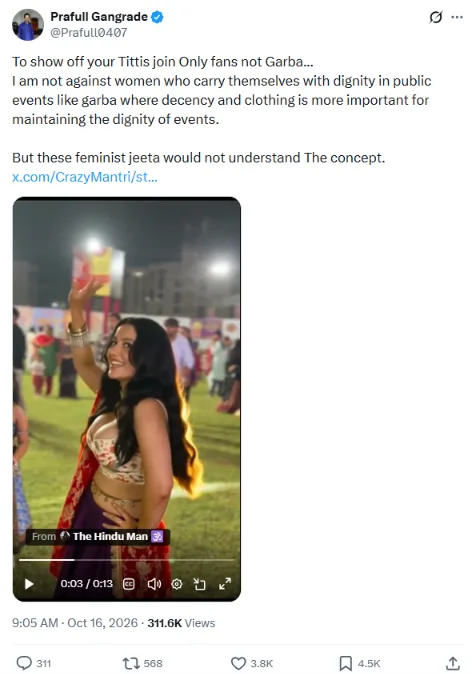
The video, originally posted by an account called The HinduMan, has gained 311.k views, 3.8k likes and 4.5k reposts.
OBC used Hive AI to assess whether the video was AI-generated.
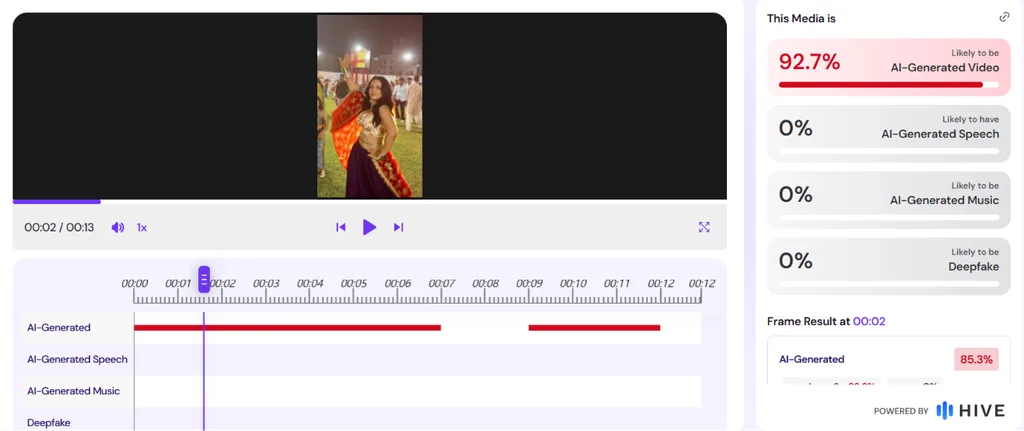
The results estimated that the video had a 92.7% likelihood of being AI-generated.
Although several users flagged the video as AI-generated in the comments, it has been viewed by hundreds of thousands of people. Various other social media accounts are similarly using AI-generated images online to demean and harass women.
Slut shaming
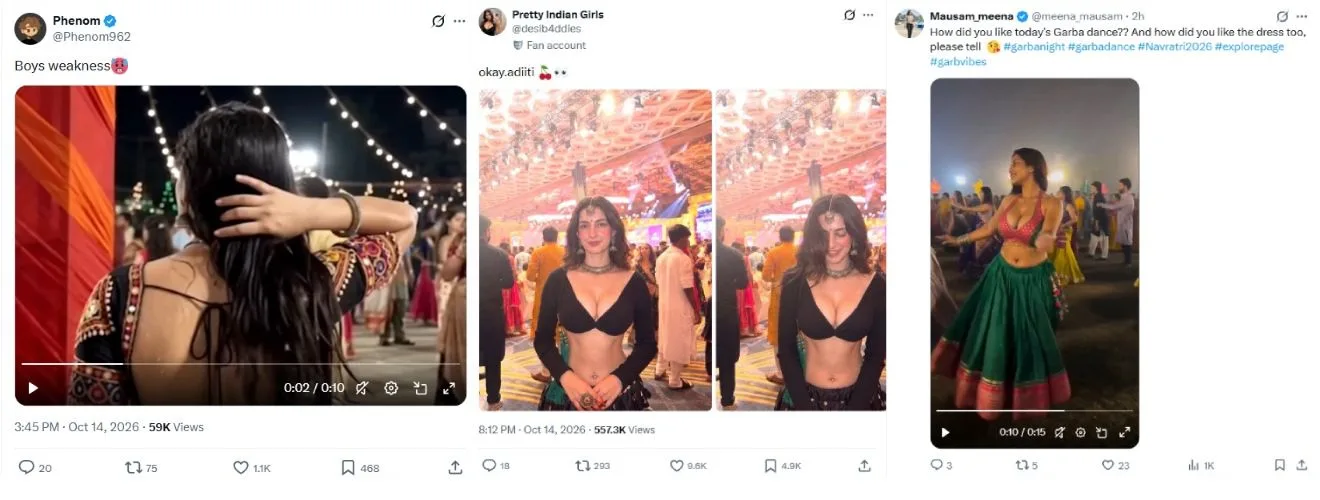
We also found a pattern of targeted slut-shaming towards women participating in Garba celebrations. Many social media accounts attacked female attendees by questioning their clothing and character.
On 5 September, an X user, Rahtrapathi Sanathani Hindu, shared a photo showing a woman in traditional cloth taking a mirror selfie with the caption, ‘Has she come to play Dandiya or to make people’s Dandiya stand up. The females are overflowing with mischief, they don’t even have the sense to know what clothes to wear at a place of worship. Now some woke liberals will support this female in the name of freedom As long as someone else’s daughter-in-law or daughter goes naked, but their own honor remains intact. #गरबा’.’
.
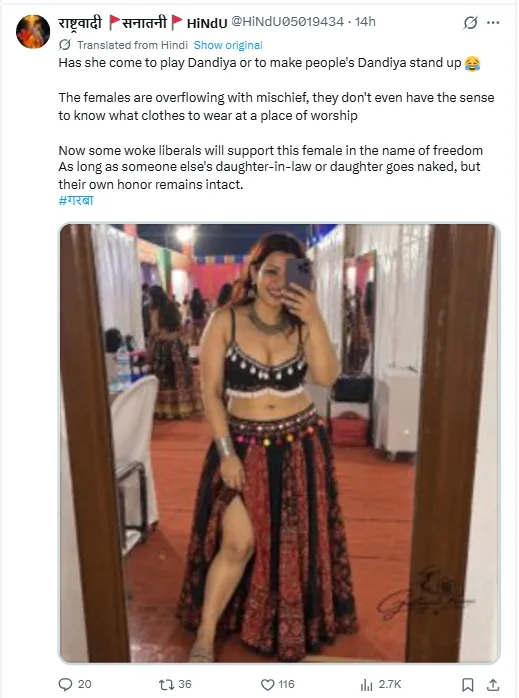
The account, which has 98.1k followers, is a right-wing account that regularly attacks left-wing ideology and focuses on festival tradition and culture.
At the same time, some users on X have shared posts calling for a complete ban on dance events during Navratri. For example, the account ‘Hindu Nation’ has posted about this.
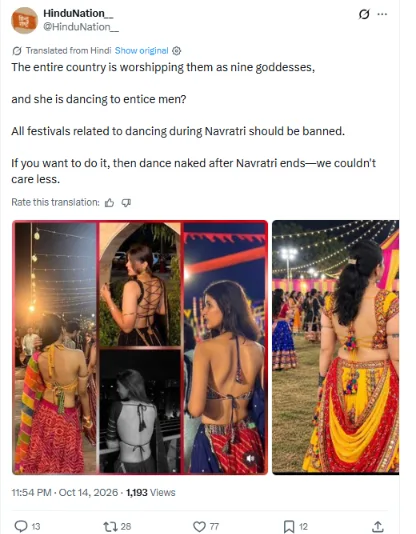
With over 18,000 followers, this X account frequently shares right-wing Hindu content. It has previously published numerous posts about Navratri celebrations, and it also features posts targeting the protests in Delhi.
Hate and polarisation
Across various social media platforms, comment sections under posts featuring women in Navratri celebrations are frequently filled with slut-shaming comments and ‘asking for it’ narratives.
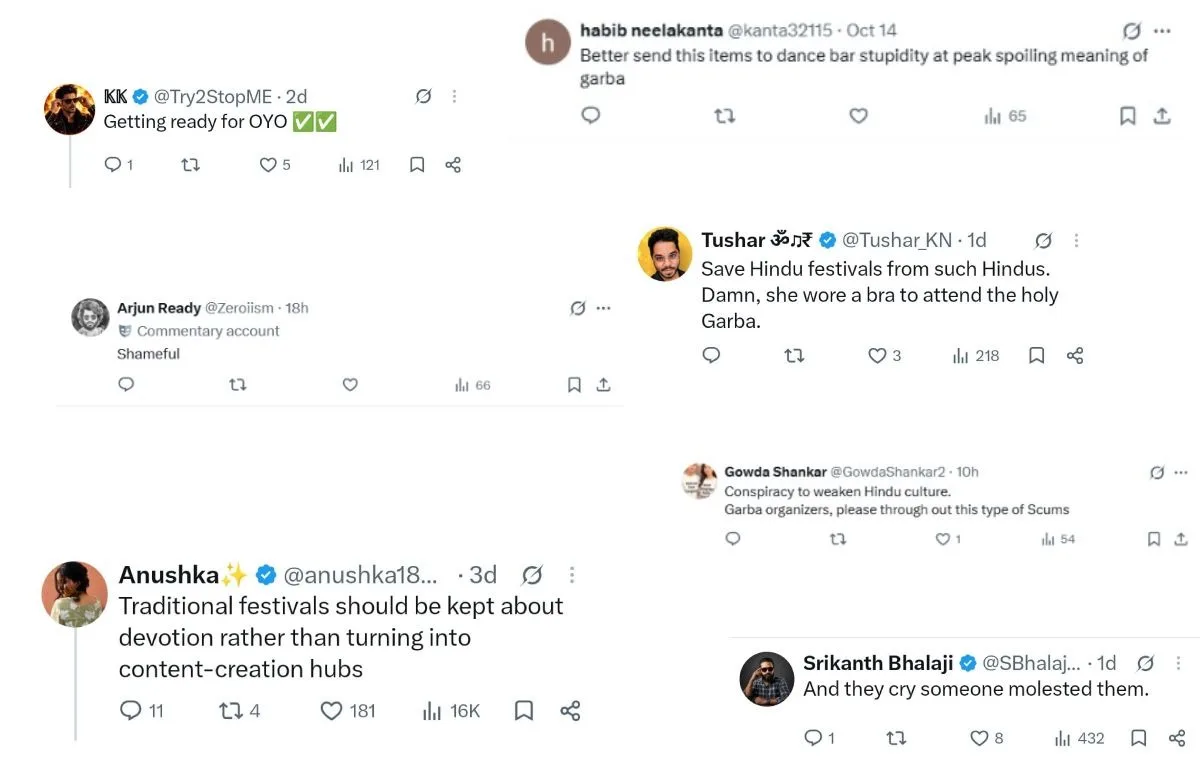
One user commented, ‘Traditional festivals should be kept about devotion rather than turning into content-creation hubs.’ Another user remarked, ‘Better send this items to dance bar stupidity at peak spoiling meaning of garba.’
Some comments were negative and hostile. One user blamed migrants for the behaviour, stating, ‘What makes you think they are Gujarati and not outside population migrants or working in Gujarat?’ Many other accounts used explicit language that objectified the women as prostitutes. Another user claimed it was meant to entice Muslims, writing, ‘This is what attracts all the Muslim men to Garba. They think it is mujra. Women look for new ways to show their skin.’
The OBC investigation highlights how ongoing online trends weaponise a traditional celebration against women. Many right-wing accounts target women’s modern festive clothing and public participation as signs of decline and disrespect for Hindu tradition. At the same time, many accounts use AI-generated visuals of women, turning them into targets of online outrage and objectification.
The accounts use various types archetypes, some as moral protectors, others as sexualised women. However, they resort to the same tactics of traditional values, mass shaming, and claims of “obscenity” to turn a community festival into a space for gender-based policing and online harassment.
The irony is hard to miss. Navratri has always been about honouring the divine feminine, celebrating women’s agency, and bringing people together through devotion and dance. Yet, the objectification and surveillance of women say more about the fears within the Hindutva male gaze than about the festival itself.