
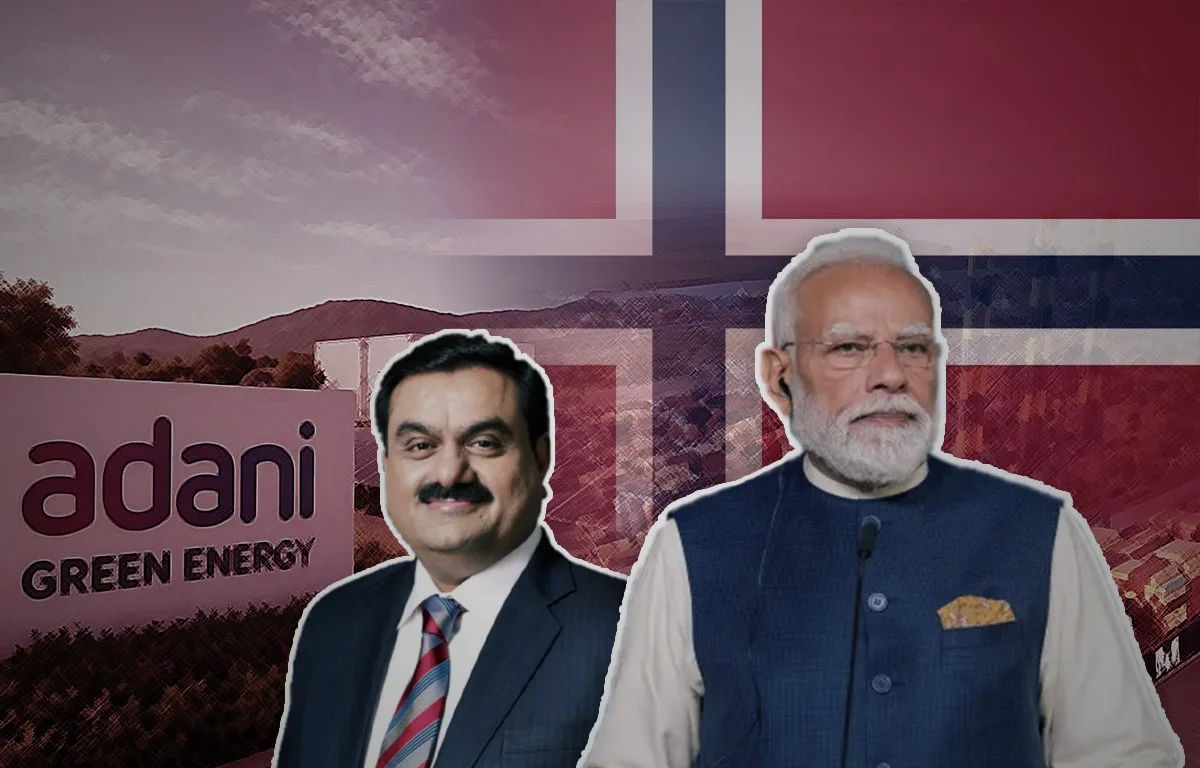
The Oslo Debate: Modi’s Norway Visit and the Long Shadow of Adani
Rahul Gandhi called it a personal lobbying trip, while the government described it as landmark strategic visit. When Narendra Modi arrived in Oslo on May 18 — the first Indian prime ministerial visit to Norway in 43 years — the trip was called a diplomatic milestone. How did the controversy surrounding the Adani Group follow Prime Minister Modi all the way to Norway?
“Did Norway agree to your personal request?”
On May 19, as Prime Minister Narendra Modi was wrapping up the two-day visit to Norway’s capital, Oslo, Congress leader Rahul Gandhi fired off a pointed question on X. “We get very good information these days”, Gandhi wrote. “Modi ji, did Norway agree to your personal request to remove Adani from their pension fund blacklist?”
The post came with an infographic juxtaposing two dates: February 27, 2026, when Norway’s sovereign wealth fund formally dropped Adani Green Energy Ltd (AGEL) from its investment portfolio over concerns of “gross corruption or other serious financial crime”, and May 18, 2026, when Modi touched down at Oslo’s Gardermoen Airport. The implication was clear- that Modi had travelled to Oslo, at least in part, to advocate for the rehabilitation of the Adani Group.
India and the five Nordic countries — Norway, Sweden, Finland, Iceland and Denmark — held the summit to strengthen strategic and trade ties. This was the first visit by an Indian prime minister to the Scandinavian nation in 43 years. The last such visit was by former Prime Minister Indira Gandhi in 1983. However, the Oslo visit involved more than the exchange that captured headlines.
On May 18, shortly after Narendra Modi and Norway’s Prime Minister Jonas Gahr Støre concluded their joint press briefing in Oslo, Helle Lyng, a journalist with the Dagsavisen newspaper, asked, “Prime Minister Modi, why don’t you take some questions from the freest press in the world?” In videos from the scene, Modi can be seen leaving the room without responding to the question.
Shadows of doubt were also cast over the intent and timing of the visit, particularly following questions raised by opposition leader Rahul Gandhi. The scrutiny stemmed partly from the strained relationship between Adani Group companies and Norwegian financial institutions in recent years.
One of the most recent developments came in February 2026, when Norway’s sovereign wealth fund — the world’s largest, managing assets worth more than $2.2 trillion — decided not to invest in Adani Green Energy. Earlier, in 2024, the Executive Board of Norges Bank — Norway’s central bank, which manages the country’s sovereign wealth fund, decided to exclude Adani Ports and Special Economic Zone from its investment portfolio.
What were the grounds on which Adani companies were and blacklisted? Norway’s sovereign wealth fund is widely regarded as a global benchmark for ethical investing. When it excludes a company, the decision follows a formal review process conducted by the Council on Ethics and is typically based on documented concerns such as environmental damage, human rights violations, corruption, or serious financial crime.
Adani Group of companies has been excluded not once, but twice.
Adani’s fallout with Norway’s wealth fund
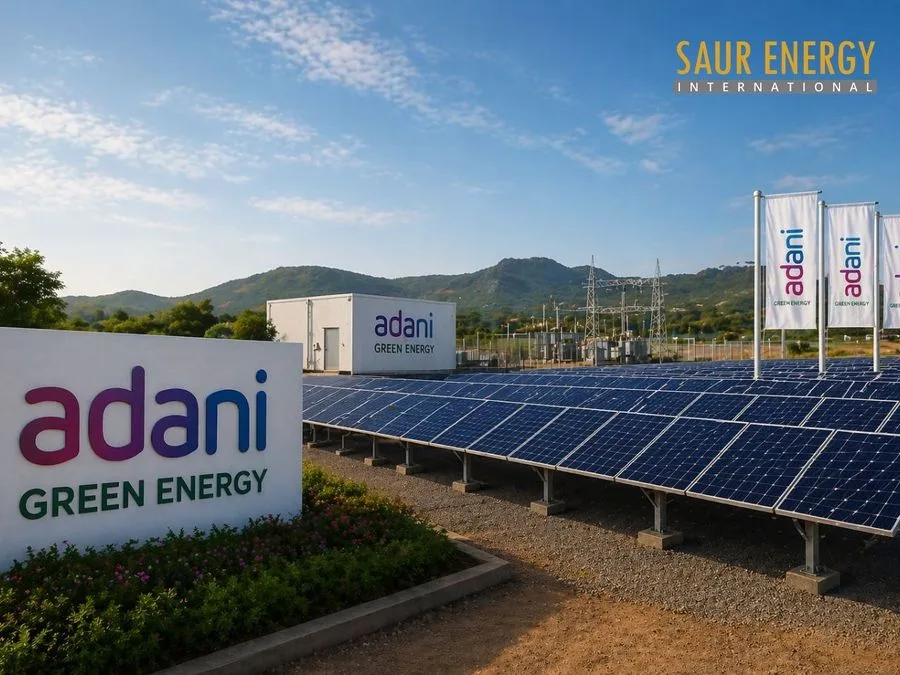
In late February 2026, Norway’s Government Pension Fund Global formally excluded Adani Green Energy Ltd (AGEL) from its portfolio. It cited concerns over ‘gross corruption or other serious financial crime’, following prior international legal scrutiny faced by the conglomerate’s executives.
Norway’s Government Pension Fund Global (GPFG), commonly known as the Norway Wealth Fund, is the world’s largest sovereign wealth fund, managing over $2 trillion in assets. It acts as a massive global index fund, owning about 1.5% of all publicly traded shares on Earth. The fund’s mechanism for managing its portfolio operates through a highly institutionalized, dual-layered governance system. It is not handled through simple stock picking but through a strict framework of ethical screening and divestment.
The fund was established after large oil and gas reserves were discovered off the coast of Norway in the North Sea in 1969. Instead of spending all the revenue immediately—which could have caused inflationary pressure and disrupted the economy—the Norwegian Parliament passed a law in 1990 to create the fund.
It is a significant player in the oil and gas sector and has been instrumental in financing oil and gas developers through bonds.
The fund screens companies based on two clear sets of criteria established by law: product-based exclusions and conduct-based exclusions.
The first type of exclusion is based on what a company produces. If a company produces nuclear weapons, cluster munitions, tobacco, recreational cannabis, or if it relies too heavily on thermal coal, it is automatically blacklisted.
The second type is where the Adani firms fell under scrutiny. Companies are excluded if there is an ‘unacceptable risk’ that they are responsible for or contributing to specific conduct such as gross human rights violations or serious violations in war zones, severe environmental damage, or gross corruption and other serious financial crimes.
The Government Pension Fund Global held 0.23% of Adani Green Energy as of 26 August 2025, worth $43.9 million at the time, when it last voted on the company’s shareholder resolutions. The decision was made public on February 26 on its website when it added Adani Green to its exclusion list, making it the second group firm to feature among 200 companies that do not align with the Norwegian wealth fund’s ethics.
According to Mint, Norges Bank did not disclose the details or evidence supporting the corruption allegations against Adani Green Energy at the time of the exclusion. As a matter of practice, the fund usually provides a detailed explanation whenever it adds a company to its exclusion list.
The fund’s exclusion list contains 16 Indian companies, including Bharat Electronics Ltd, Bharat Heavy Electricals Ltd, ITC Ltd, Vedanta Ltd, Coal India Ltd, NTPC Ltd and Tata Power Ltd.
Not once, but twice
On 15 May 2024, the Norges Bank Executive Board released a statement announcing the exclusion of the company Adani Ports and Special Economic Zone (APSEZ) due to ‘an unacceptable risk that the company contributes to serious violations of individuals’ rights in situations of war or conflict’.
The statement further adds that the decision is based on a recommendation from the Council on Ethics, dated 21 November 2023, the body that advises Norges on companies considered for exclusion.
APSEZ handles around a quarter of India’s total cargo and owns a total of 14 ports, including in Israel, Australia and Sri Lanka.
The Council on Ethics noted that APSEZ had been under observation since March 2022 due to its business association with the armed forces in Myanmar in connection with the development of the Ahlon International Port Terminal in Yangon.
In May 2023, APSEZ disclosed that it had sold its port-related operations in Myanmar to Solar Energy Ltd. No information on the buyer is available, and APSEZ has stated that it cannot share any such information on the grounds of confidentiality, the statement said. “Lack of information means that the Council cannot establish whether APSEZ has links to the enterprise concerned.”, it added.
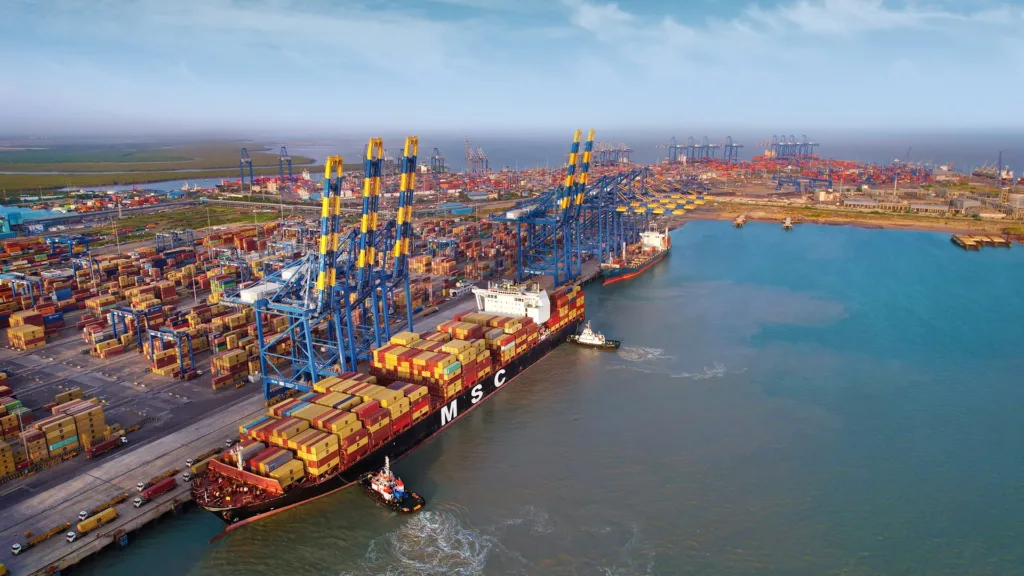
Norges owned 0.24% of APSEZ at the end of December 2023. Gautam Adani owned 65.89% of APSEZ, which had a market cap of ₹2,90,484 crore as of 16 May 2024.
The timeline question
The connection between the blacklisting of Adani companies and the Prime Minister’s visit to Norway has been highlighted by opposition leaders and independent media and is being linked to the specific timeline of events.
It was on February 26 that the Norwegian central bank announced its decision to exclude Adani Green Energy from its portfolio. A few weeks later, on May 18, Modi arrived in Oslo.
Though the official announcement of Modi’s visit to the Scandinavian country came on May 11, reports of the visit had already surfaced in early April, shortly after the Norges Bank announcement.
Another development closely linked to this timeline came on May 18, when the administration of U.S. President Donald Trump moved to dismiss criminal fraud charges against Adani in a case in which he was accused of allegedly bribing Indian officials with around ₹2,200 crore (approximately $265 million) to secure contracts and of misleading U.S. investors to obtain a solar energy project in India—allegations his company has consistently denied. The case was reportedly dropped by the U.S. Department of Justice after Adani pledged a $10 billion investment in the United States. With this, all criminal charges against Gautam Adani and his nephew Sagar Adani stood closed.
Norway’s February 2026 exclusion of AGEL was triggered by the U.S. financial fraud allegations.
Another point of contention is that, according to the joint statement on the India–Nordic Summit, the two sides are elevating ties through a Green Technology and Innovation Strategic Partnership, with a focus on offshore wind, green hydrogen, and solar transmission grids. Adani Green Energy is India’s largest private renewable energy company. The question is whether it is practically possible for Norway to meaningfully deploy significant investments into India’s green infrastructure without engaging with the dominant market player.
Adani’s global trail of ethical concerns
Norway’s exclusions did not emerge in a vacuum. The cascade began with Hindenburg Research’s January 2023 report, titled ‘Adani Group: How The World’s 3rd Richest Man Is Pulling The Largest Con In Corporate History’. Within weeks, the Adani Group lost $150 billion in market capitalisation. Adani fell from the third-richest person in the world to 30th.
Sri Lanka revoked a power purchase agreement for a 484-megawatt Adani wind power project in the Mannar and Pooneryn regions, appointing a committee to review the entire project. A spokesperson however, denied the report. Activists had pointed out that the Adani tariff was double India’s prevailing renewable energy rates. Bangladesh had separately contested exorbitant tariffs from Adani’s Godda coal power plant, with a judicial inquiry underway.
There is no publicly available documentary evidence that Narendra Modi’s visit to Norway had anything to do with the Adani Group. Yet the opposition’s suspicion rests on broader concerns that extend beyond any single event.
The Congress and other opposition voices have, for years, documented what they describe as a structural entanglement between government policy decisions and the business fortunes of the Adani Group — ranging from the awarding of airport and port concessions to the allocation of coal blocks, as well as the Securities and Exchange Board of India’s (SEBI) response to the Hindenburg allegations.
What lies ahead for the fortunes of Adani Green Energy in this context can only be assessed over time.