
The Digital Monotone: AI and the End of Historical Complexity
AI is rapidly becoming the primary lens for historical knowledge, yet its architecture is built to prioritise only the most data-rich spaces, creating a dangerous feedback loop by which popular, algorithm-driven narratives overshadow peer reviewed research and lived experiences. When political forces exploit this “manufactured history,” rich, many-layered pasts are simplified into stories where minority communities are pushed to the margins.
Sometimes the disappearance of history leaves no ash from burning, no mold on forbidden books, no acrid smell of torched libraries. It operates without overt aggression, without any visible physical damage. Its essence is not silencing but a singular monotone: gradually selecting, through sheer proportion, one dominant voice from among many, and crowning it the ultimate truth. The new age of artificial intelligence places a powerful new weapon in the hands of this quiet, dangerous process.
Artificial intelligence does not examine evidence with a historian’s precision, weigh competing interpretations, speak up for marginalised perspectives, or question what is available to it. Instead, it processes complex history through the lens of its training data and analytical methods. It consolidates statistical patterns drawn only from the most numerically dominant, most frequently repeated, and most digitally accessible records, then reproduces them at vast scale and speed.
How AI retrieves sources and generates responses depends entirely on which sources happen to exist, what questions users ask, and how those questions are framed. What appears on the surface to be a synthesis of information is, in reality, only a weighted average of available data, the sole truth the system selects. AI takes the multidimensional, irreducibly complex record of human history as raw material, and then with complete confidence presents a response shaped by the contours of its training data as an authoritative historical narrative.

The danger is this: what resonates as history in such accounts will, more often than not, be the voice of whichever group was most prolific in producing the record.
Tunnel Vision
A Large Language Model is trained on an enormous corpus gathered from the internet, extracted from books, drawn from every form of human marks and analysable inscription.
What AI fundamentally learns is which words and ideas tend to appear together, what kinds of descriptions follow what kinds of questions, and which version of an event gets repeated most often.
This is not a process that evaluates truth. It is structurally designed to register frequency. The history AI presents is therefore not history, it is a tunnel view of history.
It peers at the past through narrow apertures that illuminate only the most data-rich spaces, while everything else recedes into darkness. This narrowness is not an accidental technological flaw. It is something produced through social and political conditions. It reflects which languages dominate the internet; which institutions had the financial resources to digitise their archives; which communities had the leisure, literacy, institutional support and awareness to produce written records; and which events were deemed significant enough to document in the first place.
AI does not begin from a neutral origin. It is, at its core, a powerful continuation of the politics of the powerful.
When a user asks an AI to explain a historical event, the AI does not simply retrieve a fact. It constructs the statistically most probable response from the totality of what it has absorbed. If ten thousand records describe an event one way, and two hundred describe it in various other ways, the model’s output will reflect the weight of those ten thousand — not because it evaluated the evidence, but because that is how it was built to function.
In AI’s epistemology, volume becomes authority.
Techniques like Retrieval-Augmented Generation (RAG) can partially address this by grounding responses in specific sources. But if those sources themselves come from archives that were preserved in biased or incomplete ways, the problem cannot be resolved, only redirected. The tunnel shifts; it does not open.
Flattened Complexity
The Malabar Rebellion of 1921 in Kerala was simultaneously an anti-colonial uprising against British rule and an agrarian revolt by tenant farmers ground down by feudal landownership, yet it is a historical moment that has repeatedly been recast primarily as a communal conflict.
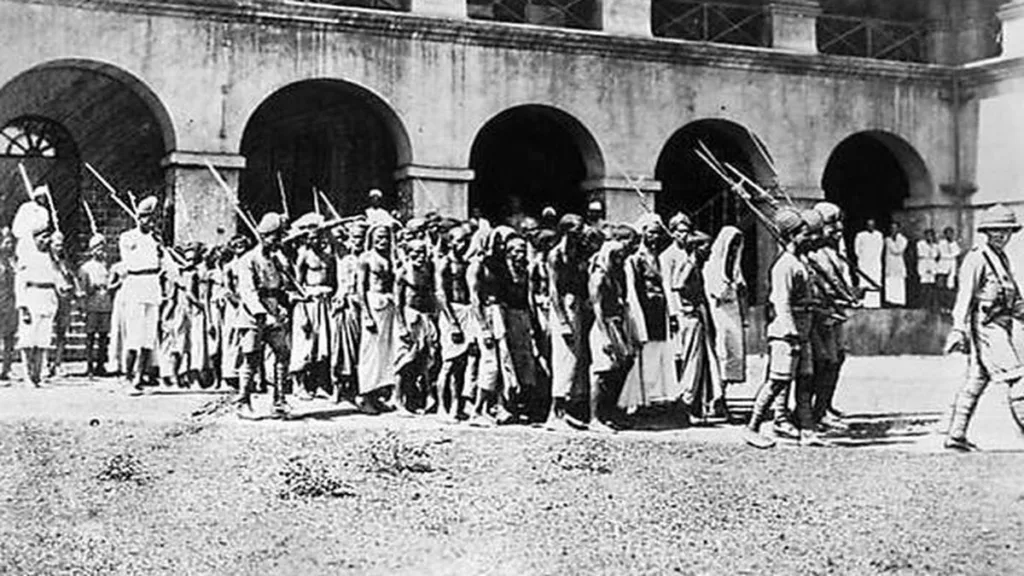
AI, generally, cannot hold such complexity in place. It aggregates information into a single unified output. In the current digital landscape, content framing this uprising as communal violence is vastly more prevalent, a narrative that gained enormous reach through coordinated online campaigns. AI’s aggregation process tilts accordingly. The anti-colonial and agrarian dimensions fade. What gradually remains is the version that is most available, most repeated, and most amplified by algorithms.
This is not disinformation in the conventional sense. Not a single claim within it need be entirely false. What is destroyed is something harder to name and harder to recover: the event’s true character, the contradictory truths it holds, and the irreducible complexity that makes it an unavoidable historical moment rather than a simple morality tale. This tunnel vision does not merely distort individual events – it erases their historical particularity altogether.
The process of collapsing complex realities into a single, easily digestible account is among AI’s most consequential political effects. It happens invisibly, concealed within the authoritative register of a system trained to sound like credible writing. There are rarely qualifications, no signals of uncertainty, and no acknowledgement that interpretations compete. There is only one answer delivered as the final word.
When Power Feeds the Machines
AI’s structural pull toward dominant narratives becomes acutely dangerous when political forces begin deliberately exploiting it.
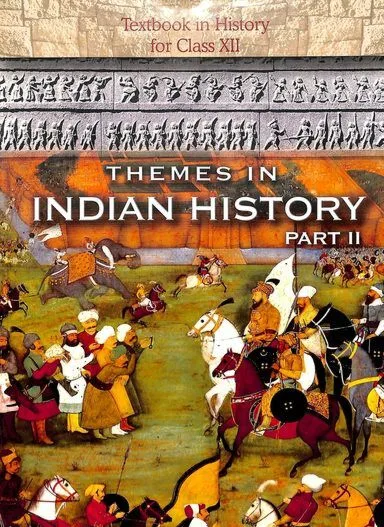
In India, revisions to NCERT textbooks used by hundreds of millions of students have, since 2014, significantly reduced references to certain historical figures and periods. Through the 2023 revision, references to Maulana Abul Kalam Azad one of the chief architects of Indian nationalism and the country’s first Education Minister were partially removed from Plus One Political Science textbooks. Chapters on the Mughal period, previously distributed across multiple sections of the Plus Two History textbook, were condensed. A 2023 report by the All India Forum for Right to Education documented the omission of approximately 17 significant passages affecting minority representation across six subjects.
These deletions were not the product of scholarly disagreement over interpretation. They were political decisions, identified by teachers, condemned by historians, and challenged in courts, ultimately without success.
When textbooks are rewritten, altered narratives slowly enter the public consciousness over generations. But the digital versions of these books will become the very records that rapidly expanding AI systems turn to for reference. AI narratives, by contrast, require no generational lag to become received wisdom.
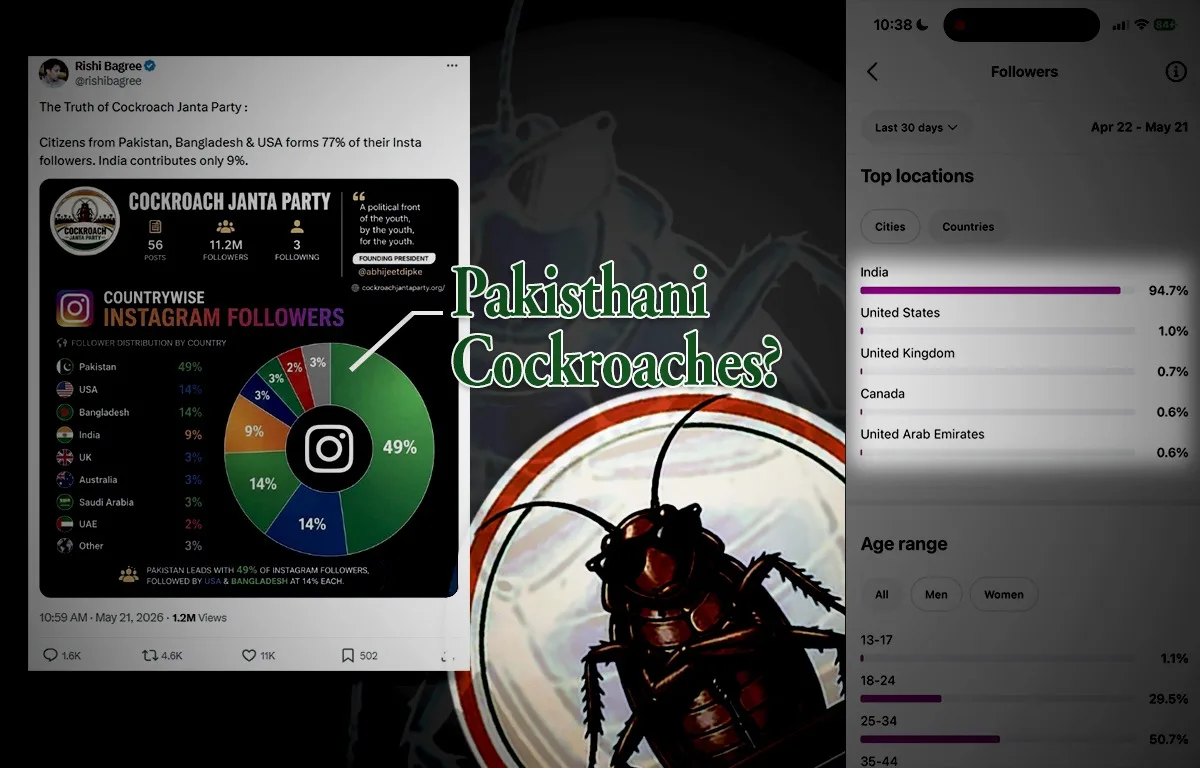
Meanwhile, organised digital networks are generating content at scale depicting India’s pluralistic past as a story of existential threat to one culture from all others, reframing minority communities as demographic dangers, and filtering history entirely through the lens of contemporary communal grievance.
Such content does not need to be true to be effective. It needs only to appear repeatedly, across many platforms, in many forms to enter the statistical baseline from which AI systems learn.
Ask an AI trained in this environment to describe medieval Indian history, or the history of communal relations in a particular state, and it will be unable to distinguish between peer-reviewed scholarship and algorithmically amplified counter-narrative. It will reflect what is most available. And in that reflection, the historical accounts of a particular political agenda will acquire the appearance of neutral, objective fact.
The danger lies not only in what is added, but in how thoroughly what already exists is simplified. Rich, contested, many-layered histories become simple stories. In the hands of dominant-group politics, such simplification tends toward a single pattern: one community at the centre, all others pushed to the margins, or erased.
Algorithms Against History
Certain communities have always depended on oral tradition, local imagery, community archives, living memory, and literature in minority languages, forms of preservation that are inherently fragile. These histories never received adequate representation in the dominant official record. Their presence in AI training datasets is correspondingly thin.
Machine learning systems do not treat all content equally. They learn most efficiently from large data pools, formally structured formats, and information that is linked to or cited by other sources. Historical narratives that exist outside these machine-legible formats often fail to register at all.
What has not been digitised at scale has very little chance of being retrieved or remembered.
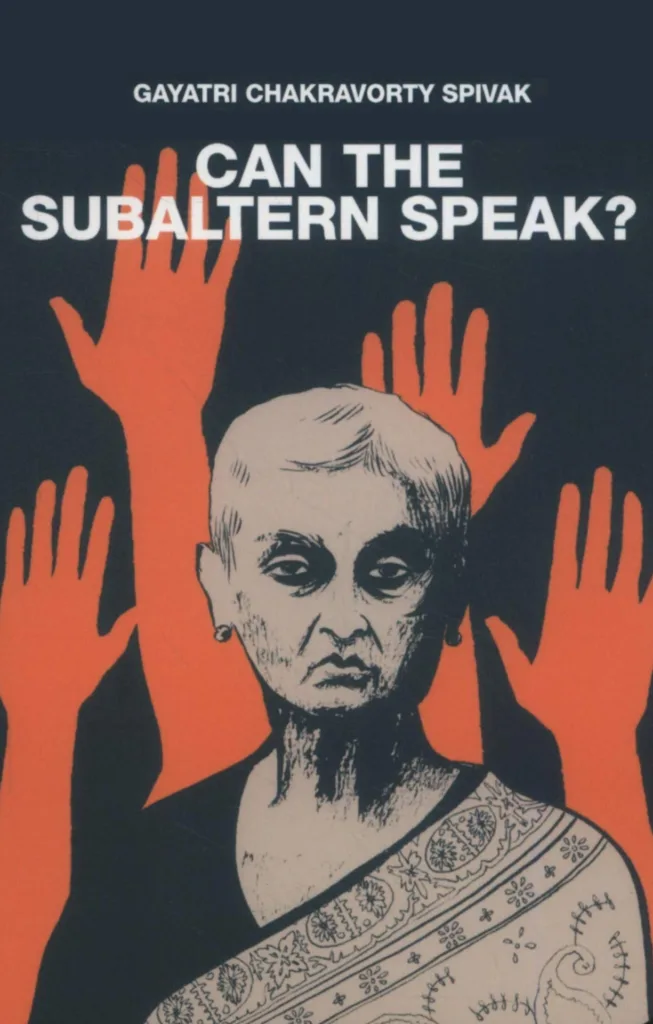
This gives AI a new setting for the question Gayatri Chakravorty Spivak posed decades ago: ‘can the subaltern speak’ can those at the margins make themselves heard within structures built precisely to exclude them? The problem here is not only that oppressed histories lack representation in training data. It is that even where such histories do appear, they tend to be absorbed into dominant frameworks, stripped of context and plurality, flattened and ultimately swallowed by the far more voluminous narratives that surround them.
Perhaps the subaltern has spoken. But the algorithms were not built to listen.
Every segment carries histories of immense depth and texture. Yet an entire information-technological infrastructure works continuously to compress these histories into the anxieties of the present political moment. Through this process, they risk gradual effacement until only the dominant power’s version remains as the machine’s reference point and the only answer it returns.
The Loop That Narrows the Tunnel
There is a feedback mechanism that compounds this problem. What sets it apart from the historical distortions of earlier eras is the scale at which it operates.
Historically inaccurate content, AI-generated images, manipulated footage, fabricated narratives, and algorithmically amplified misinformation spread across platforms designed to reward engagement over accuracy. These are indexed, archived, and scraped into training datasets. Future AI models learn from corpora that include this fabricated material. Those models then reproduce and further legitimise the distortions. The cycle repeats.
What makes this loop structurally different from a curriculum revision or a controversial publication is that it self-reinforces without coordination. No single individual or institution needs to be directing it.
A political movement generates historically distorted content at scale; that content enters AI training data; the model reflects it; users who encounter the synthesised output produce yet more content consistent with it; that content enters the next generation of datasets. With each turn of the cycle, the keyhole narrows further. Each new generation of models learns from a corpus containing more disinformation, more amplified majority-group narrative, and less of the complexity that variant histories carry.
Over time, even a deeply contested historical interpretation can be transformed through repetition and algorithmic reinforcement alone into something that presents itself as a universally accepted fact.
The Future of Protecting the Past
History is not only what happened. It is what could be recorded, preserved, remembered and thereby defended and reclaimed. Power has always shaped those processes. What is new today is that AI is rapidly becoming a primary medium through which people access historical knowledge, while its architecture systematically privileges the histories of those who already had the greatest power to document their own pasts.
This is not an argument against AI. It is an argument for intervening at the precise points where the narrowing happens and such interventions are entirely possible.
First of all, the most urgent is large-scale digitisation of historical records in minority languages, of oral knowledge, of the multidimensional archives that encompass different movements, policies, and modes of governance. Without this foundational work, no technical adjustment will offer a lasting solution.
Secondly AI developers must stop treating the structure of their training data as a given. It is not a neutral substrate, it is a consequential choice, and it must be subject to ongoing scrutiny and accountability.
Thirdly AI systems deployed in educational contexts must be required both legally and by design to disclose the uncertainties embedded in their outputs. Rather than presenting a statistically derived approximation as a settled truth, these systems must be capable of flagging contested historical interpretations as contested. Some systems gesture toward this already. It must become a non-negotiable standard.
Historians, archivists, educators, and the communities whose pasts are at stake must insist that the construction of AI training data is not a technical question to be resolved by engineers alone. It is a question of collective memory and it demands the same rigorous public scrutiny we apply to any institution that shapes how societies understand their past.
AI does not burn archives. It does not ban books. It issues no orders to forget. It simply reflects what is most available, most repeated, most digitised, and in doing so, quietly lends the authority of singularity to the historical narratives of the powerful.
Minority histories are not visibly erased. They are rendered unreachable. And in a world increasingly mediated by AI, unreachable is indistinguishable from gone.
This narrowing is not a malfunction. It is the design. But designs can be rewritten, if we are willing to undertake the work that protecting history in the algorithmic age demands.