From Murder to Hate: How the Rangpur Killings Became Fuel For Anti-Muslim Narratives
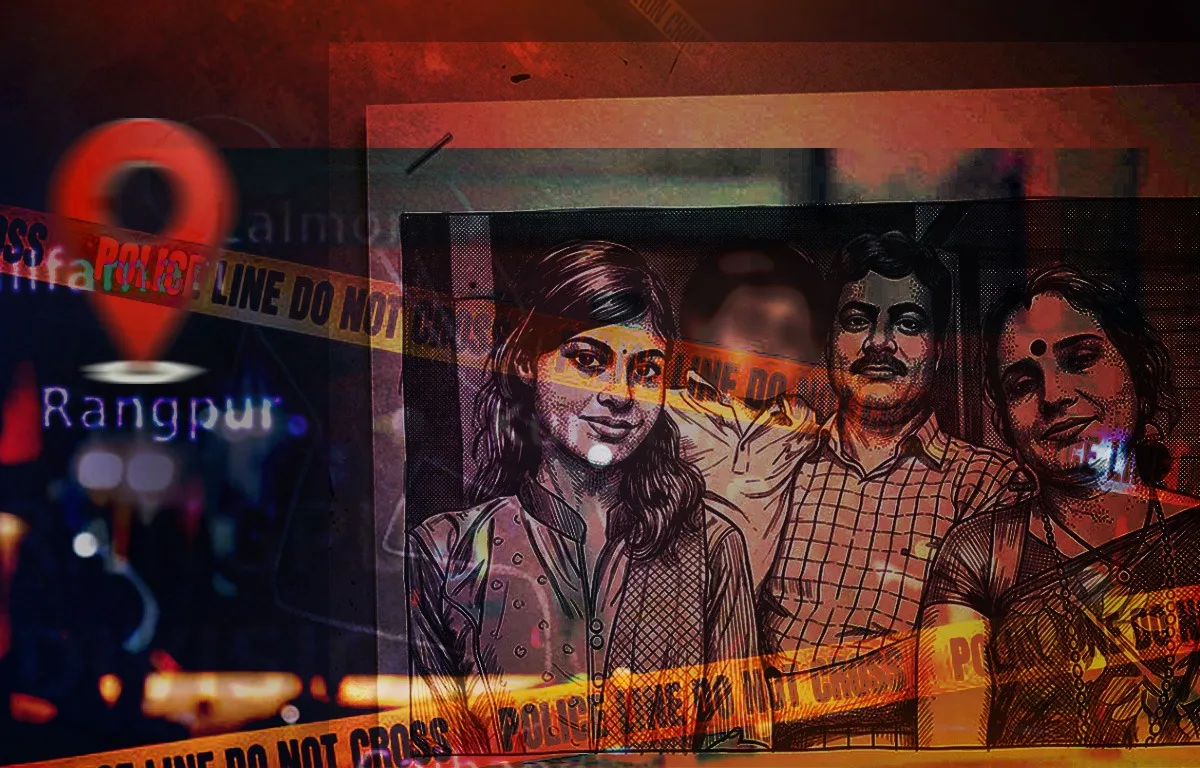
A family of four was murdered in Rangpur, Bangladesh. Before the investigation could establish what happened, social media had recast the crime as a ‘Hindu genocide’ by Islamists. OBC traced the claims, examined the evidence and found how graphic allegations and unrelated videos were used to turn a murder case into fuel for communal hate.
On August 22, a family of four was found murdered in Rangpur, Bangladesh. Even before the authorities identified the suspects, social media labelled the incident as a ‘Hindu family genocide’ by the ‘Islamists’. Soon, the incident became the epicenter of yet another online hate against Muslims on social media. The suspects arrested by Bangladesh police in connection with the murder reportedly belong to the same religious community as the victims. To amplify the hate, multiple users also resorted to spreading false claims.
This OSINT report examines the online hate surrounding the murder and viral false claims that were used to highlight the alleged atrocities against Hindus in Bangladesh.
Viral hate
Following the murder, social media posts quickly framed the incident as an attack on Hindus in Bangladesh. Several users described the victims as a Hindu family allegedly killed by Islamists. In contrast, others used the incident to call for the Citizenship Amendment Act (CAA) to be extended to persecuted Hindus from Bangladesh.
On August 24, X user Riju Dutta claimed that a schoolteacher and his entire family had been ‘butchered’ in Bangladesh, while using the incident to argue that India should provide persecuted Hindus from Bangladesh with safe residence through the Citizenship Amendment Act (CAA). The post identified the victims as Hindus and portrayed the murder as part of the persecution of the community in Bangladesh.
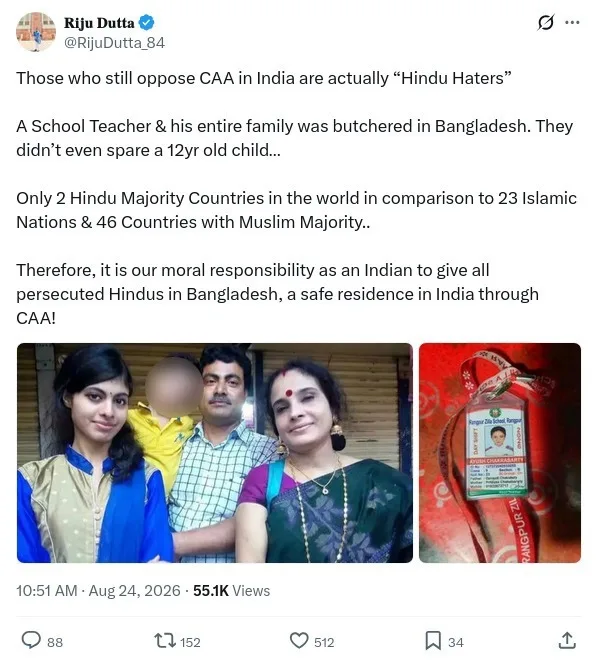
As of August 29, the post had garnered 55,100 views, 512 likes, and 152 reposts.
Responding to the post, a user stated, “Totally agree with CAA but not without NRC; every Hindu brought in from Bangladesh must replace an illegal bangladeshi muslim who will be pushed back through NRC.” Another user replied, “Nuke 23 Islamic countries and make them done and dusted.”
On August 26, another X user, @tiraspeaks, made more graphic claims about the incident. The post alleged that the schoolteacher’s wife and daughter were raped, stripped, and attacked with acid, while claiming that the daughter’s eyes were gouged out and the 12-year-old son was forcibly circumcised. It further claimed that the family was targeted by the ‘Islamists’.
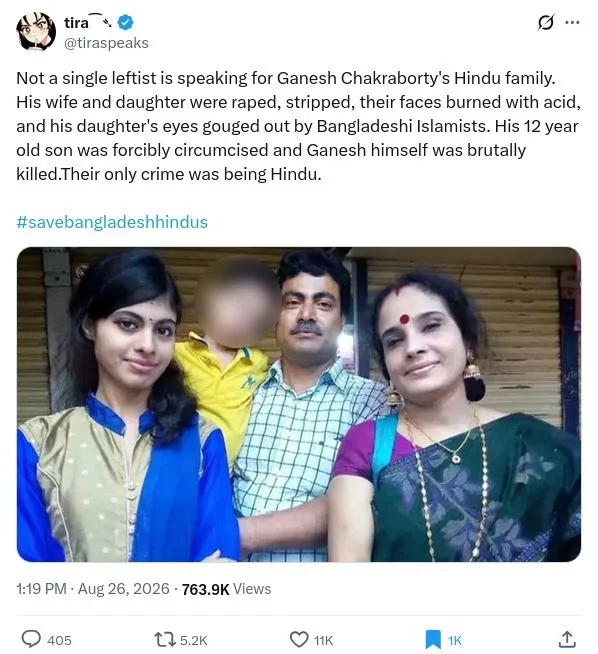
As of August 29, the post had received 7,63,900 views, 11,000 likes, and 5,200 reposts.
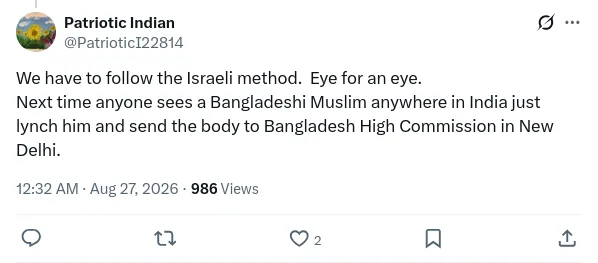
A user, Patriotic Indian, responded to the post, remarking, “We have to follow the Israeli method. Eye for an eye. Next time anyone sees a Bangladeshi Muslim anywhere in India, just lynch him and send the body to the Bangladesh High Commission in New Delhi.”
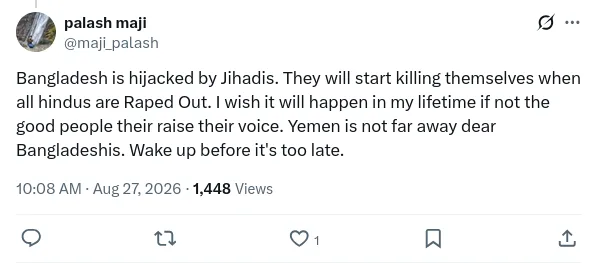
Another user responded, “Jihadis hijack Bangladesh. They will start killing themselves when all Hindus are Raped Out. I wish it would happen in my lifetime; if not, the good people raise their voice. Yemen is not far away, dear Bangladeshis. Wake up before it’s too late.”
On August 27, X user Amitabh Chaudhary described the incident as ‘HINDU GENOCIDE IN BANGLADESH’ and claimed that Islamists had killed the family of four in Rangpur. The post also shared the names of the alleged victims and used hashtags including #HindusUnderAttackInBangladesh and #SaveBangladeshiHindus, further amplifying the communal framing of the incident.
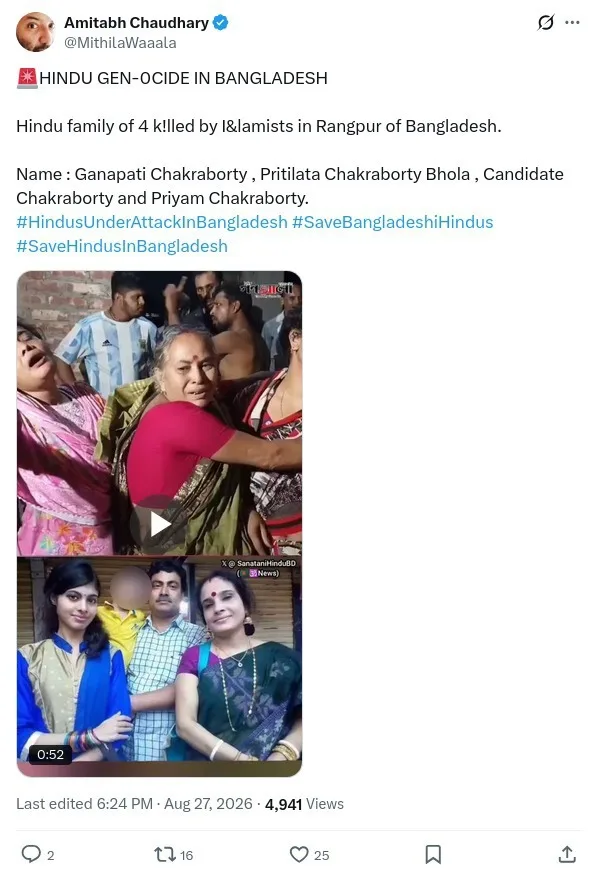
As of August 29, the post had garnered 4,941 views, 25 likes, and 16 reposts.
Bangladesh Police arrested 2 suspects.
The claims circulating online portrayed the killings as a communal attack by Islamists. However, the police investigation pointed to a different account of the incident.
On August 23, Bangladesh police detained two men, Siddhartha Das and Mugdha Das, in connection with the murders of the family of four in Rangpur. The Daily Star reported on August 23 that the two suspects were cousins and had allegedly entered the rooftop of the family’s house to consume yaba. According to police, Ganapati Chakraborty confronted them after hearing noises on the roof, following which the suspects allegedly attacked and killed him. His wife, daughter and 12-year-old son were subsequently killed.
The police account also contradicted the communal framing of the incident. Both arrested suspects and the victims were reportedly Hindus. On August 24, NDTV, citing the Rangpur Metropolitan Police Commissioner, reported that the two suspects were neighbours of the family and that police had arrested them in connection with the killings.
Allegations of evidence tampering
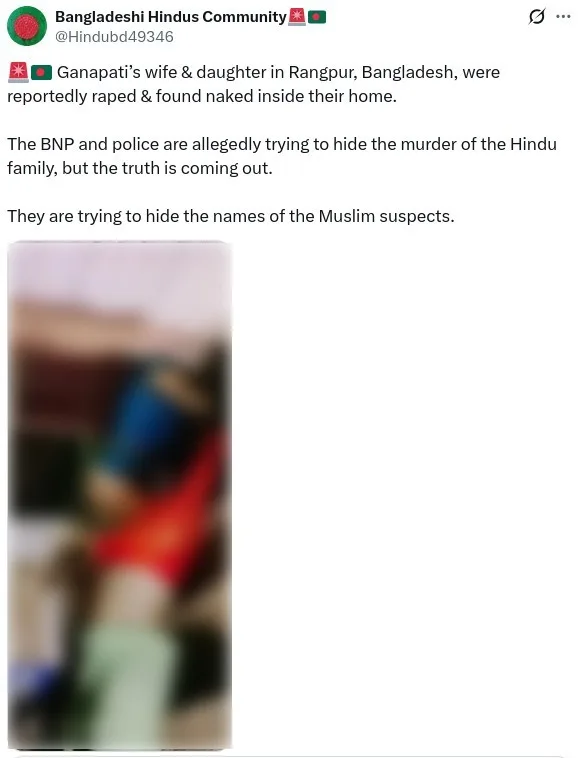
Questions over the police investigation also began circulating online. On August 24, an X user, Bangladeshi Hindus Community (@Hindubd49346), alleged that Ganapati Chakraborty’s wife was raped and found naked inside their home. The post further claimed that the Bangladesh Nationalist Party (BNP) and police were attempting to conceal the murder and were hiding the identities of the alleged Muslim suspects.
Several posts also suggested that the women were targeted with acid.
However, the allegations of rape and acid attacks circulating online were not supported by the available forensic findings. According to The Daily Star, a forensic doctor who conducted the autopsies said there was no evidence of rape or chemical burns on the victims. He said the changes to their faces were due to decomposition.
According to the Dhaka Tribune report dated August 28, there were indeed questions about the initial police account. The rights organisation Ain o Salish Kendra (ASK), after conducting a fact-finding visit, said discrepancies had emerged between the police narrative and accounts from relatives, residents and media reports. It called for the police account to be independently verified using physical, digital and forensic evidence.
False claims shared on X
Several unrelated videos were also shared on X to reinforce the narrative of a recent attack on Hindus in Bangladesh. We found that the videos predated the Rangpur murders and were unrelated to the incident.
On August 25, the X account Kreately. in (@KreatelyMedia) shared a video with the claim, “Hindu woman attacked by Islamists in Bangladesh.”
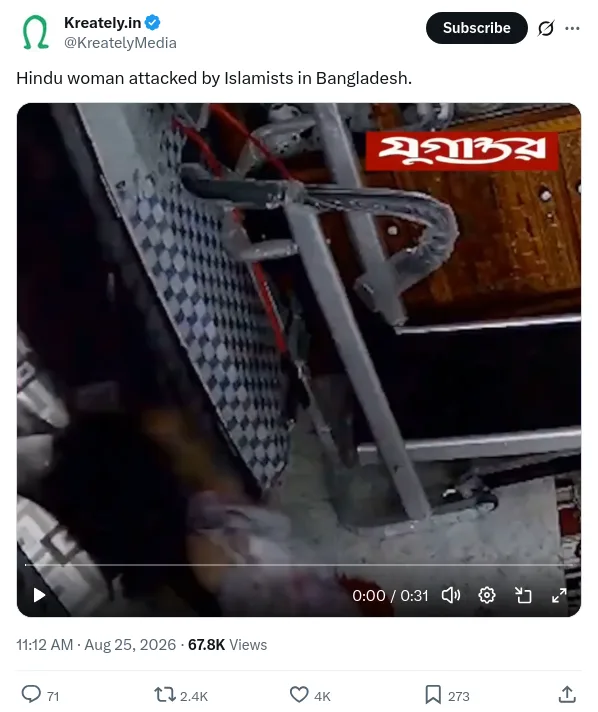
As of August 29, the post had garnered 67,700 views, 4,000 likes and 2,400 reposts.
However, the video shows a robbery at a house in Feni, Bangladesh, on August 19. According to Jugantor, two men allegedly entered the house, threatened Shahana Akhter, a housewife, with a knife and looted cash and gold jewellery. Police visited the scene, but no arrests had been reported.
Therefore, the video does not show a Hindu woman being attacked by Islamists, as claimed in the X post. The report also makes no reference to the woman’s religion or to a communal motive behind the robbery.
Another video that appears to show a Muslim man forcibly cutting the hair of a woman was shared on August 25 by X user Faraz Pervaiz (@FarazPervaiz3) with the caption, “In Bangladesh, a Muslim Imam from a mosque is mistreating Hindu women, treating them worse than animals. This is real Islam.”
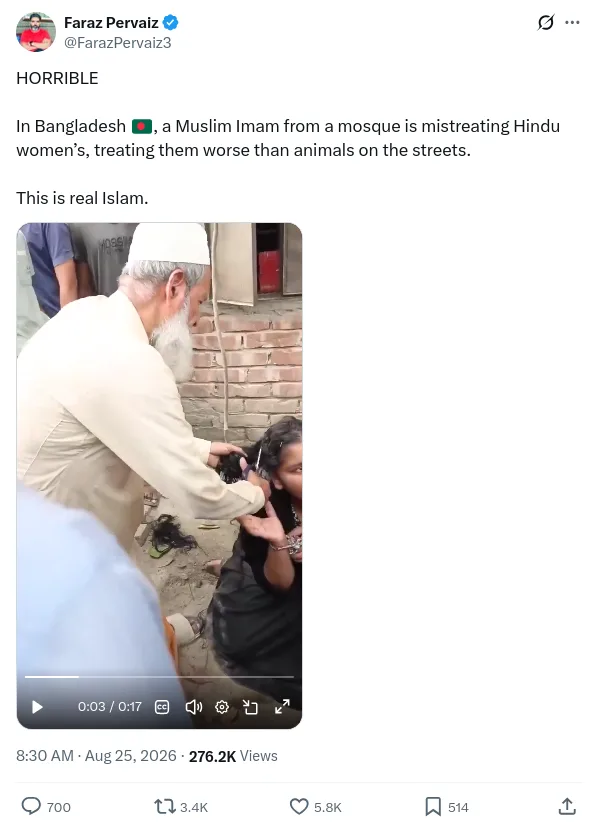
The video, however, shows an incident that took place on March 2, 2026, in Rupganj, Narayanganj, and is unrelated to the Rangpur murders.
On March 2, Poribortonerdak reported that three women were accused of attempting to steal a gold chain, after which local people allegedly tied them up, beat them and cut their hair. Police rescued the women and took them into custody. The report does not identify the incident as an attack by a Muslim imam on Hindu women, nor does it establish a communal motive.
The Rangpur murders were quickly turned into a communal narrative on social media, with users portraying the incident as an attack on Hindus by Islamists. However, the police investigation identified two Hindu men as suspects, while forensic findings did not support several of the graphic claims circulated online. At the same time, unrelated videos from separate incidents in Bangladesh were presented as evidence of attacks on Hindus.
While questions have been raised about aspects of the police investigation, these do not establish the communal claims circulating online. OBC’s analysis demonstrates how a real crime can be repackaged through unverified allegations and unrelated visuals to fuel communal hate and distort the facts surrounding an ongoing investigation.

Sujith A
Open Source Intelligence Researcher and Mis/Disinformation tracker. Passionate about investigations and a big fan of Sherlock Holmes.
View all posts by Sujith A