
The 80:20 Republic: Assam to Bengal
A decisive electoral victory in Assam and West Bengal signals more than political success-it marks a deeper shift in India’s democratic fabric. As majoritarian strategies sharpen and representation skews, the line between mandate and exclusion grows thinner, raising urgent questions about the future of India’s electoral democracy.
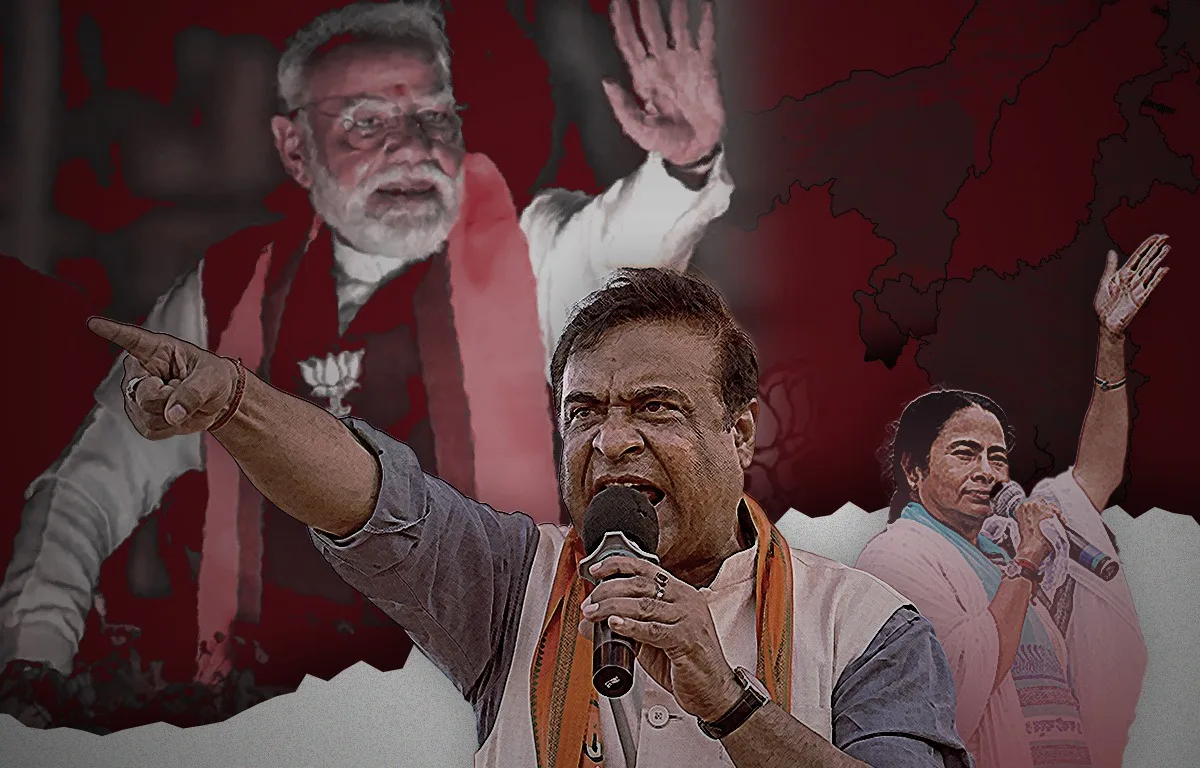
The sweeping triumph of the Bharatiya Janata Party (BJP) in the state assembly elections in Assam and West Bengal is a point of rupture, a milestone in India’s transition to electoral autocracy.
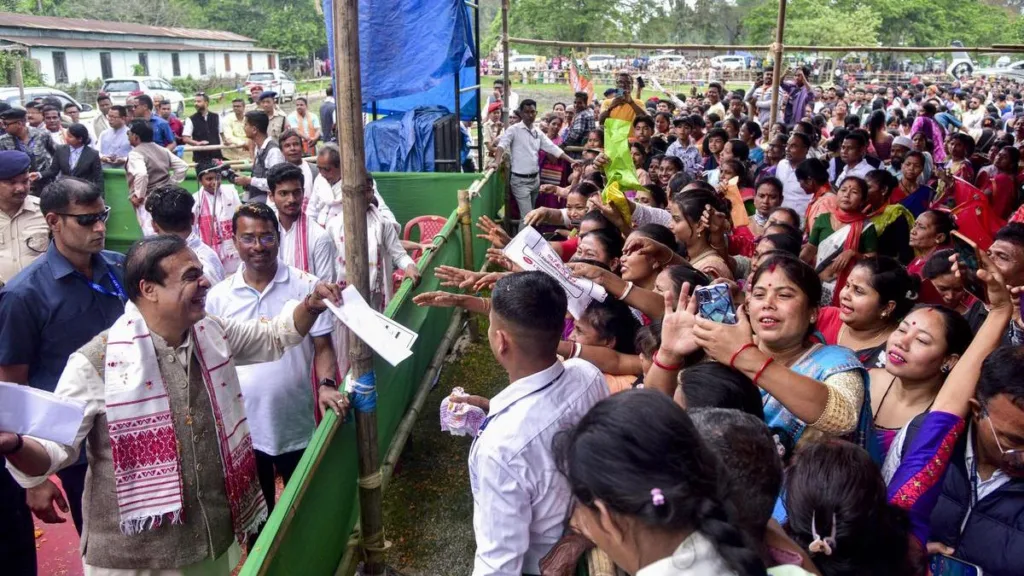
Despite being the ruling party at the centre for twelve years, the BJP has never let complacence get in the way of its ravenous appetite to win. Though its ambitions in the last round of elections were fulfilled only in part, its two wins could have fateful consequences.
The BJP scarcely registered a blip in the southern states of Tamil Nadu and Kerala, and won as a junior partner of a regional ally in the union territory of Puducherry. A third win in a row in Assam was in line with expectations, though its magnitude may have surprised even its greatest enthusiasts. West Bengal was the greater triumph that should bring the BJP immense satisfaction, and serve as a dire warning for the rest of the country.
In Assam, the BJP on its own secured 82 seats, a near- two-thirds majority in a house of 126. Though now dispensable, its two allies, the Asom Gano Parishad and Bodo Peoples’ Front, added another 20 seats to its kitty. The alliance won just over 48% of all votes cast, against 35.4% for the opposition alliance led by the Congress. With a mere 21 seats in the house, the opposition alliance will have a hard time making its voice heard, even if the other three members who won independently were to join in.
In West Bengal, the BJP contested on its own and won 206 of the 293 seats where results were declared. It had 45.75% of the votes cast, substantially more than its tally from the last time around. In power for 15 years, the All India Trinamool Congress (AITC) garnered 41.12% of the vote, falling to a paltry 81 seats.
Outside of Jammu and Kashmir, West Bengal and Assam are the two states of India that have the highest relative numbers of the country’s main religious minority. According to the last available census figures (of 2011), Muslims are 27% of West Bengal’s and 34.2% of Assam’s population. It may once have been impossible for a party to run an election campaign on the promise of excluding these substantial numbers from political power. But the BJP has proven otherwise, replaying on a larger and more ambitious scale, a script rehearsed in Uttar Pradesh.
Liberal democracy is built on an agnosticism about personal identities. There is no reason why an observant person of any religion should not be able to represent the political interests of the people of other faiths. Practice though, has never conformed to this ideal, but the deviations which once were understated and subtle, are now loud and brazen.
The BJP’s electoral success has been fashioned on building a plurality while excluding an entire religious minority from its calculations. Uttar Pradesh chief minister Yogi Adityanath gave clear expression to the strategy during his last state assembly election campaign. The election, he said, was an 80:20 affair, effectively dismissing the state’s entire Muslim population as extraneous to his calculations. Rather disingenuously, he later clarified that he was speaking of those who stood for development against those who did not. But the point had been amply made.
With Bangladesh occupying the territory in between, the infiltrator became the dark shadowy figure that the BJP could conjure up with unbridled virulence in Assam and West Bengal. There was perhaps some irony that two individuals — Prime Minister Narendra Modi and Home Minister Amit Shah — who have had absolute power to deal with border security for the past several years, should brazenly use failure as an appeal for votes.
That irony was lost on most audiences. The demographic threat to fragile identities has become a staple of globally resurgent right-wing populism. And exponents of this brand of politics have cultivated support with public displays of harsh and inhuman treatment of those who embody the supposed threat. Fear was the theme in the BJP’s campaign; dark forebodings of the Assamese and Bengali identity being buried by infiltrators.
The swampy and riverine terrain in the eastern parts of the country make it difficult to control subsistence-oriented rural populations, for whom national borders have no real existence. Yet the figures available do not reveal a threat of demographic transformation. According to the census, the Muslim population of West Bengal has increased at an annual (compounded) rate of 2.5% between 1981 and 2011. In all of India (excluding Assam and Jammu and Kashmir for which census operations were not conducted in some of the relevant years), the rate of growth of the Muslim population is almost identical. And as demographers have pointed out, this rate is beginning to taper downwards, so that by mid-century, there would be a stabilisation of all population figures at a level which secures a substantial Hindu majority.
Likewise, the growth rate of the Muslim population in Assam between 1991 and 2011 is 2.61%, which is a figure that could affect a significant change in absolute numbers and proportions. Yet there is an undoubted promise that this figure too will decline to a level where relatively stable proportions will become the reality.
It is reasonable to expect, in a fair system where barriers on grounds of identity are absent, that representative bodies would broadly reflect external demographic realities. India’s religious demography has very rarely been reflected in its elected bodies, but the results from Assam and West Bengal reveal a picture that is alarmingly skewed. There are 22 identifiable Muslim names in the list of winning candidates in Assam, i.e., just over 17% in the House of 126 members. What is even starker is that of the 24 seats on the opposition side, all but two would be occupied by Muslims. The division of treasury and opposition benches has mutated into a sharp religious polarisation. Democratic opposition could in the circumstances, be very easily dismissed as the voice of the infiltrator which has no right to be heard.
The picture from West Bengal, though less stark in numerical terms, is troubling because of the greater heft the state carries in national politics. As against 42 outgoing representatives of the Muslim faith, the newly elected house will have 36. Though not a substantial fall, there is a significant difference in that almost all 42 members of the Muslim faith in the outgoing house occupied the ruling benches, where they made up roughly 20% of total strength. Now, they will be over 40% of the total opposition strength of 83, again enabling rather easy recourse to inflammatory rhetoric about infiltration.
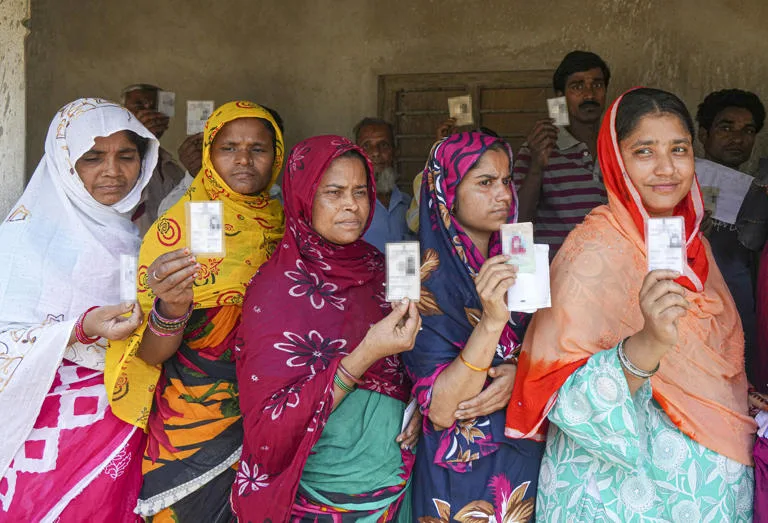
Beyond the virulent campaign rhetoric, the administration of the electoral process has failed the test of public trust. Once a globally respected body, the Election Commission of India (ECI), now presides over the large-scale disenfranchisement of citizens. And the Supreme Court has waved aside all grievances as a minor issue that could be corrected in the indefinite future. The referees of electoral fairness have shown greater concern in serving the ends of power rather than protecting the rights of citizens. Rather than the participatory fervour that was once the flavour of the Indian election, anger and anxiety have been the mood this time around. The portents for the miracle that was Indian democracy are grim.
(Disclaimer: OBC encourages a diversity of ideas. The opinions expressed in articles may not necessarily reflect our editorial position.)
Sukumar Muralidharan
Independent journalist and journalism trainer based in the Delhi NCR.
View all posts by Sukumar Muralidharan