The Anatomy of a Defence: Right-Wing Misogyny and the Dileep Case
In the aftermath of sexual violence allegations, why do the same right-wing voices always rush to defend the accused? By tracking the responses to the actor assault case, this article reveals how misogyny operates not as an accident, but as a political strategy—one that treats survivors as threats and turns impunity into ideology.
Every time a woman in Kerala speaks of assault, a familiar figure steps into the frame. He arrives unfailingly—before the facts settle, before the wounds even begin to close—armed with certainty, sympathy not for the survivor, but for the accused. Whether it is a man arrested for publicly flashing on a bus, a young Congress leader accused by multiple women of rape and forced abortion, or a celebrated Malayalam actor recently acquitted of allegedly commissioning the rape of a fellow actor, this man appears with clockwork precision to mount their defence.
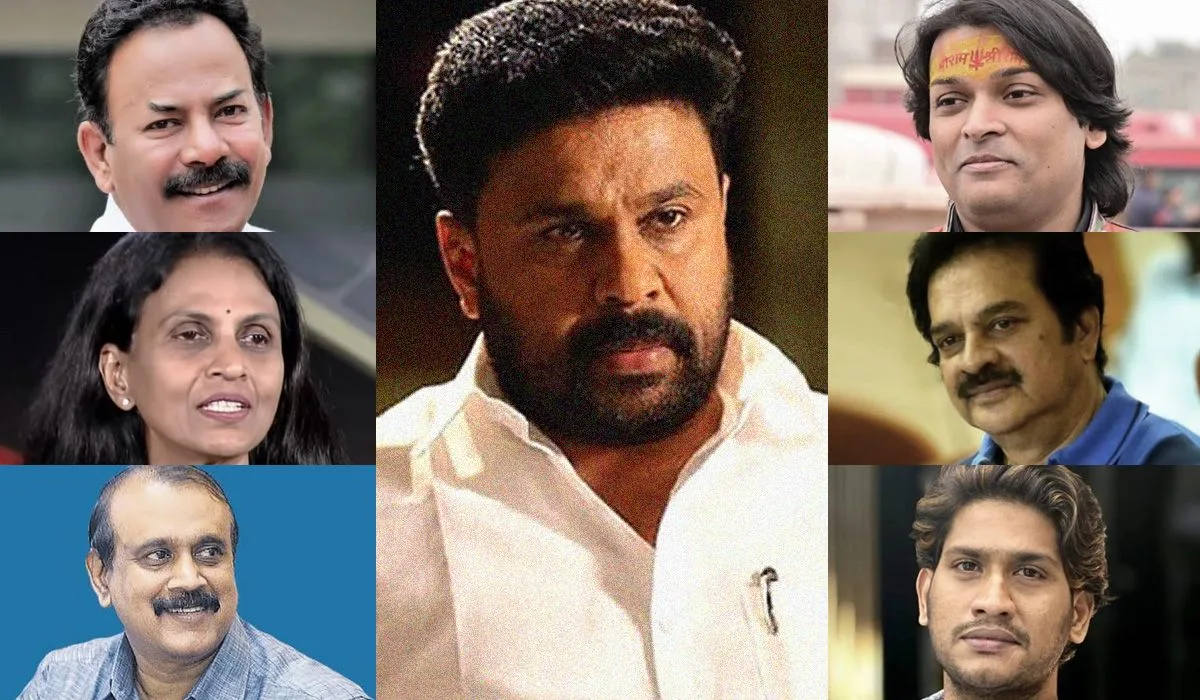
That man is Rahul Easwar.
A self-described “right-wing, savarna, Hindu activist,” Easwar has cast himself as the voice of what he calls “falsely framed men.” In Kerala’s public conversations on women’s safety and justice, figures like him—who instinctively align against survivors and in favour of the accused—are no longer outliers. Their presence has grown louder, more organised, and increasingly influential, shaping the narrative even before accountability can begin.
Ideology Before Empathy: Why Misogyny Finds a Home on the Right
Proponents of hardcore misogyny are often observed to share one defining commonality: an affiliation with right-wing ideology. They may or may not openly acknowledge it, but the most ardent proponents of the right wing leave themselves little choice other than to disregard the voices and lived experiences of survivors, irrespective of the case.
The 2017 actor assault case starkly exposes this pattern. A popular female actor was abducted and sexually assaulted in a moving vehicle while travelling from Thrissur to Kochi, the crime allegedly filmed by the perpetrators. While six men have since been convicted, actor Dileep—accused of orchestrating the attack out of personal vendetta—was acquitted, with the court ruling that the conspiracy could not be proven beyond reasonable doubt.
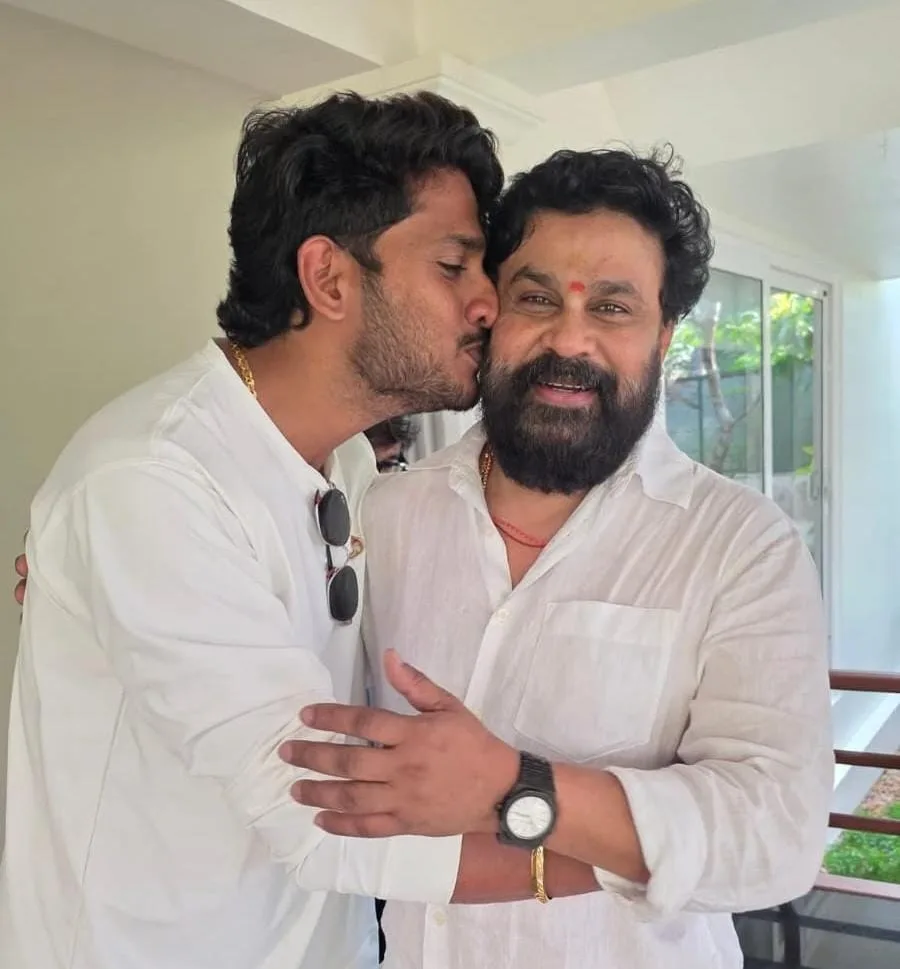
Unlike Rahul Easwar, Akhil Marar—who publicly backed Dileep—does not openly identify as right-wing. Marar, who rose to fame after winning Bigg Boss on Asianet and claims affiliation with the Congress Party, posted a photo of himself kissing Dileep on the cheek after the December 8 verdict, captioning it: “A kiss of love to the one who was falsely framed by society for a crime he hasn’t done.”
Known for his misogynistic positions since his time on the show, he has consistently supported Dileep on several occasions. In one of his many facebook posts supporting Dileep, Akhil Marar even says to “enact a demo of the rape with your husband or wife” and asks what kind of rape is possible in the limited space of the back seat of an SUV.
The nature of his takes is not new. While on Bigg Boss, he faced backlash for admitting to domestic abuse during a private conversation with fellow housemate Sobha. He was forced to issue an apology. In a later interview featuring Marar and his wife, she candidly stated that Marar “beats her” when she does something wrong, but later “reconciles” with her through affection.
From the day of the verdict until December 19, he posted at least 15 facebook posts backing Dileep. Marar has also repeatedly cast aspersions on the survivor’s claims as well as the credibility of the Kerala Police and the prosecution.
Manufacturing Innocence: Rahul Easwar and the Rhetoric of ‘False Cases’
Rahul Easwar goes further by cloaking his defence in “theoretical” and “scholarly” language. He calls for a men’s rights commission in Kerala to counter what he claims are women’s “undue legal and social privileges” and to protect “cultural, traditional, and family values,” while consistently siding with men accused in such cases. Easwar himself spent 16 days in judicial custody for revealing the identity of the survivor in the Rahul Mamkootathil rape case.
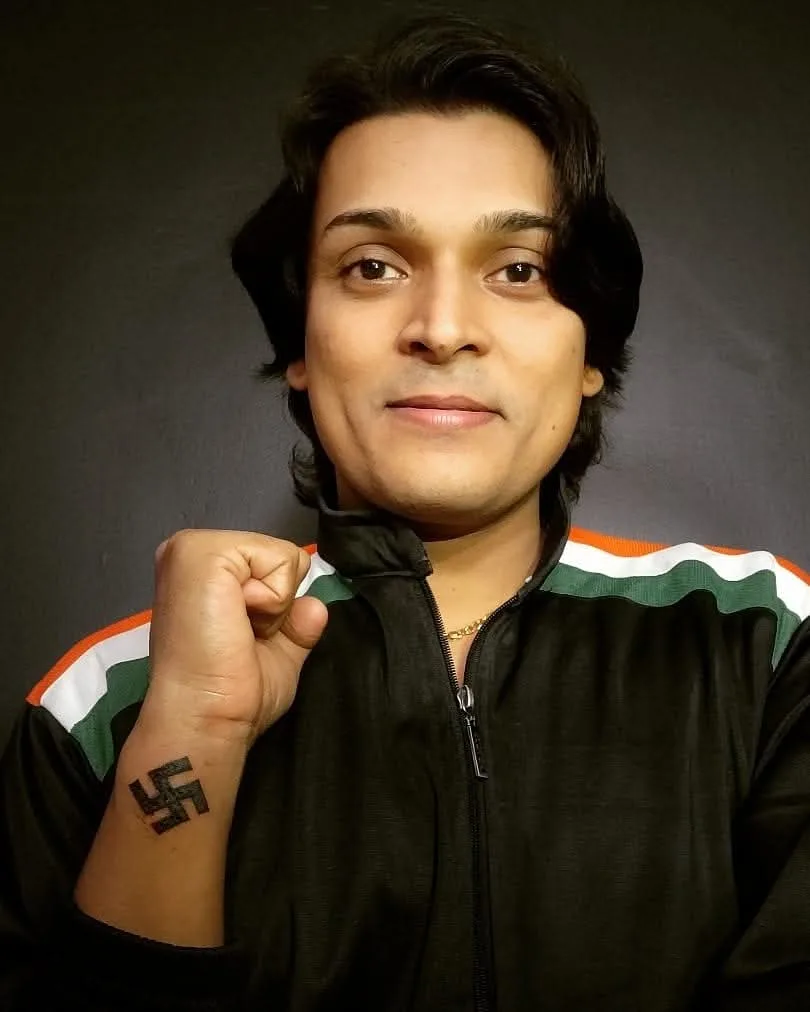
Claiming that actor Dileep was falsely implicated, Easwar repeatedly invokes the suffering of Dileep’s “wife, mother, and two children.” In a YouTube video posted on December 18, he alleged that key evidence—including a photograph allegedly showing Dileep with the first convict, Pulsar Suni—was fabricated by the police. To back this claim, he cited Sreelekha IPS, former Kerala DGP and now a BJP corporation councillor in Thiruvananthapuram, also seen as a mayoral contender.
Uniforms, Power, and Politics: Ex-Cops Rallying Behind Dileep
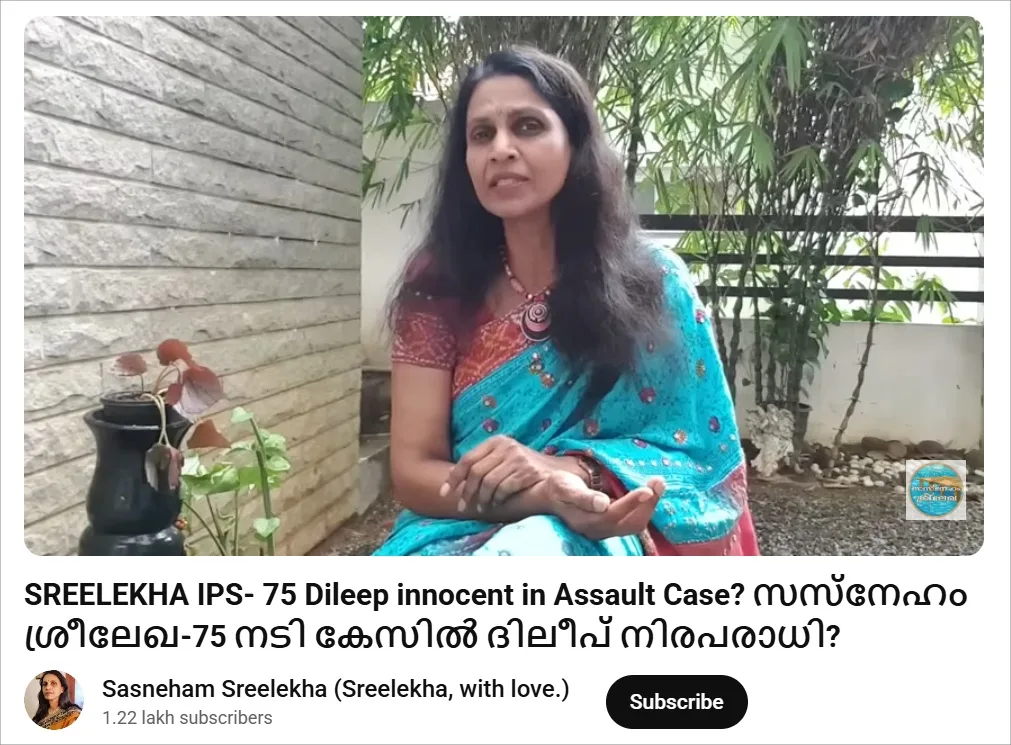
On 10 July 2022, R. Sreelekha IPS posted a video on her YouTube channel SaSneham Sreelekha (Sreelekha, with Love) titled “Dileep Innocent in Assault Case?”. In the 40-minute video, she recounts her personal experiences with the case dating back to 2017, when she was the jail superintendent.
In the video, she said she initially believed Dileep was guilty but changed her view after a surprise jail visit made amid allegations of VIP treatment. She described him as emotionally distressed and physically weak, said she arranged medical care—as she claims to do for any inmate in such a condition—and later found no credible evidence against him. Sreelekha also alleged that a police officer told her the photograph allegedly showing Dileep with Pulsar Suni was photoshopped. She concluded by saying she “100% believes” Dileep is innocent and had no role in the crime.
She repeated these claims in multiple YouTube interviews. In December 2024, the Ernakulam Sessions Court issued her a notice following a contempt of court petition filed by the survivor. Sreelekha, the first woman IPS officer from Kerala has also drawn criticism recently for questioning the delay in filing a sexual harassment complaint against MLA Rahul Mamkootathil.
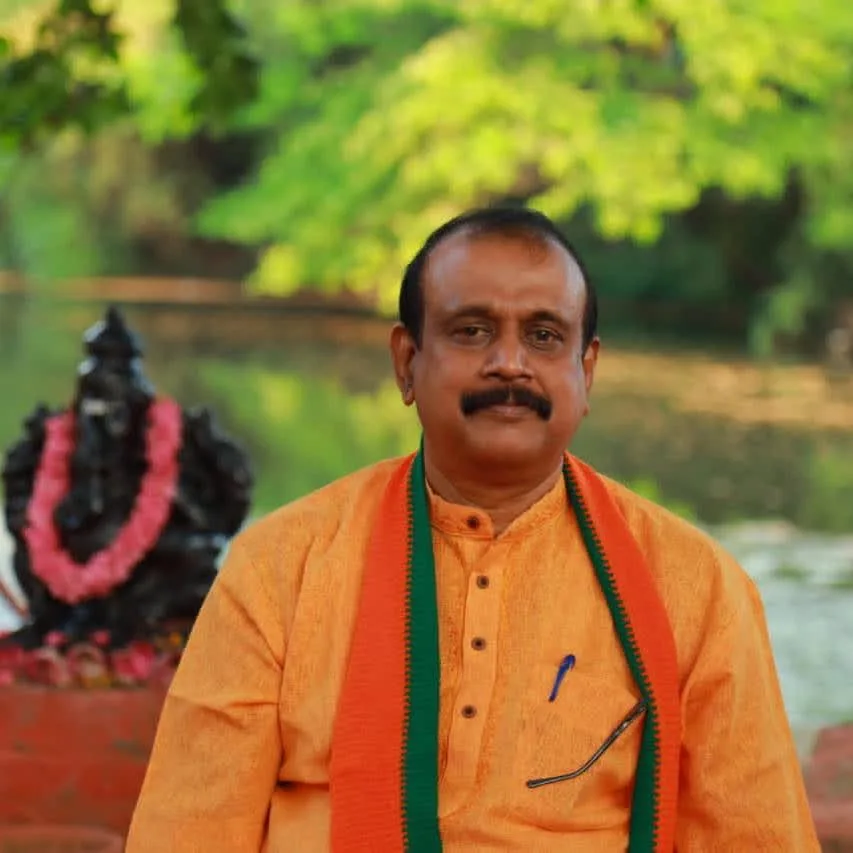
T. P. Senkumar IPS, another retired DGP of Kerala, shared a lengthy Facebook post on the day of Dileep’s acquittal. He said that as early as 2017, he had stated that Dileep was not arrested on the basis of proper evidence and that “this wasn’t the way to conduct an investigation.”
“Some officers believe that their own air of superiority matters more than truthfulness. That is why many cases end up like this,” he said in the post.
Almost a week after his retirement, on July 8, 2017, Senkumar remarked in an interview with Samakalika Malayalam magazine that “love jihad” in Kerala was a reality. He also allegedly made inflammatory statements about the growth of the Muslim population in the state. Following this, he was booked under IPC Section 153A for promoting enmity between different religious groups and was later released on bail after his statement was recorded. Shortly thereafter, he officially joined the BJP.
From Screen to Statecraft: Artists Aligned With the Right Wing
“If a woman wishes, she can file a complaint against you. Then your life is effectively over. The media gangs up against you, and the woman is instantly branded a ‘survivor’ and a ‘victim’. Isn’t the man a victim too?” The remarks—widely seen as a wholesale dismissal of the lived experiences of survivors of sexual violence—were made by actor-turned-politician Devan, currently the state vice-president of the BJP in Kerala.
Speaking in an interview with a YouTube channel, Devan remarked that publicly stating one is “with the survivor” has become a “fashion” today. In an interview with Manorama Online, Devan said it was not right to “hunt down” Dileep again, as he now stands acquitted. “Legally, I feel the survivor has received justice,” he said.
He added that calls to boycott Dileep’s films were inappropriate, arguing that they went against the principles of artistic freedom. Devan has played an important character in Dileep’s latest release, BhaBhaBha.
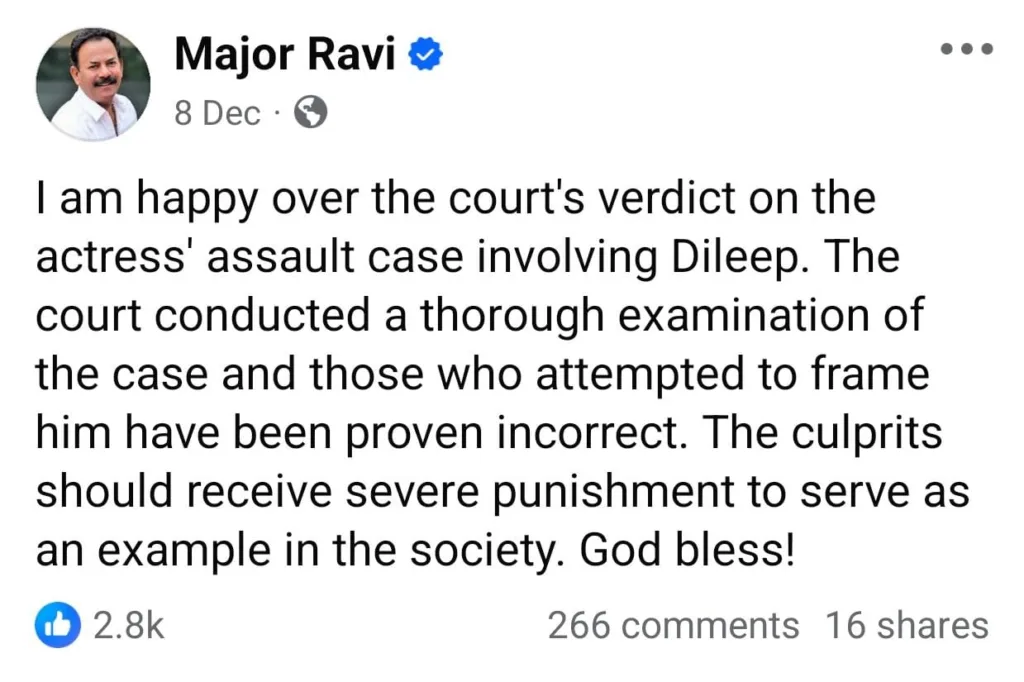
Major Ravi, another actor-director, also publicly supported Dileep throughout the course of the case. Following the acquittal, he wrote on Facebook that he was “happy” with the verdict and that “those who attempted to frame him have been proven incorrect.” Ravi, who joined the BJP in 2023, was the former Vice President of the party’s state committee.
Other artistes, including producer Suresh Kumar, who is also the executive director of Janam TV, a BJP-aligned television channel in Kerala, and actor Urmila Unni, who is affiliated with the party, have also extended their support to Dileep.
Other right-wing voices, including advocate Sreejith Perumana and commentator Sreejith Panickar, have consistently written and argued in support of Dileep across various social media platforms and media outlets.
Around the 15th and 16th of December, they had shared a video featuring Martin, the second convict in the case, in which he presented an alternative narrative, claiming that the case was a conspiracy involving the survivor, along with Dileep’s former wife Manju Warrier and actors Lal and Remya Nambeesan.
The video was later taken down following a complaint from the survivor. Shot around 2022, when Martin was out on bail, the video had been widely circulated before its removal.
When Misogyny Becomes a Movement: The Right Wing and the Silencing of Survivors
Misogyny often acts as a “gateway” to far-right hate. Far-right groups worldwide weaponize misogyny, viewing women as threats to male dominance, according to various studies. Right-wing populists, such as Donald Trump and Jair Bolsonaro, reinforce patriarchal hegemony by delegitimizing feminism as “gender ideology.”
The larger goal of these movements is not necessarily to reject individual survivor accounts, but to curb the broader social progress that accompanies them. Whether it is the global #MeToo movement, the Weinstein case—where dozens of women accused American film producer Harvey Weinstein of rape, sexual assault, and abuse over at least 30 years—or the formation of the Women in Cinema Collective and the subsequent publication of the Hema Committee report exposing systemic failures in addressing gender issues in Malayalam cinema, right-wing actors often seek to steer these movements back toward their vision of “what was” and to preserve patriarchal norms.
This is evident in the positions of many of the figures mentioned above, who maintain that “the survivor received justice” and insist that should be the end of the matter.
A study by the Centre for the Study of Organised Hate (CSOH) notes that the convergence of Hindu nationalism and the manosphere—a network of online communities including men’s rights activists, and “alpha male” influencers—creates a potent narrative in which women are framed as threats, subjects of moral policing, and symbols of national or cultural purity. The manosphere globalizes this resentment through a shared vocabulary of male victimhood, the decline of “real” masculinity, and collective anger toward women’s autonomy.
This shared anger is exactly what unites right-wing extremists in defending the accused and even influences actions such as choosing to watch Dileep’s movies simply because “feminists” were opposed to them.