The Invisible Arsenal: India’s Data Gap on Illegal Firearms- What RTI Reveals
RTI replies filed by Chennai-based journalist B.R. Aravindakshan reveal critical gaps in the Indian government’s data on illegal firearms, including the absence of consolidated records for a key period between 2014 and 2016 and no clear accounting of how seized weapons are disposed of. While thousands of illegal firearms are seized each year—mostly from civilians rather than extremist groups—the lack of transparency raises concerns about a larger organised arms network, public display of weapons on social media, and the effectiveness of enforcement.
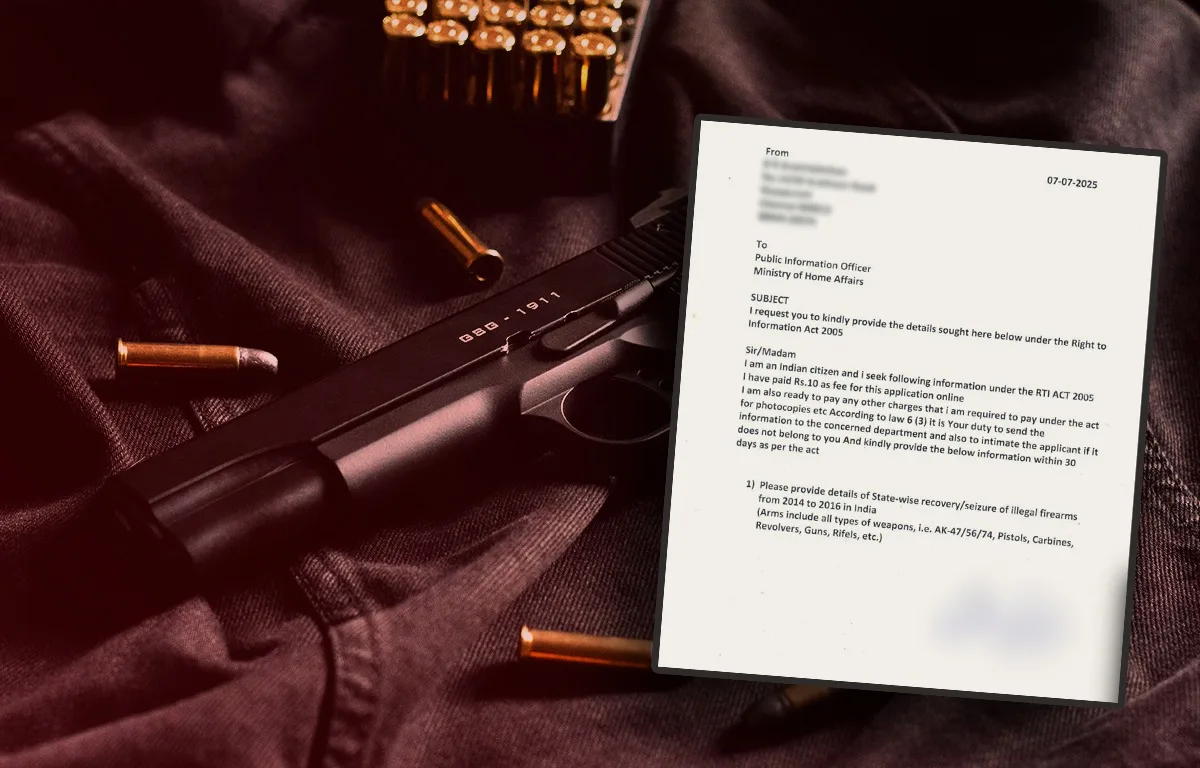
Across India’s states, the seizure of illegal firearms and the arrest of illegal arms suppliers is routine police work. Newspapers carry at least one such report almost every day.
Yet, the Indian government does not know how many illegal firearms are held by individuals in the country, an RTI reply reveals. More shockingly, the government does not possess any data on seized firearms for the period between 2014 and 2016.
A response to an RTI query filed by Chennai-based journalist B.R. Aravindakshan revealed that “no specific information is available” on illegal possession of firearms during a crucial period. In a letter to the Ministry of Home Affairs dated December 23, 2025, Aravindakshan flagged the possibility of the existence of a “large, organised, and profitable underground arms market” in the country.
What the Data Reveals — and What It Doesn’t
The Ministry of Home Affairs (MHA) in 2015 informed the Lok Sabha that 20,351 illegal firearms were seized in India between 2011 and 2014. Data for the period between 2017 and 2023 are available with the National Crime Records Bureau (NCRB). In between, there appears to be a data vacuum.
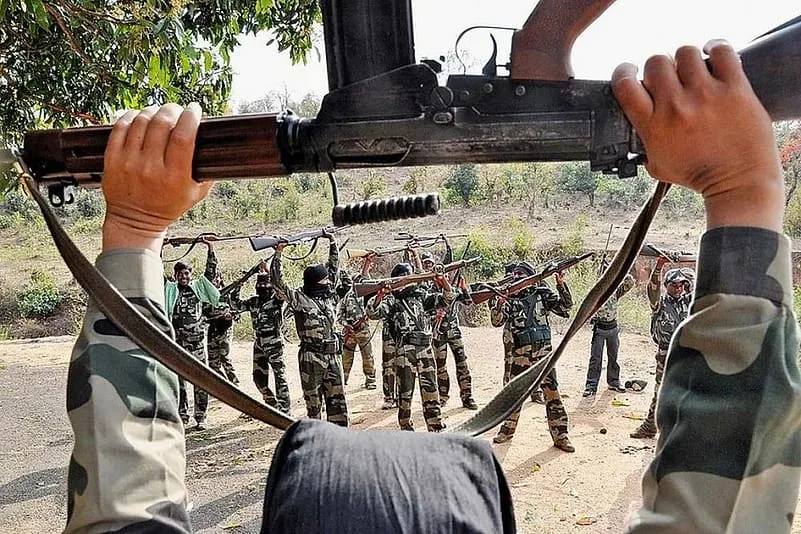
Aravindakshan filed an RTI application on July 7, 2025, seeking data on illegal arms seizures for the period 2014–16. The Central Public Information Officer (CPIO) of the NCRB replied that no such information is available, and the appellate authority of the Arms Division confirmed the reply. According to him, this indicates a “serious institutional lapse” and requires urgent scrutiny. In the letter to MHA, Aravindakshan called for a high-level inquiry into the absence of NCRB data on illegal firearm seizures for the aforementioned period.
The Crime in India annual reports for the years 2017–23 reveal another alarming situation. During this six-year period, 5,43,523 illegal firearms were seized. Of these, just over six percent of the seizures were from anti-elements—those categorised as terrorists or extremists. The rest were recovered from civilians. This, Aravindakshan says, indicates the rapid spread of a dangerous gun culture among the general population.
The Serious Concern of Disposal: Where Do Seized Firearms Go?
In another RTI reply dated November 21, 2023, the MHA admitted that there is no consolidated data on the proper disposal of seized firearms.
“This raises serious apprehensions regarding the diversion, leakage, or re-circulation of seized weapons,” Aravindakshan said. He urged a comprehensive audit of the disposal of seized firearms and an investigation into whether any seized weapons have been illegally diverted or resold.
A Larger, Organised Arms Network?
A reply to another RTI query dated April 13, 2023, revealed that 37,51,127 individuals hold valid firearm licences in India, while 112 licences have been issued for manufacturing small arms. Despite this, law enforcement agencies seize approximately 70,000 illegal firearms annually, he stated in the letter.
He draws another striking parallel to underline the gravity of the situation. If all the illegal firearms seized between 2017 and 2023 are conservatively valued at ₹20,000 per weapon, the estimated size of the illegal arms trade crosses ₹1,000 crore—₹1,087 crore.Through this estimate, Aravindakshan flagged the existence of what he described as a “large, organised, and profitable underground arms market.”
While this threat looms on one side, another concern appears even more visible. Across social media platforms, numerous videos circulate showing individuals associated with certain right-wing and cow-protection groups in northern and central India openly brandishing sophisticated firearms. Instagram has emerged as the primary platform for such content, Aravindakshan notes. He adds that these blatant violations of the law, when viewed in the context of the larger issues highlighted, are being largely overlooked.
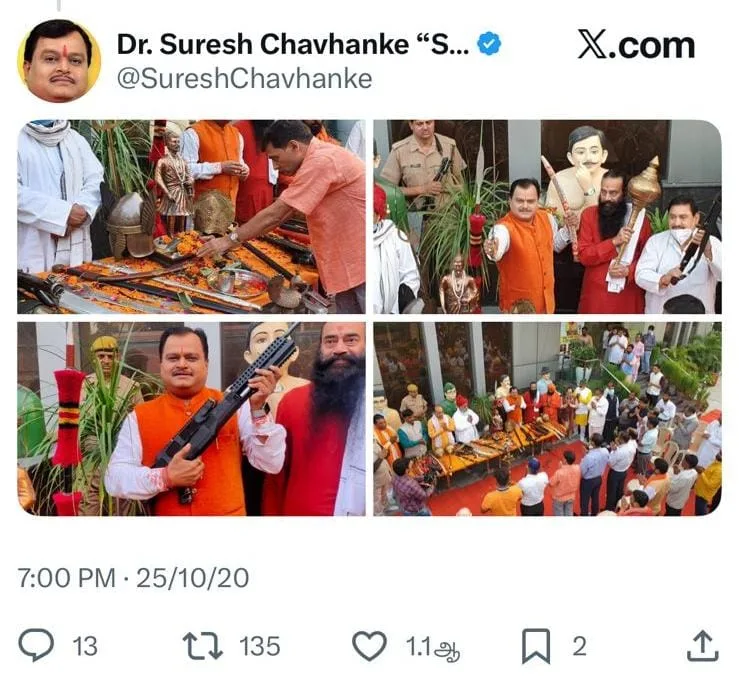
In light of several instances of illegal arms trade, the Supreme Court in 2025 constituted and directed an Expert Committee to ensure the effective implementation of the Arms Act and to curb the menace of illegal firearms and the unauthorised use of legal arms.
In his letter, Aravindakshan demanded immediate action against individuals and syndicates involved in the manufacture of illegal firearms. Among the eight demands outlined in the letter, he demanded an inquiry into financial transactions connected to the illegal arms trade and the constitution of a dedicated special task force to probe organised illegal arms networks. He also called for the identification of organisations and groups openly displaying firearms and the immediate confiscation of such weapons.
Aravindakshan emphasised that this is not just a data issue, but one connected to national security, public safety, and the accountability of law-enforcement institutions. The RTI documents, along with the available data—and the absence of it—highlight the seriousness of the issue and the need for immediate redressal by the State and law-enforcing mechanisms.