Regulating your Feeds? What the latest IT rules means for users and platforms
You don’t have to be a journalist to be censored anymore. India’s proposed IT Rules would bring every retweet, every satirical post, every critical comment under the government’s watch. Welcome to the new internet.
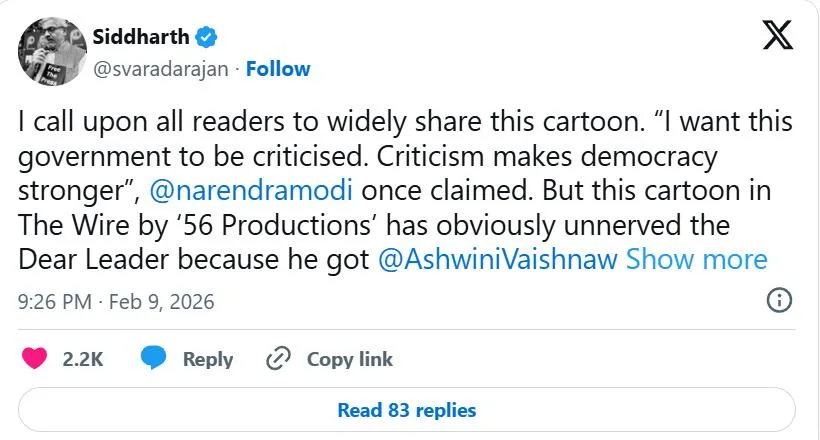
In recent weeks, a couple of posts criticising Narendra Modi and the ruling regime were asked to be taken down from social media platforms, including Meta and X (formerly Twitter). This included a cartoon by the digital news platform The Wire and AI-generated satirical videos by the Congress. In Kerala, the Instagram accounts of Deshabhimani, the ruling CPI(M)’s mouthpiece, and NoCap, a social media page that creates left-leaning content, were disabled by the Ministry without prior or proper notice.
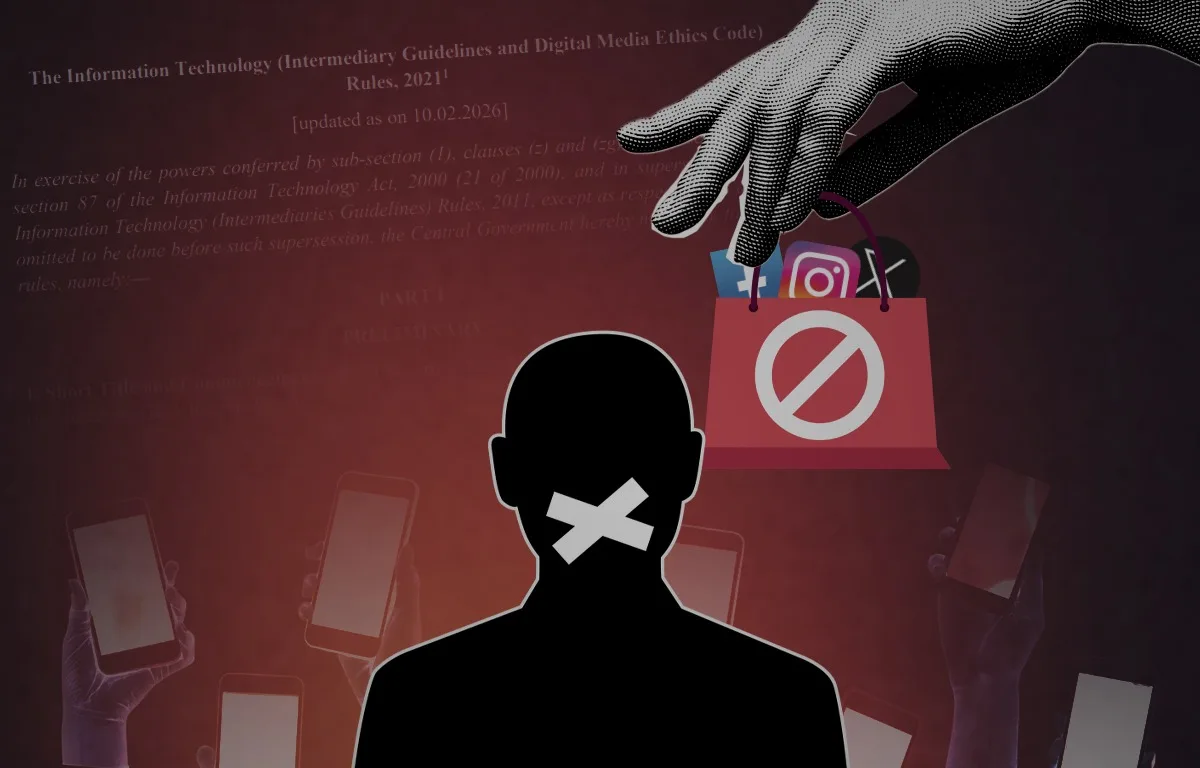
A few days later, on March 30, the Ministry of Electronics and Information Technology (MeitY) proposed amendments to the Information Technology (Intermediary Guidelines and Digital Media Ethics Code) Rules, 2021. Described as “digital authoritarianism” by several digital rights activists, the proposed amendments expand and tighten government oversight over social media news content, particularly by users who are not “publishers” but post or share news and current affairs content online.
What are the proposed amendments to the IT rules?
The existing IT Rules were last amended as recently as February. The latest proposed changes, provisionally called the Information Technology (Second Amendment) Rules, 2026, are described by the Ministry as ‘clarificatory and procedural in nature’, aimed at improving legal certainty and strengthening oversight of news and current affairs content on social media. The Ministry has invited public comments on the proposed amendments by April 14, a period of barely fifteen days.
The draft rules propose an amendment to Rule 8(1), under which Rules 14, 15, and 16 will apply to intermediaries (social media platforms) and to news and current affairs content shared on their platforms by users who are not classified as ‘publishers’. Until now, the digital media ethics code primarily applied only to entities registered as publishers of news and current affairs.
In effect, this means that provisions relating to the Inter-Departmental Committee, procedures and directions for blocking content, and emergency blocking powers will extend to content that is hosted or shared by ordinary users on social media platforms. This also permits the Ministry of Information and Broadcasting to recommend issuing blocking orders and requiring creators to apologise or make changes to the content if they are found guilty of grievances received by the above-mentioned inter-departmental committee.
The draft rules also propose amendments to Rule 3(1)(g) and 3(1)(h), making data retention obligatory by these intermediaries.
A new sub-rule proposed to be inserted under Rule 3 states that an intermediary shall comply with and give effect to any clarification, advisory, order, direction, standard operating procedure, code of practice, or guideline issued by the Ministry. It also requires that every such clarification be issued in writing.
The draft ties this compliance directly to ‘safe harbour protection’. It states that adherence to such ministerial directions “shall form part of the due diligence obligations of the intermediary under Section 79 of the Act.” Section 79 of the Information Technology Act, 2000 is the provision that shields platforms from legal liability for user-generated content.
The draft also proposes an amendment to Rule 14(2), expanding the scope of the Inter-Departmental Committee from hearing “complaints or grievances” to hearing “matters”, including those referred to by MeitY.
The Looming Threats
The most pressing issue with the draft amendment is that it effectively expands the range of authorities empowered to issue takedown orders.
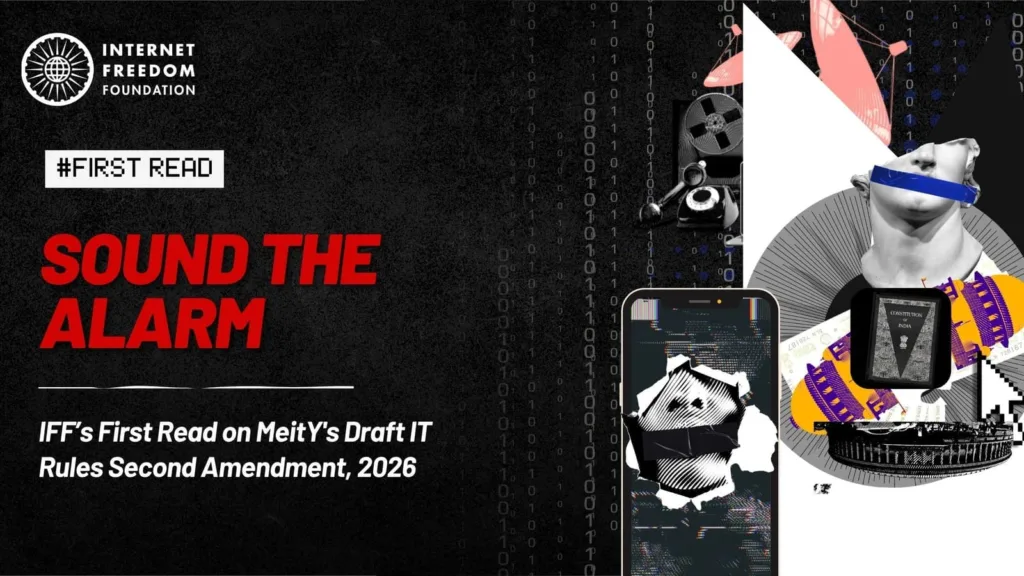
The Internet Freedom Foundation expressed grave concerns over the “decisive turn toward executive-led content control” brought about by the amendments. In a statement reviewing the threats posed by the proposed amendments, the IFF said they come at a “time of fear and increased government-directed censorship, especially of online political speech that includes parody and satire of the government, including the Prime Minister.” It also demanded the immediate withdrawal of the draft amendments.
A key shift introduced by the amendment is the formal linkage between compliance and safe harbour protection. While the Ministry has previously issued directions and advisories to platforms, there was no explicit rule that made adherence a condition for retaining legal immunity. Platforms could contest or delay such directives without facing a clearly defined statutory consequence.
This amendment changes that framework. It embeds a direct legal penalty for non-compliance: the potential loss of Section 79 protection, thereby exposing platforms to liability for all user-generated content hosted on their systems.
The Internet Freedom Foundation, in its statement, also said that the new rules do not align with several Supreme Court judgments and orders, including Shreya Singhal v. Union of India and Indian Express Newspapers (Bombay) Pvt. Ltd. v. Union of India. It also accuses the government of trying to sidestep several high court judgements of Bombay and Madras High Courts.
‘Politically motivated’?
A recent US government report stated that the Indian government has subjected several American companies to an “increasing number of takedown requests” since 2021 for online content and user accounts related to matters that appear “politically motivated.” The report, titled 2026 National Trade Estimate Report on Foreign Trade Barriers, was released by the Office of the United States Trade Representative.
However, IT Minister Ashwini Vaishnaw pushed back, telling the media that the government’s actions were directed at ‘AI-generated deepfakes’ and ‘fake news’, and not at legitimate political speech.
‘Playing’ with the rules?
“I think the amendment would have a chilling effect on people, especially small media platforms and independent journalists. The internet has long been a democratic medium, where those without the resources to start large media organisations can still share important information. That, essentially, is what news is all about.” Geeta Seshu, a Mumbai-based journalist and founder of the Free Speech Collective, told OBC. She added that the move is a serious attack on anyone sharing news content on social media, as well as on constitutional freedoms.
This is the second time the government has moved to amend the IT Rules, 2021 within 2026 alone — a pace that itself raises questions. The first amendment, notified on February 10, targeted AI-generated deepfakes, introducing mandatory watermarking and provenance metadata for synthetic content. It also drastically reduced the takedown window for platforms to retain safe harbour protection — from 24–36 hours down to just two to three hours.
Since then, Meta has been taking down more posts and accounts in response to such notices. Blocking orders, which carry stronger legal force, are issued under Section 69A.
“Even when we want to hold powerful officials accountable, or highlight something going wrong, we have been able to put it out on the internet. With these amendments, that may no longer be possible,” Geeta Seshu said.
In a similar vein, the government’s earlier push to mandate the Sanchar Saathi app on all smartphones—later withdrawn after criticism—was widely seen as another attempt to expand digital surveillance and tighten control over users’ online activity.
The latest amendment has not yet been formally notified in the Gazette of India and does not carry an official notification number. This indicates that it still remains at the public consultation stage.
The IFF has called on the government to await judicial determination of the pending constitutional challenges and to pursue its regulatory goals through parliamentary legislation rather than executive rules. As the foundation put it, such rules risk exceeding the parent statute altogether. It is imperative that the draft be examined thoroughly by all stakeholders and the government held responsible for the legal and moral questions it raises.