Doxxing Dissent: How Saurav Das Is Being Targeted
From leaked passport details and questions over his citizenship to sexualised trolling and bizarre claims about his parentage, Saurav Das has been subjected to a sustained campaign of online harassment. OBC examines how coordinated disinformation, doxxing and misogynistic attacks are weaponised to intimidate a political dissenter and put his family at risk.
Saurav Das, one of the co-convenors of the Cockroach Janta Party (CJP), has been a victim of a targeted and coordinated social media harassment and doxxing campaign for the past few months. The campaign escalated on 26 November when the Centre informed the Delhi High Court that Mumbai Police had issued a Look Out Circular (LOC) against him just hours before his flight. Amid these ongoing tensions, his passport details were leaked and circulated online after he was prevented from boarding a London-bound flight because the Chennai passport office flagged discrepancies.
OBC traces how misogynistic disinformation, weaponised narratives, and doxxing are deployed to undermine individuals, invalidate their citizenship, and expose them to grave risk.
What are the patterns of abuse:
1. ‘When Private Life Goes Public‘
On November 26, Saurav Das accused several BJP-aligned accounts of sharing his passport details online in a post on X. He also asked how they obtained his personal information and made it public. He asked the Ministry of External Affairs (MEA) if leaking citizens’ passport details had become common and whether doxxing was now effectively legal in India. This happened after immigration officials stopped him at Delhi’s Indira Gandhi International Airport on the night of 23 November, just as he was about to board his flight to London for an event at Oxford University.
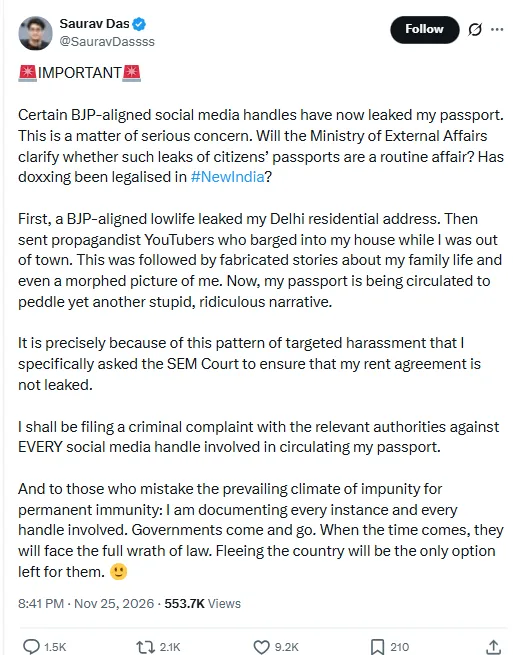
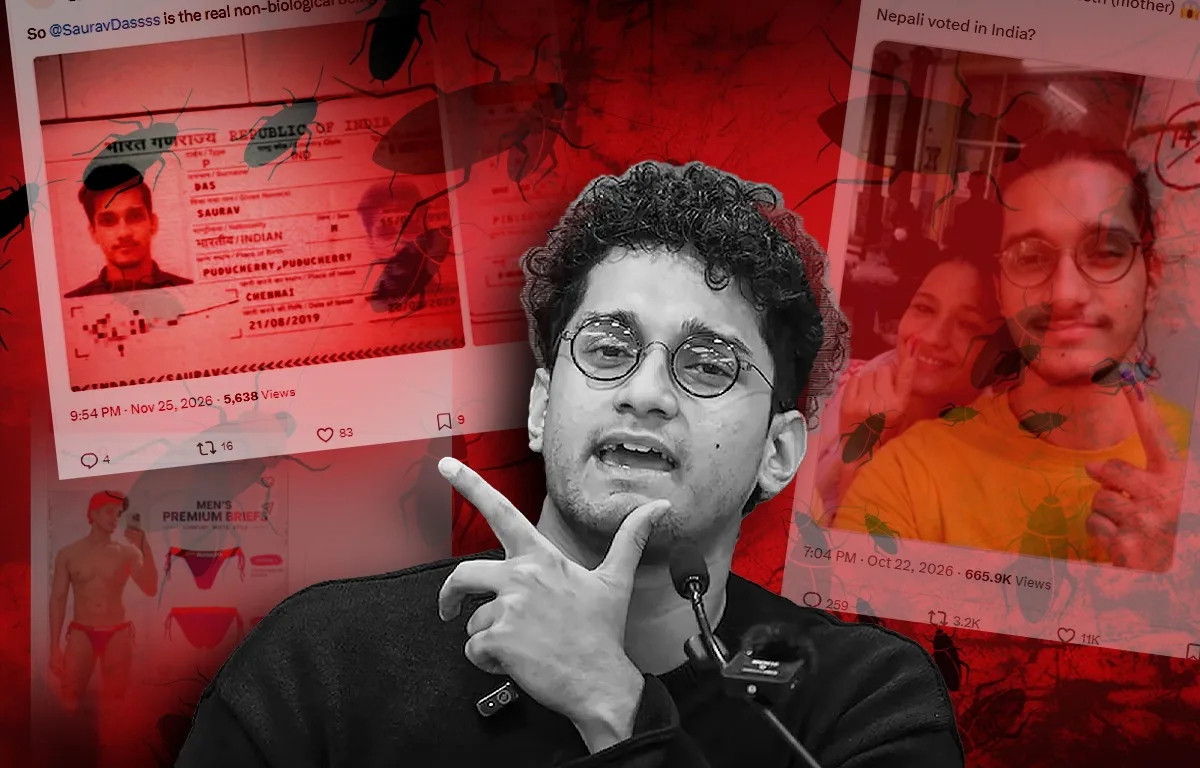
Numerous right-wing accounts shared the details of his passport and private information across social media platforms. One of the recurring narratives across their accounts and pages questioned his Indian citizenship.
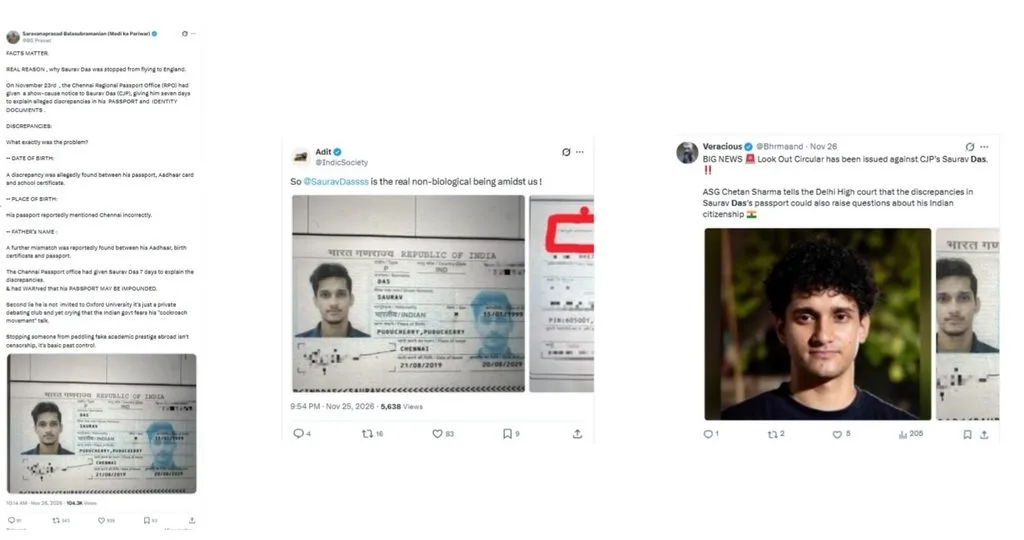
An account named Saravanaprasad Balasubramanian (Modi ka Pariwar) posted Saurav Das’s passport details. The account also alleged that Das was not invited to Oxford, calling the event a ‘private debating club’ and describing the travel restriction as ‘basic pest control’ rather than censorship.
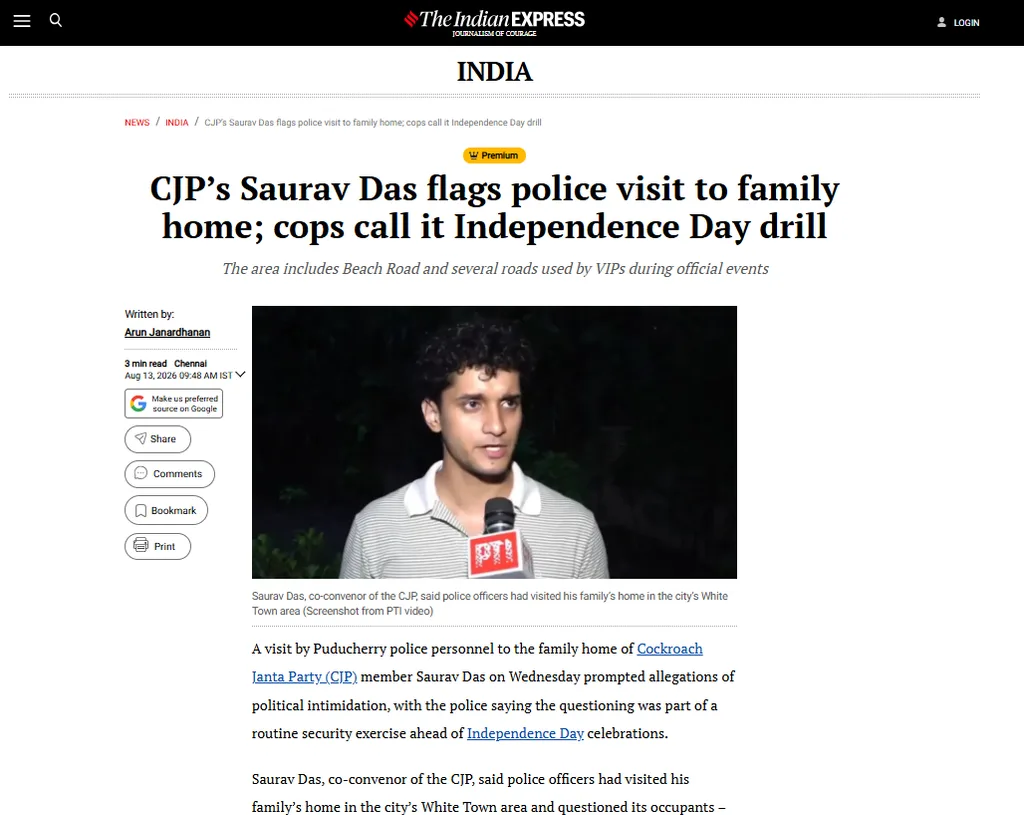
This is not an isolated attempt at doxxing for Saurav Das. This has happened to him numerous times. According to The Indian Express report dated 13 August 2026, police visited and questioned Saurav Das’s mother at their residence in Puducherry, allegedly as part of a routine Independence Day check. After the visit, his family’s private residential address was doxxed online, forcing the Delhi High Court to step in and issue summonses over severe privacy violations.
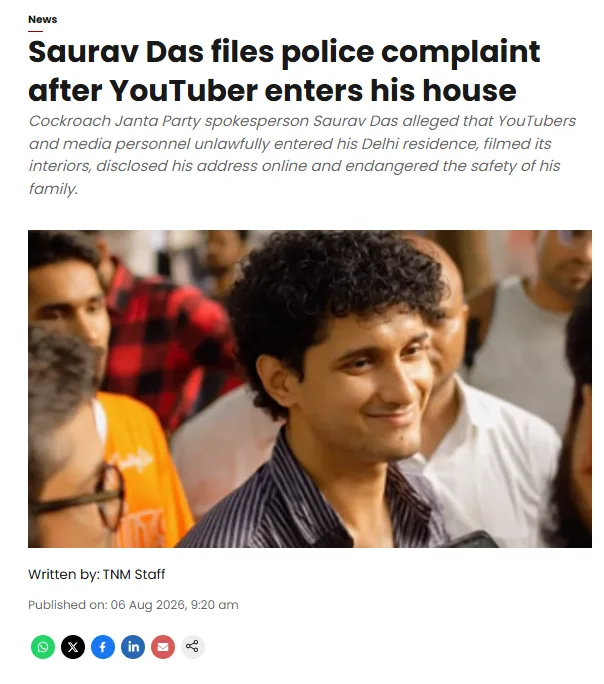
In another such incident, The News Minute reported that Saurav Das accused Deepak Sharma of the YouTube channel The Pamphlet of trespassing onto his Delhi property and peering through a window on August 5, 2026. According to Das, Sharma had first posted a video purporting to show his residence and subsequently shared personal details, including his rent and landlord’s identity, on X. The Jaipur Dialogues later shared the post.
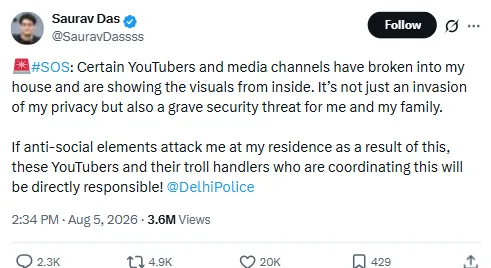
Das condemned the video on X, tagging Delhi Police, and described it as a serious privacy violation and security threat to his family. He warned that those coordinating the effort would be held responsible if he were attacked at home.
2. ‘The underwear model’
In 2017, Saurav Das tagged Flipkart in a post on X, asking whether he could model its products.
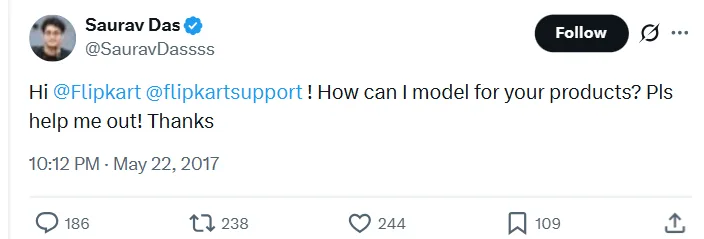
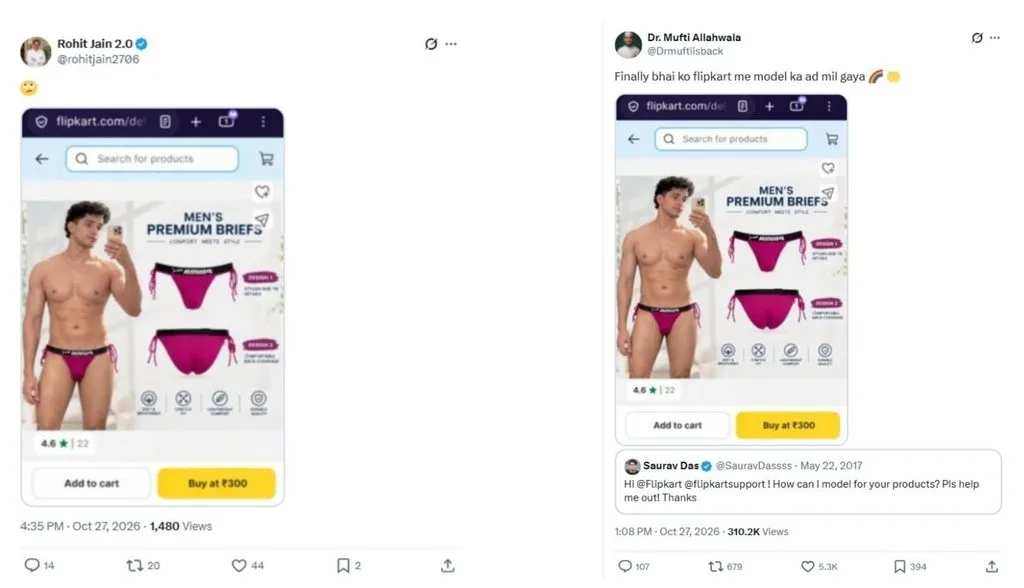
Years later, right-wing accounts dug up his past post on X and tagged him in digitally altered images depicting him as an underwear model. These kinds of posts featuring sexualised mockery aim to emasculate his identity and shift the attention from his political criticism to personal ridicule.
3. ‘The Nepali citizen’
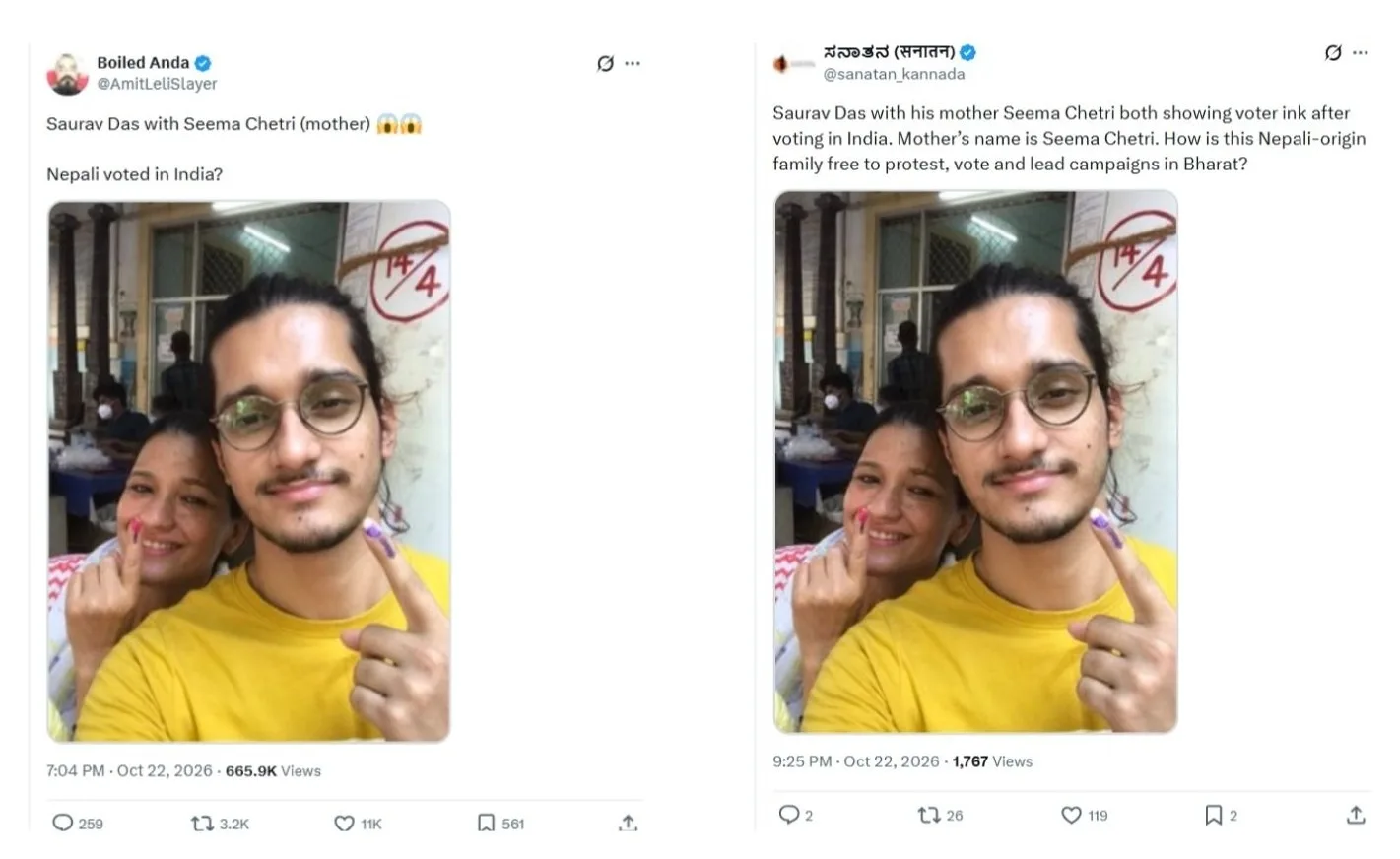
Another narrative circulated by several right-wing social media accounts involved sharing photographs of Saurav’s mother online. Accounts such as Boiled Anda and Sanathan Kannada posted her image alongside his, mocking her facial features to claim she was a Nepali citizen and alleging that Saurav was not an Indian national.
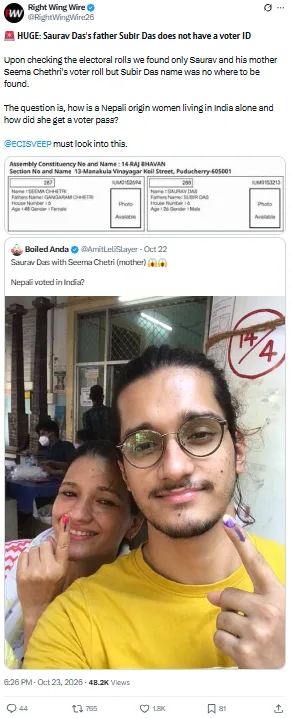
These accounts described her as a single mother and raised questions about how she obtained her voter identity card. Other accounts alleged irregularities concerning how a Nepali woman acquired a voter identity card.
4. Estranged son of a tycoon’
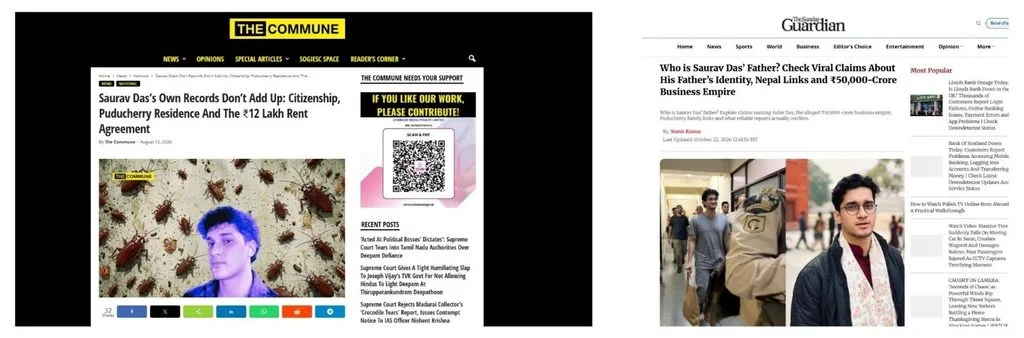
In an August 12, 2026, article titled ‘Saurav Das’s Own Records Don’t Add Up: Citizenship, Puducherry Residence and the ₹12 Lakh Rent Agreement’, The Commune questioned Saurav Das’s parentage, citizenship and residential records, citing alleged discrepancies in official documents. The article relied substantially on an X thread by The Chronology and claims made by Abhijit Iyer-Mitra, rather than independently establishing the alleged discrepancies through primary documentary evidence.
The claims gained further attention following The Sunday Guardian podcast, in which Abhijit Iyer-Mitra questioned Saurav Das’s parentage, family background and lifestyle, alleging that his father was a man named Subir Das who supposedly controlled a ₹50,000-crore business empire. Both narratives relied on unverified claims and third-party accounts rather than independently established evidence to substantiate their allegations.
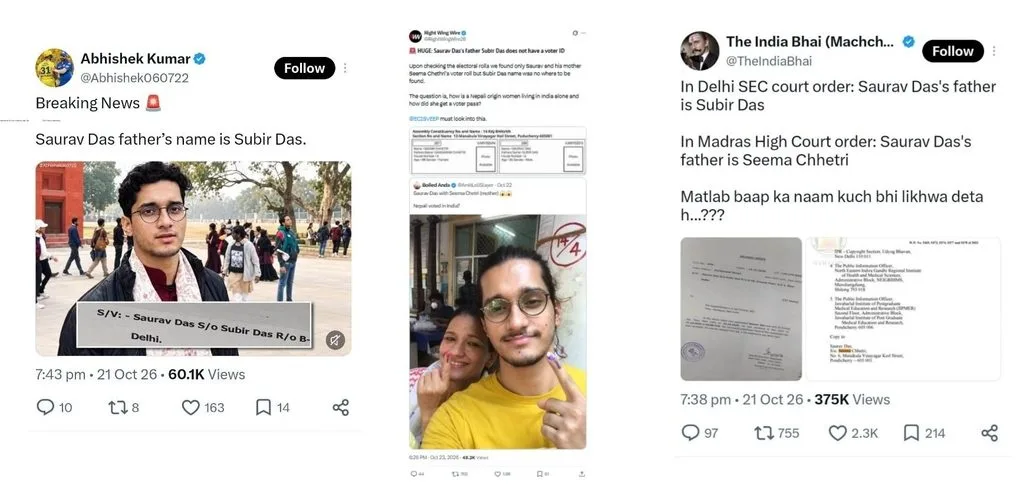
Following these reports, various right-wing social media accounts began to circulate content questioning Saurav Das’s parentage. Some accounts even claimed that Subir Das was his father and that he headed a secretive ₹50,000 crore corporate empire. The claims were picked up and spread widely on social media, with the usual attendant speculation about his family and their business, despite there being no independently verifiable evidence to support the existence of such an empire.
5. ‘The Curious Case of a CPI(M) Leader’s ‘Son’’
X users @Abhishek060722 and @Iam_Rohit_G circulated posts alleging that Saurav Das is the son of the late CPI(M) leader Sitaram Yechury.
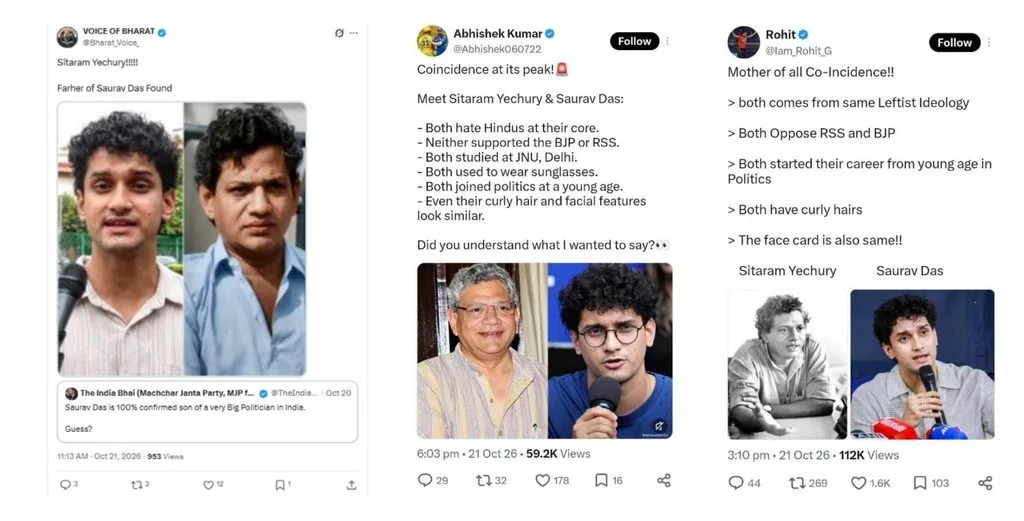
These accounts compared the facial features and alleged a resemblance between the two figures, citing shared anti-BJP ideologies, JNU backgrounds, young entry into politics, curly hair, and similar facial features.
Das’s constant and fierce critique of the ideology, principles, and actions of the Central Government and the BJP has triggered viral hate campaigns against him. India’s highly biased Television channels and propagandistic social media accounts have amplified these attacks, releasing his personal documents and turning them into a public smear campaign.
6. ‘A POCSO criminal’
On 15 August 2026, CJP began the ‘School Thik Karo’ campaign to audit government schools in India and highlight infrastructure, hygiene, and staffing gaps.
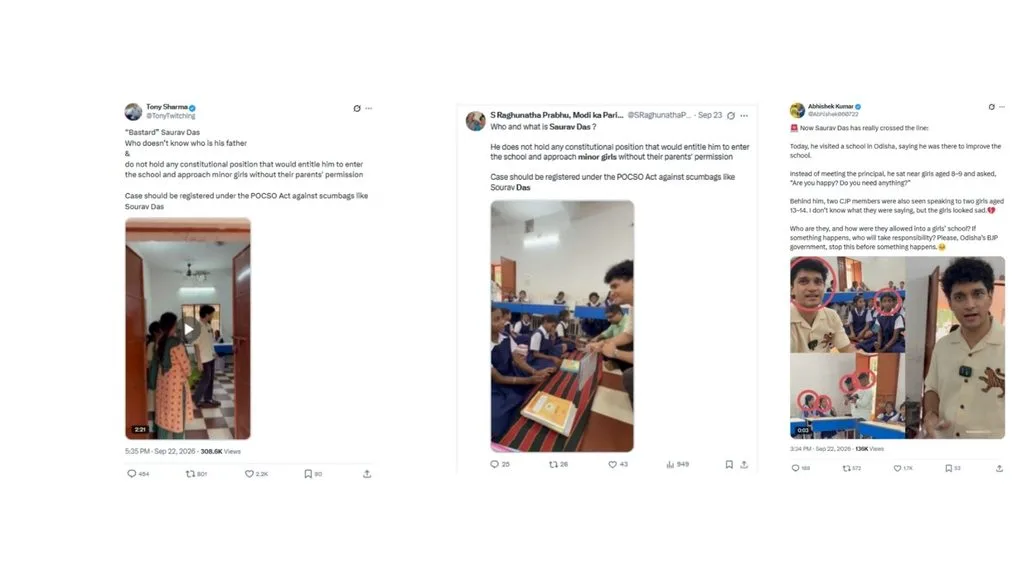
Amidst this, numerous right-wing accounts are circulating posts on X that misinterpret the CJP’s and Saurav Das’s school visit videos to provoke public anxiety and outrage under the guise of child safety. These posts falsely accuse Das of entering school premises and approaching minor girls without parental supervision or consent. Many of these posts were shared without concealing the identities of the minor girls sitting in the classroom.
What does the research reveal?
In a 2020 study titled Doxxing, Privacy and Gendered Harassment by Stine Eckert and Jade Metzger-Riftkin, they interviewed 15 people from five countries, including men, who had been doxxed. Many participants said the experience was deeply unsettling and led to more harassment through phone calls, emails, and social media. Some felt constantly threatened both online and offline, which made them withdraw from online discussions, limit their digital activity, and try to hide their identities. Similarly, a 2021 review by Francesca Stevens, Jason R. C. Nurse, and Budi Arief examined 43 studies on cyberstalking and cyber harassment among adults. Of these, 42 were reported to have negative mental health effects like depression, anxiety, panic attacks, and suicidal thoughts. These studies show how targeted online abuse, smear campaigns and doxxing can cause permanent psychological damage and disrupt victims’ daily lives.
The real danger in the Saurav Das case is not trolling. It is a coordinated campaign of intimidation, with state agencies, partisan media and social media accounts feeding off each other. All these claims portraying Das simultaneously as an undocumented Nepali migrant, the estranged heir to a ₹50,000-crore corporate empire, and the secret son of a late Marxist leader highlight how facts are irrelevant to the campaign. Instead, they aim to strip an active political dissenter of his citizenship in the public imagination, and reduce him to a joke through relentless misogynistic attacks on him and his family.
When private details such as passport records, home addresses, and rental agreements move from government files and police checks to partisan social media, doxxing becomes more than cyberbullying: it turns into physical and psychological surveillance. Research by Eckert and Metzger-Riftkin (2020) and Stevens et al. (2021) links such exposure to anxiety, paranoia, and self-censorship. By turning private life into an active site of surveillance, this strategy forces people to stop speaking out and live in constant fear.